
.jpg)
Best Sofa Colours That Never Go Out of Style
Choosing the best sofa colours is not just about what looks good today. A sofa is often the largest piece of furniture in the room, so the colour you choose can influence the entire look and feel of the space for years to come.
The biggest mistake is focusing on trends before considering how the couch will work in your home. Light, room size, existing furniture and everyday living can all affect how the colour looks once the sofa is in place.
At Designer Sofas 4U, there is a wide range of sofa colours, from timeless neutrals to richer statement shades. In this guide, we will look at some of the most popular sofa colours, current colour trends, and practical ways to choose a shade that works with your room, your style and the way you live. The aim is simple: to help you picture a sofa that feels right the moment you walk into the room.
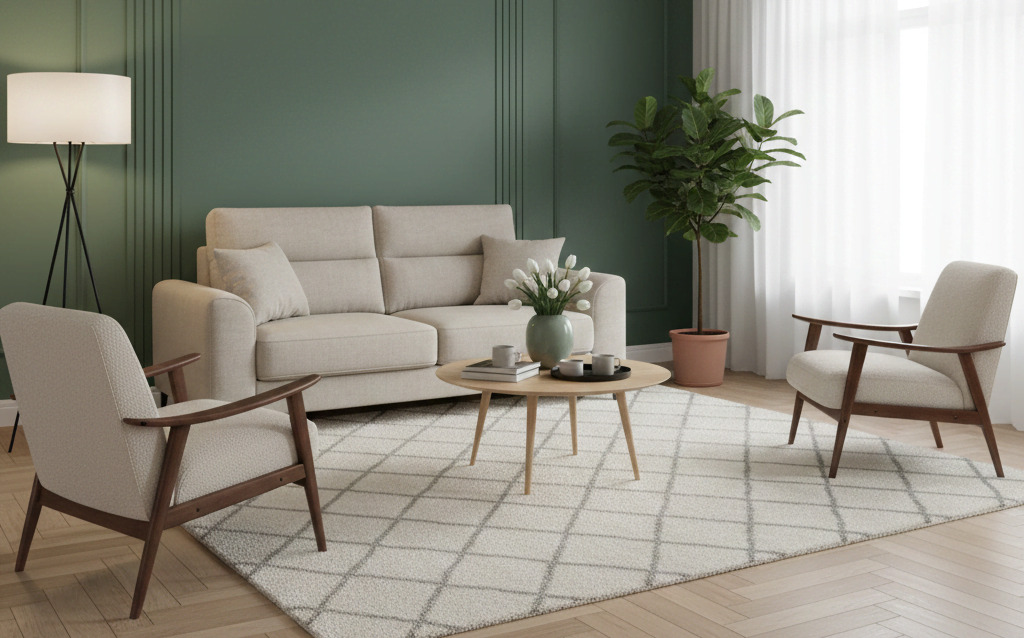
How to Pick a Sofa Color: What to Consider First
When you choose the right sofa colour, the room feels easier to enjoy. You do not worry about every small mark, the sofa still looks good after daily use, and the shade still suits your furniture, flooring and walls for years rather than only looking nice on the day it arrives.
Practicality
Children and pets: If the sofa will be used every day, especially in a home with children or pets, the colour needs to be easy to live with. Drinks may spill, crumbs may fall, and pets may leave marks after a walk. On white, cream or pale grey upholstery, these small things can show very quickly.
Cleaning: Taupe, olive, navy, charcoal, tan and brown are often the practical choices for busy homes. They help the sofa stay looking good between cleans, so you can relax and enjoy it without worrying about every little mark left by children, pets or everyday use.
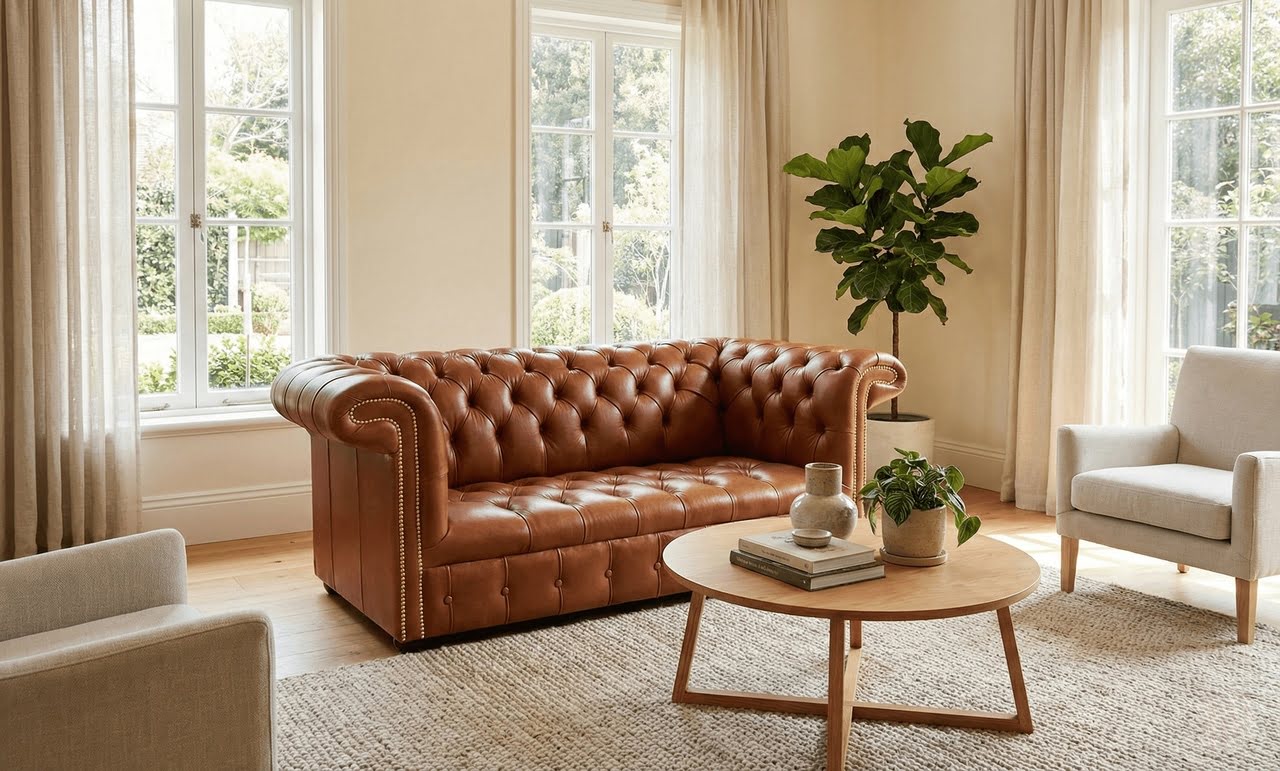
The Light and Size of the Room
Direct sunlight: If the sofa will sit in strong sunlight, avoid colours that are very bright or heavily saturated. Reds, strong blues and vivid greens can fade more noticeably over time. Softer neutrals, tan, brown, olive, mocha and muted earthy shades are safer choices for a sunny room.
Low-light rooms: If the room often feels dim, choose a sofa that helps the space feel lighter. Oatmeal, sand, cream beige and soft greige work better here than very dark colours.
Small rooms: Lighter colours often help a sofa feel less dominant in a compact space.
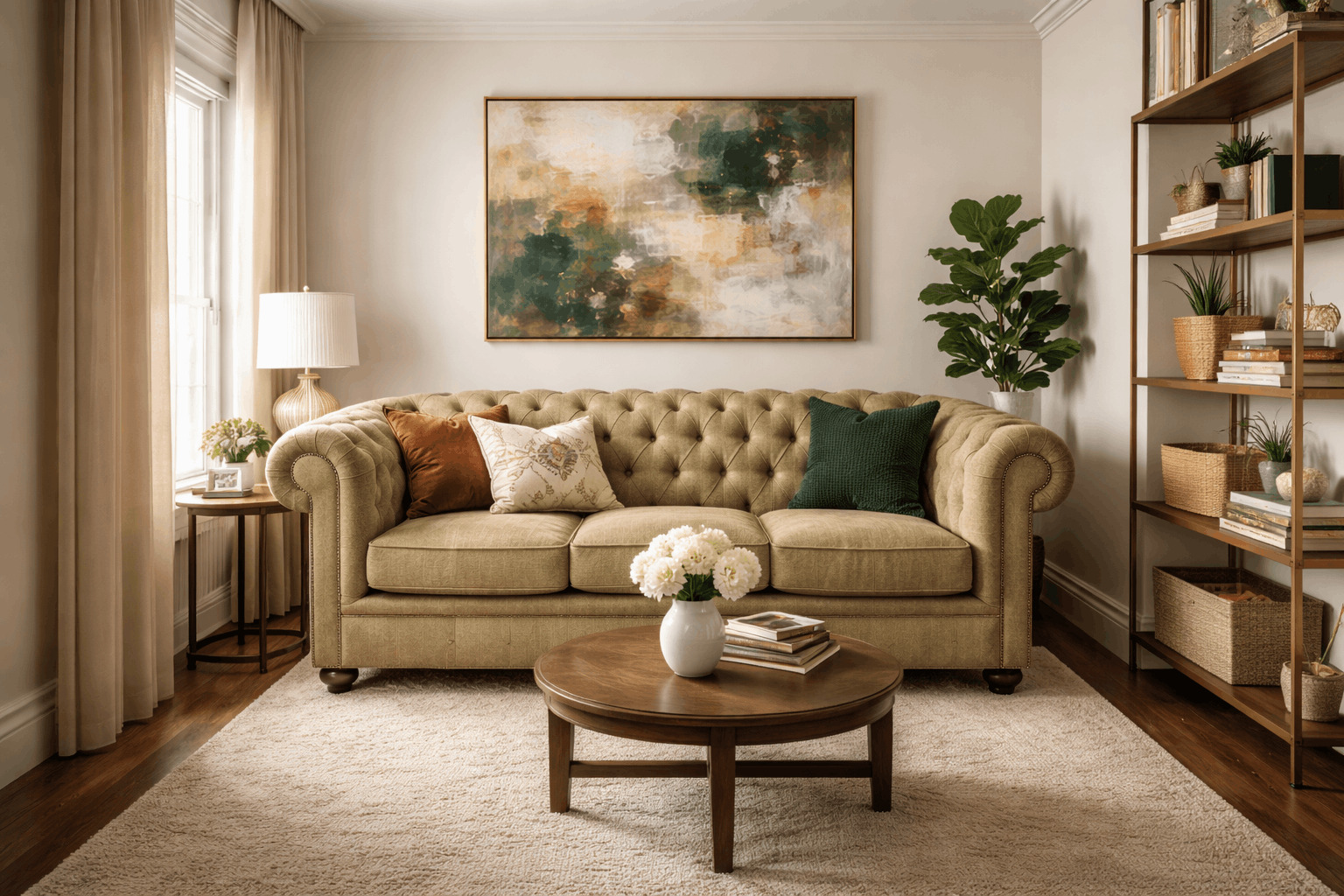
Large rooms: In a large living room or open-plan space, deeper colours such as navy, chocolate, forest green or charcoal can help the seating area feel more complete, especially on a large sectional or L shaped sofa.
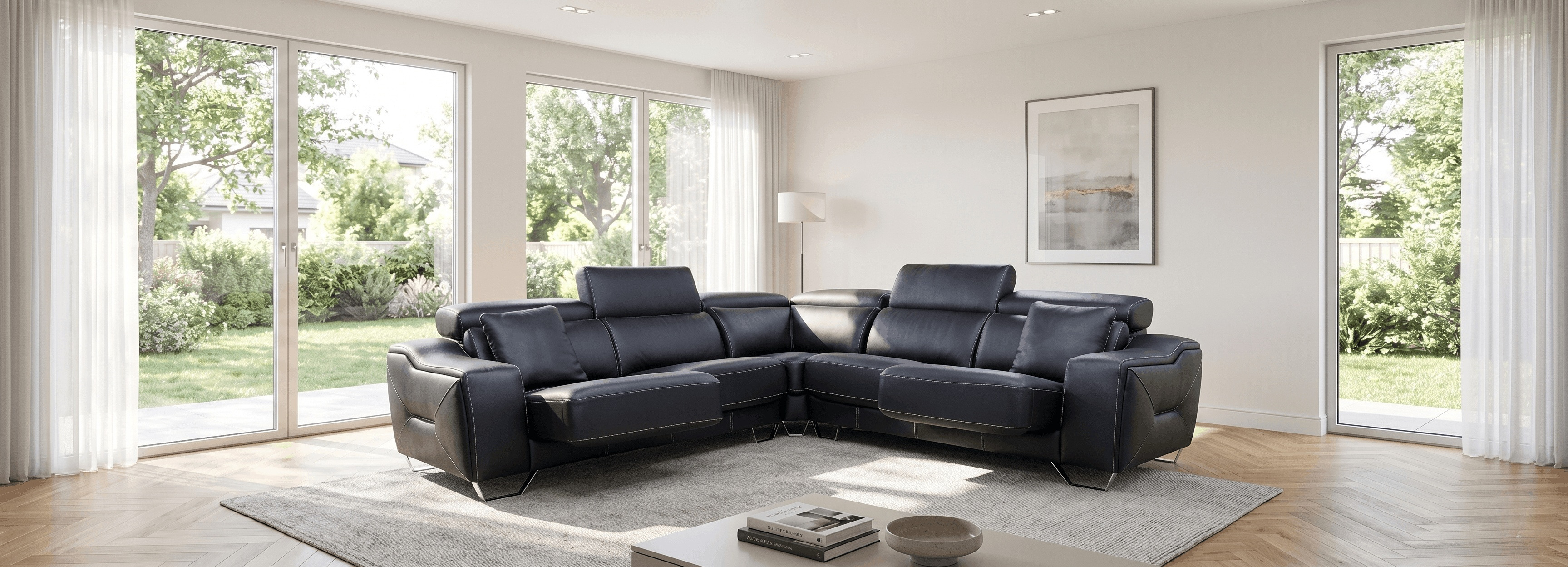
Once these basic tips are clear, choosing a sofa colour feels much easier. You can stop guessing, start picturing the sofa in your own living room, and choose a colour that feels good every time you see it.
How to Choose the Best Sofa Colour for Your Home
Some colour choices become much easier when you stop comparing every shade and focus on the real situation. Here are four common sofa colour questions with a clear answer for each one.
Finding the Best Colour for Leather Sofa
If we are talking specifically about leather, the most successful colours are usually not the most “fashionable” ones, but the ones that make the most sense in everyday life: tan, cognac, dark brown, and sometimes deep olive or black for a more contemporary look.
If you want the safest leather option, choose tan or cognac. Both have a cosy British feel, work naturally with wood, brass and cream walls, and age well visually. Dark brown is also a strong option, especially if you want a slightly more club-like, heritage feel.
What Is the Best Colour for a Fabric Sofa?
Fabric gives you far more colour freedom than leather. Among the most popular fabric sofa colours are beige, sand, oatmeal, olive and navy because they are easy to combine with different decorating styles and colour schemes.
The key is to match the colour to the fabric finish. A pale woven fabric gives a softer, more relaxed look, while velvet can make deeper colours feel richer and more luxurious.
Choosing the Best Colour Sofa for Small Room
For a small room, the best sofa is not necessarily white. Warm beige, oatmeal, soft stone, light grey and sand work much better, especially on a compact modular sofa: they reflect light, do not visually break up the room and do not argue with the walls.
But there is an important UK note here: if the room is small and north-facing, cool greys and blue-grey sofas often look duller than you expected. In that case, it is better to choose a warm undertone — not pure grey, but greige, mushroom, oat or linen beige.
What Is the Best Sofa Color to Hide Stains?
For everyday living, the calmest colours for hiding stains are charcoal, olive, brown, tan, navy, rust, as well as melange fabrics, an imperfectly even pile and a subtle pattern.
There are also three practical tricks. First: do not choose pure white if it is the main sofa in the home. Second: if you love a light base, move towards oatmeal, stone, warm beige, not paper white. Third: look not only at the seat colour, but also at the fabric technology.
For most people, the best universal option is a warm beige or sand fabric sofa, for a more expressive but still calm interior — olive, for leather — tan/cognac, for a modern and practical home — charcoal or navy.
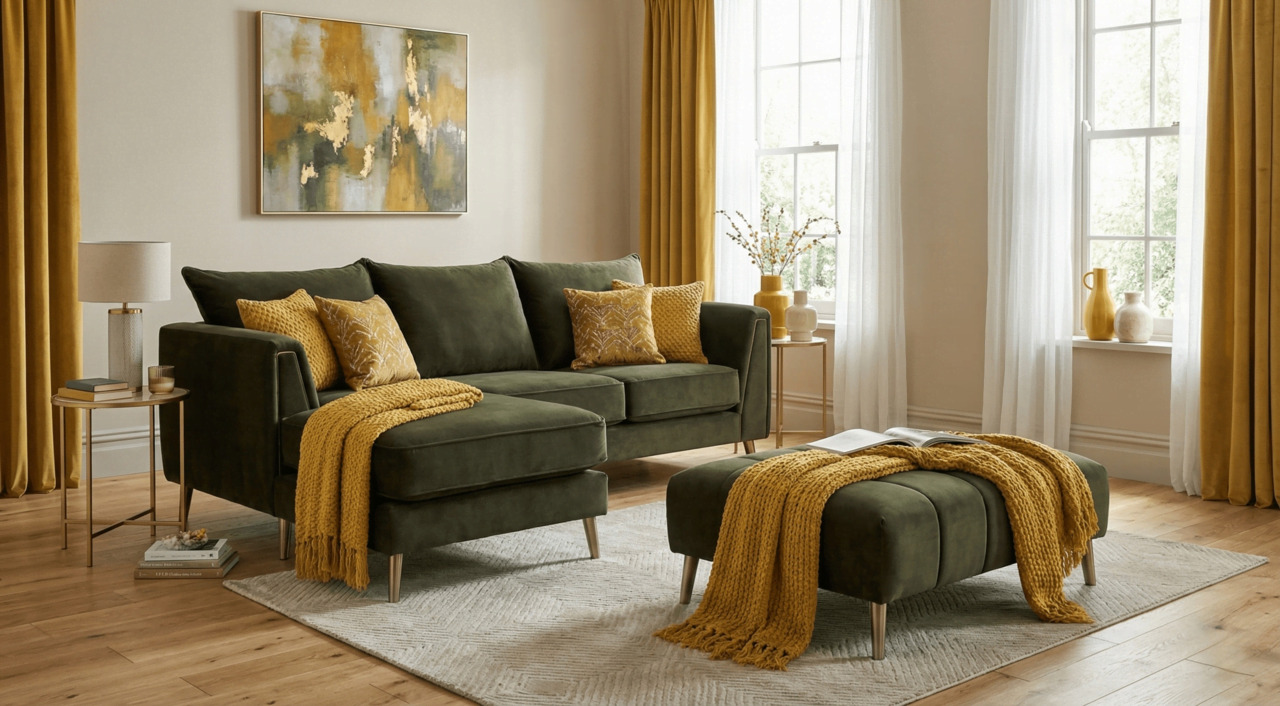
The 5 Sofa Colours People Choose Most Often
While trends change every year, some sofa colours stay popular because they are easy to style, suit different interiors and still look good as the room changes over time.
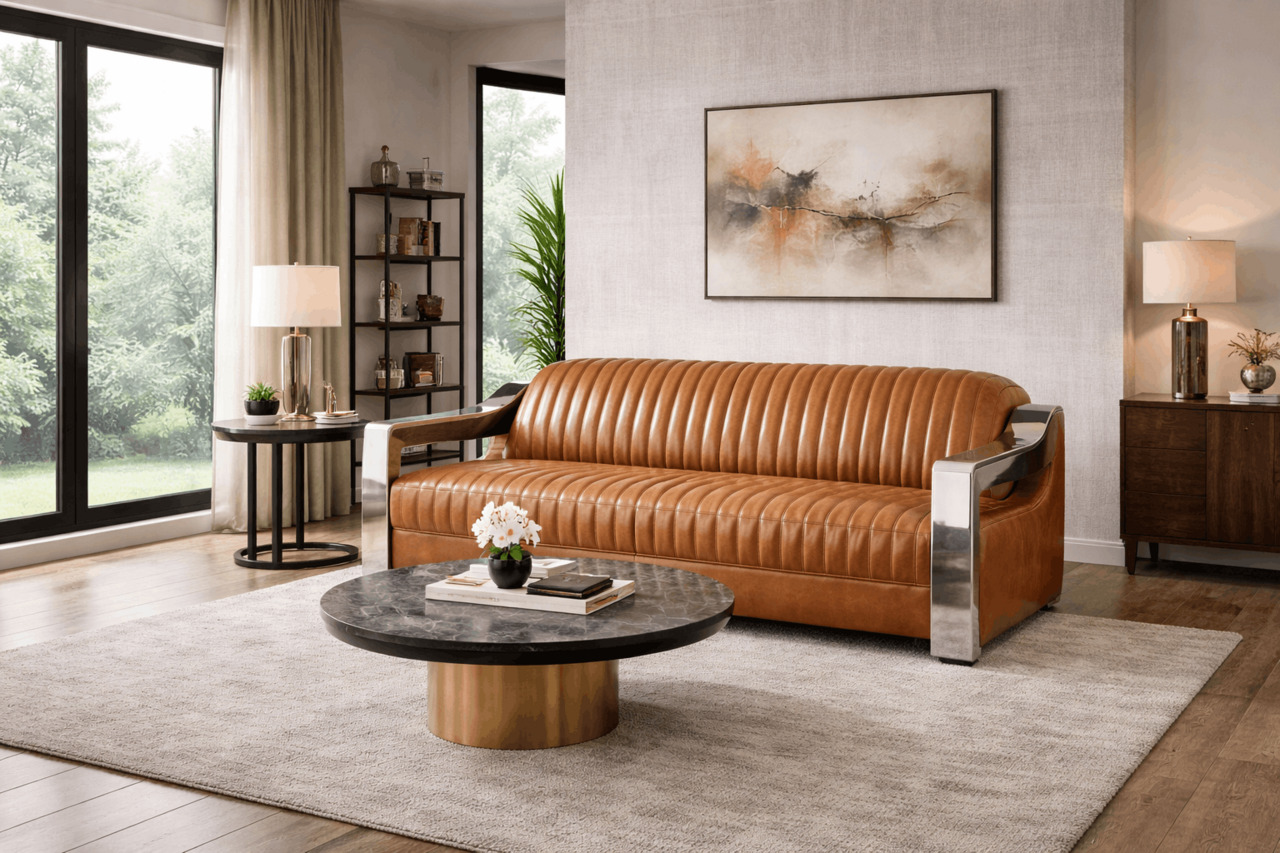
Brown and Tan
Brown and tan fit Chesterfield, vintage and leather styles especially well, so they read as safe, classic and premium rather than trend-led. They also travel well across traditional and luxury-inspired interiors, which helps them stay popular year after year.
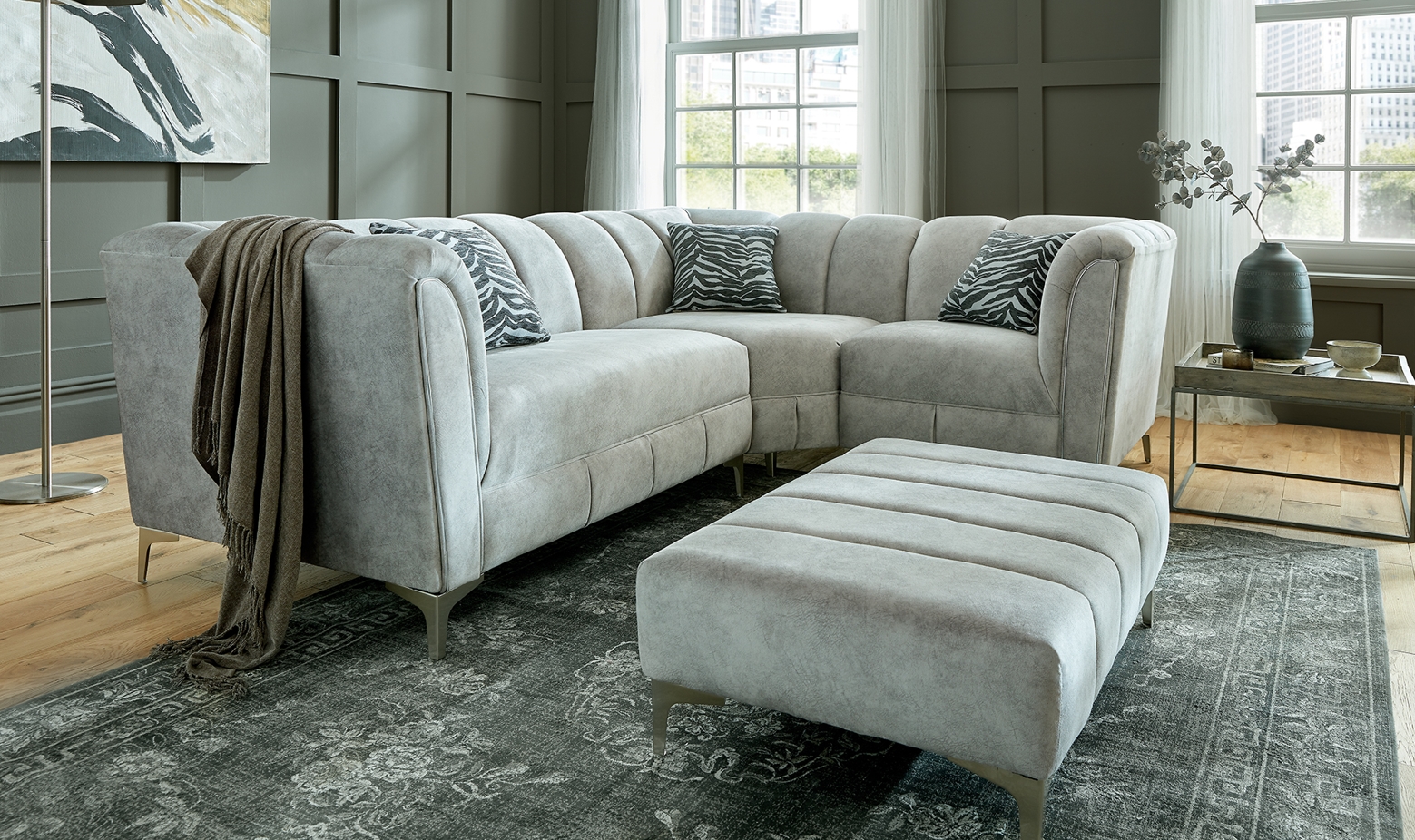
Grey
Grey stays popular because it is neutral, forgiving and easy to style, but still feels more modern than older beige-only schemes. It works equally well in leather, velvet and family fabric options, which makes it a flexible choice for many homes.
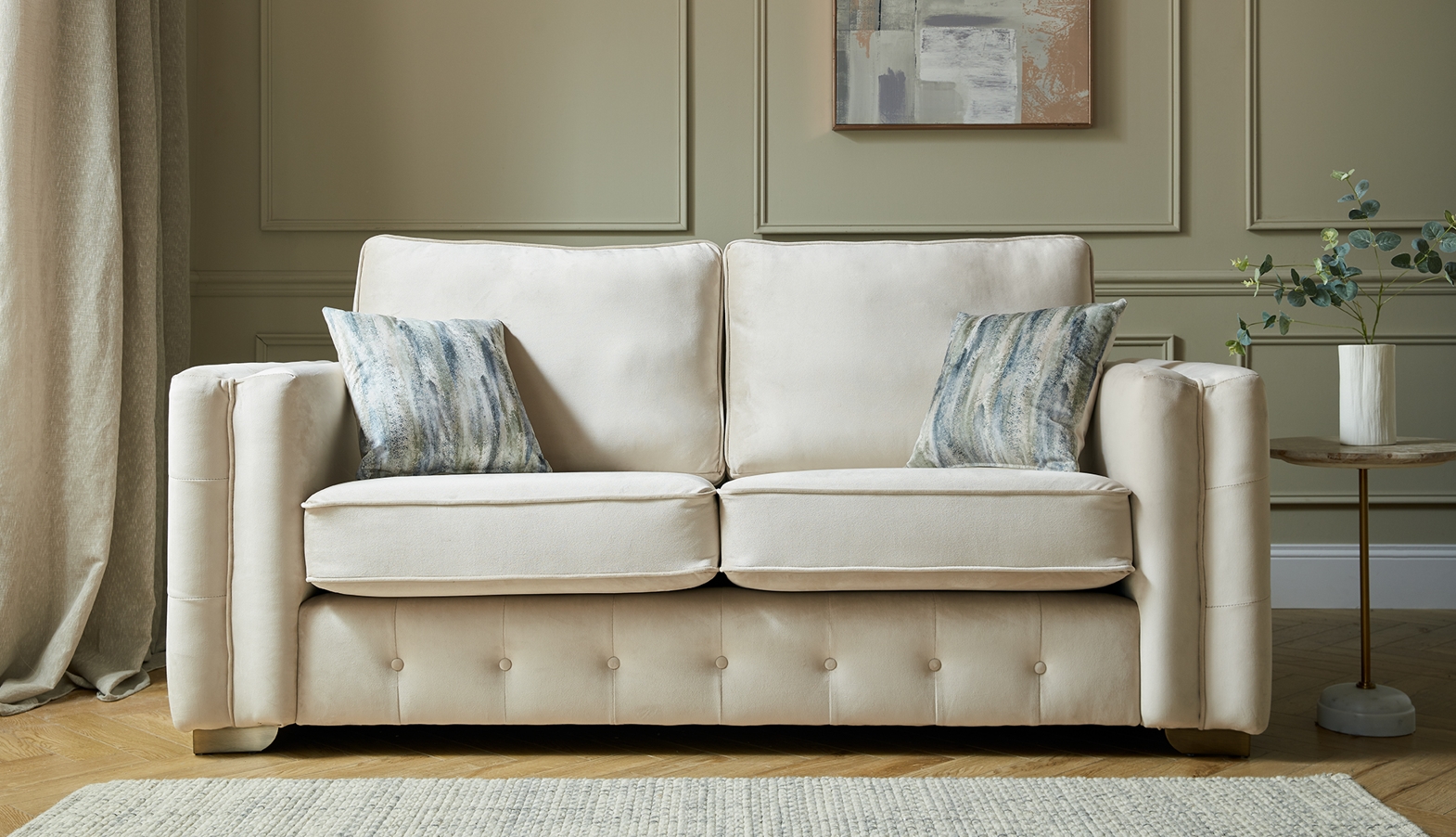
Cream and Beige
Cream and beige are popular because they brighten rooms and act as an easy backdrop for other colours, especially wood, stone and muted accents. They feel softer than grey and more contemporary than a stark white sofa, which gives them very broad appeal.
Black
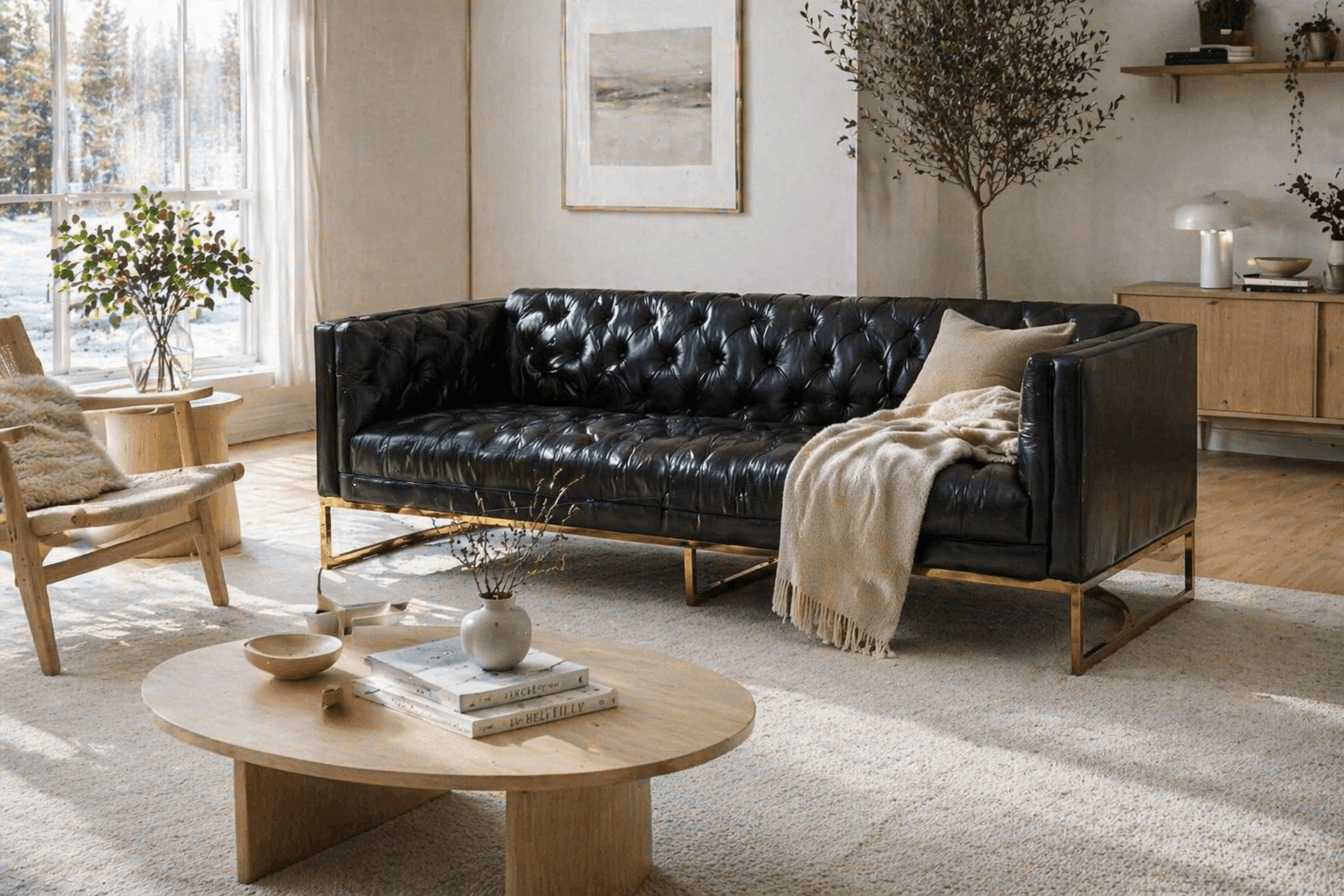
Black sofas remain a popular option for buyers who want a stronger visual statement. They work particularly well on leather and Chesterfield sofas, bringing contrast and definition to a room.
Blue
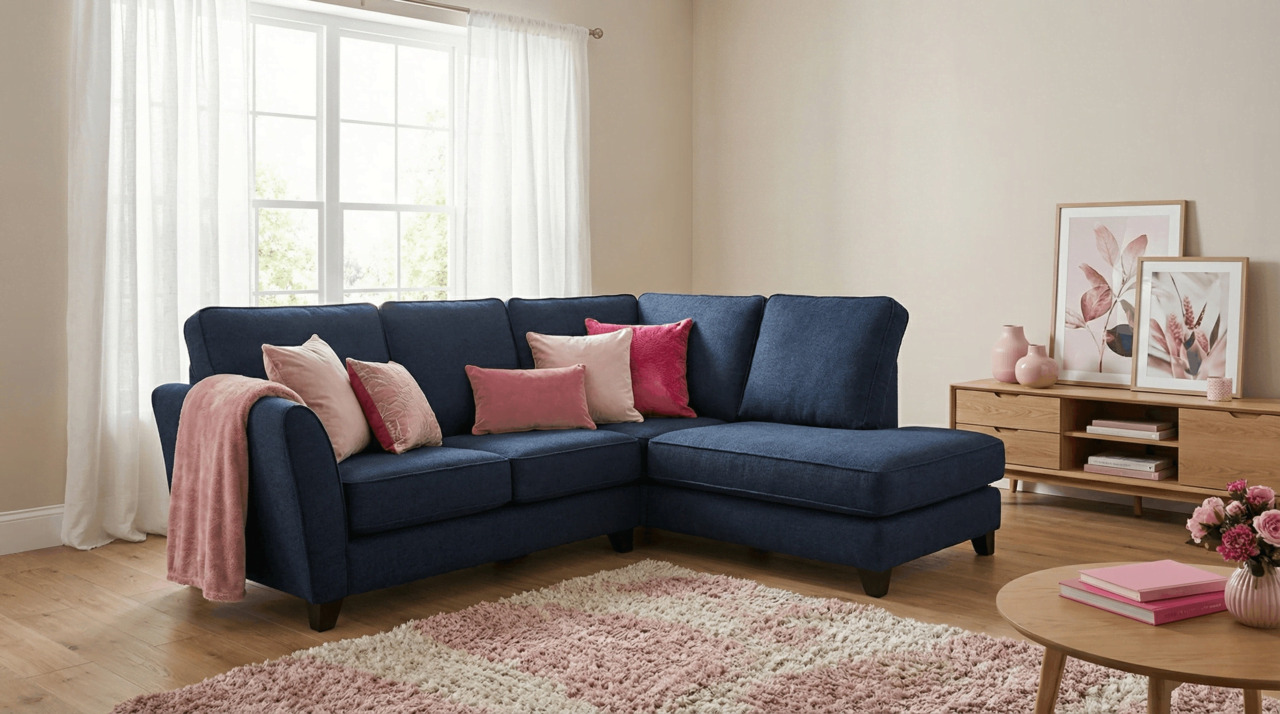
Blue is popular because it gives more personality than a neutral without becoming hard to live with. Navy, antique blue and softer pale blues all read as calm and versatile, so blue now works as a “safe statement” colour in the UK market.
Best Sofa Colour Combinations That Always Work
Once the sofa colour has been chosen, the combination around it decides almost everything. The simplest guide is not to squeeze five main shades into one living room at the same time.
In many interior guides, you will see the 60-30-10 rule: around 60% is the walls and background, 30% is large furniture such as the sofa, and 10% is for accents. For a real living room, this means something simple: the sofa does not have to match the curtains exactly, but they should speak the same colour language. Warm colours pair naturally with warm colours, cool colours sit better with cool colours, and one contrast accent usually creates more harmony than three random ones.
Below are five easy palettes. They are not fixed sets, just simple colour schemes and colour combinations for sofa styling, curtains and walls.
| Scenario | Sofa | Curtains | Walls | Best when |
|---|---|---|---|---|
| Soft classic | Navy | Flax | Warm ivory | You want a timeless look with contrast that feels elegant rather than heavy. |
| Calm modern | Charcoal | Stone | Soft white | You prefer a clean, contemporary room that still feels bright and comfortable. |
| Earthy natural | Olive | Oat | Chalk | You want a relaxed space with warmth, texture and a connection to natural materials. |
| Heritage leather | Cognac | Natural linen | Putty | You love classic British interiors with a cosy, welcoming feel. |
| Light small living room | Beige | Sage | Cloud white | You want a compact room to feel lighter, fresher and more open. |
A good colour combination helps the sofa look right as soon as it arrives. The room feels more finished, the shade feels intentional, and you feel more confident that you made the right choice.
How to Create a Colour Combination for Sofa and Curtains
With sofas and curtains, it is best not to chase an exact match. Matching the mood works much more beautifully. For a navy sofa, white, cream, warm ivory and flax linen curtains are almost always successful.
For an olive sofa, the safest choices are oatmeal, stone, light grey and cream. For tan leather, natural linen, off-white or curtains with a light linen texture work particularly well. If the sofa itself is light, the curtains can be one or two shades deeper so everything does not blend together.
There is also a simple rule when it comes to light. In a dark living room, curtains are almost always better lighter than the sofa. In a bright south-facing room, you can take the opposite approach and choose richer curtain colours, such as sienna, bronze green or dusty blue.
Popular Sofa and Chair Color Combinations
There are three combinations with chairs that almost always work. The first is tone-on-tone: if the sofa is beige, the chair can be in mushroom, taupe or a warmer stone shade.
The second is a neutral sofa and an accent chair. For example, a sand sofa and a botanical green chair, or a sand sofa and a striped armchair. This approach is particularly good if you want character, but without the risk of repainting the whole room around one bold sofa.
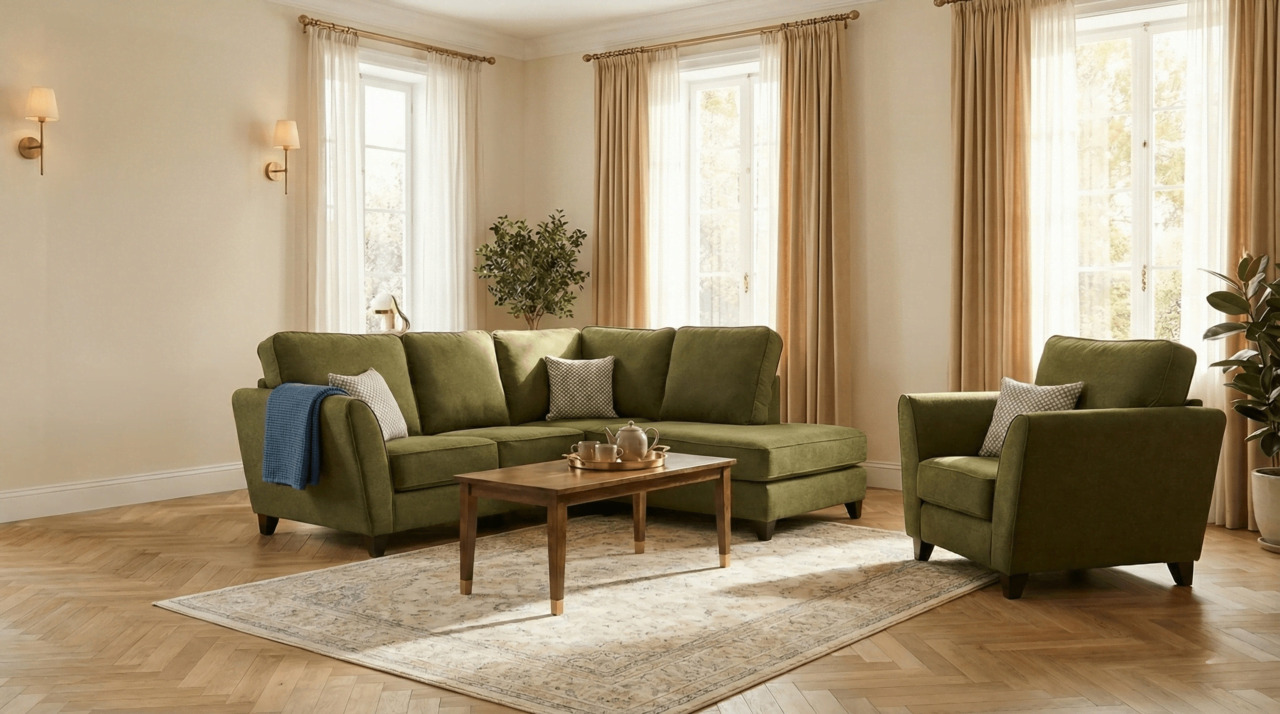
The third scenario is navy and olive. Navy gives the room depth, while olive adds warmth. Together, these colours help the space feel calmer and more relaxing, which is why they work well in a living room.
Sofa and Wall Colour Combination
This is where things most often fall apart because of undertones. If the sofa is warm — beige, sand, tan or rust — the walls are also best chosen from a warm group: chalk, putty, warm white, pink-beige and soft clay.
In practice, it looks like this. An olive sofa sits naturally with chalk, linen, soft clay and warm white. Navy looks strongest with off-white, pale stone and sandy beige. Tan leather pairs beautifully with putty, cream and muted olive.
If the room is dark by nature and you would rather embrace it than fight against it, you can choose richer wall colours and an equally confident sofa.
From Colour Ideas to the Perfect Sofa
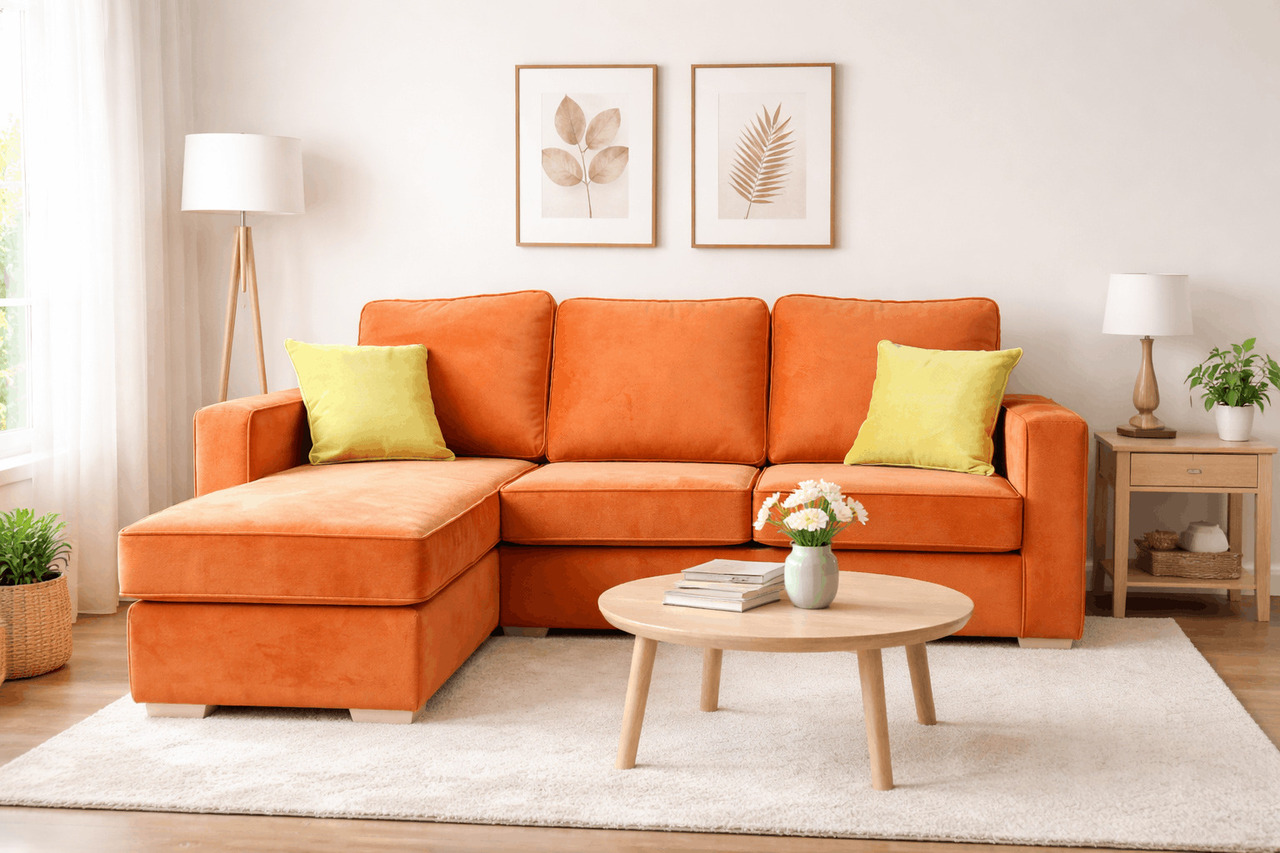
By this point, you should have a much clearer idea of how to choose from the best sofa colours and which shade will feel right in your home. The next step is to imagine that colour on a sofa you would love to see every day — not just in a showroom, but in your own living room, with your lighting, your flooring and your favourite pieces around it.
You can browse Chesterfield sofas, corner sofas, leather sofas and soft fabric settees in shades that can make your living room feel warmer, smarter and more personal. Compare the finishes, think about how the colour will look in the morning and evening, and choose the piece that makes the whole room feel closer to the home you want.
Start exploring today and find the perfect sofa for your home at Designer Sofas 4U.
FAQ
What Sofa Colours Are Trending in 2026?
According to Good Housekeeping, “Earthy Vibrancy” is one of the key colour directions for 2026, with nature-inspired shades such as terracotta, mossy green, muddy blues and rich earthy tones becoming more popular. If you are looking for couch color ideas, this means olive, clay, sand, mocha, chocolate brown and deep blue can feel more current than flat cool greys, while still being easy to live with long term.
Should a Sofa Be Lighter or Darker Than the Walls?
There is no fixed rule, but most interiors look more balanced when there is some contrast between the sofa and the walls. A darker sofa can add depth to a light room, while a lighter sofa can help soften darker walls. The goal is usually contrast rather than an exact colour match.
Should You Choose a Trendy Sofa Colour or a Timeless One?
When choosing a couch color, most people are better starting with a timeless sofa colour because a sofa is expected to last for years. If you enjoy following trends, a common approach is to keep the sofa relatively neutral and introduce seasonal colours through cushions, throws and accessories. This makes it much easier to refresh the room without replacing the furniture.
How to Choose the Best Color for Sofa Cover?
With covers, the logic is slightly different. If the sofa itself can be a “base for years”, then a sofa cover is a quick way to change the mood of the room without buying a new furniture set. Many large furniture retailers now focus on loose covers that can be removed, washed and even ordered as spares, making it easier to change the look of the living room seasonally or simply according to your mood.