
.jpg)
Burgundy Sofa Living Room Ideas: 20 Ways to Make the Colour Work
The best burgundy sofa living room ideas use the sofa as a rich focal point rather than treating its colour as something difficult to work around. Burgundy sits between deep red, wine and sometimes oxblood, so it can feel warm and traditional, dramatic and luxurious, or surprisingly modern depending on the colours, materials and furniture around it.
At Designer Sofas 4U, we have worked with upholstered furniture since 2007, including classic Chesterfields, contemporary sofas and distinctive leather designs. One thing we have learned is that a strong sofa colour does not need an equally strong room. Often, the most effective interior starts with a few carefully chosen supporting shades and lets the sofa provide the depth and character.
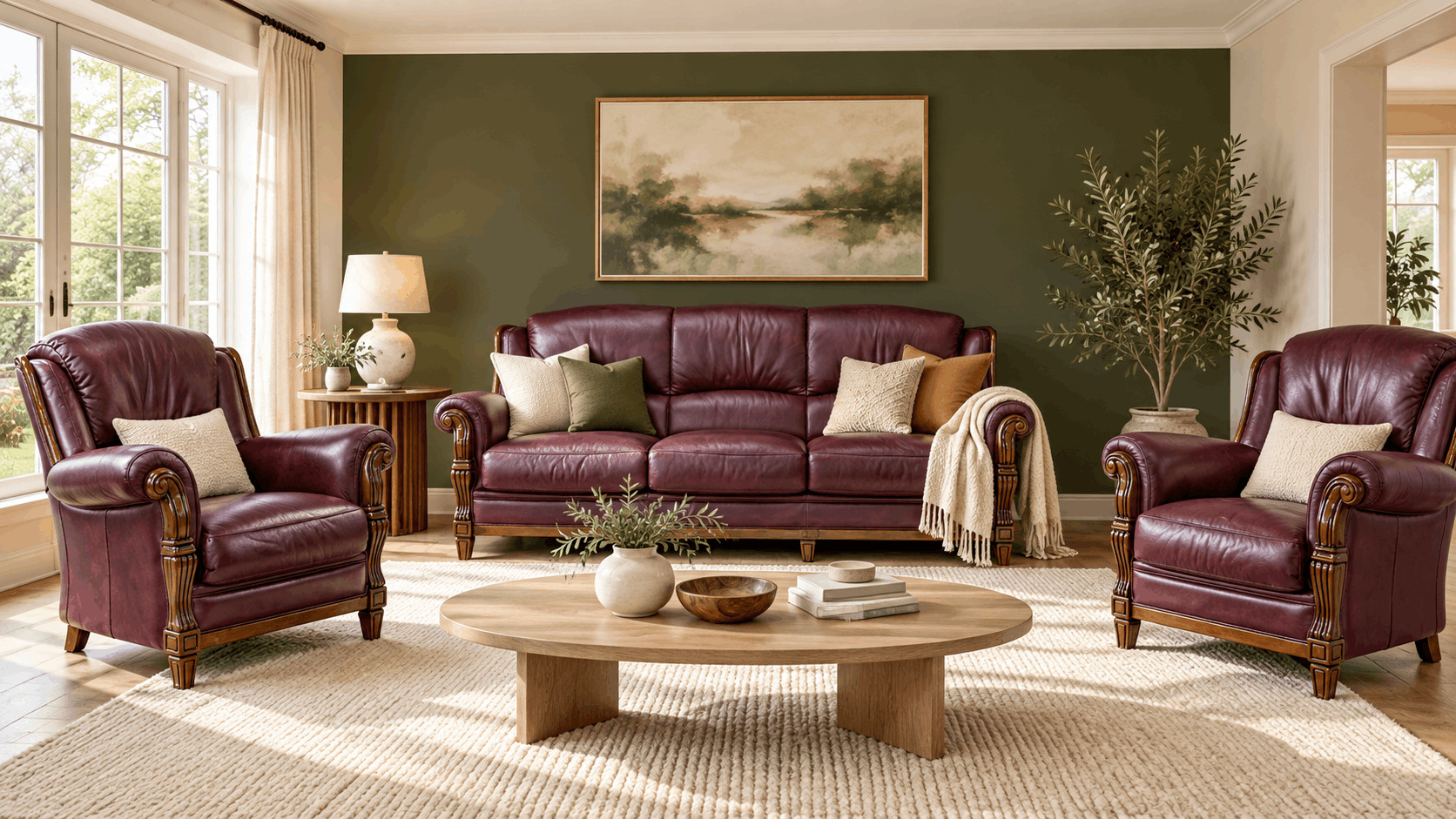
What Colours Go With Burgundy Sofa?
Burgundy is easier to combine than it may first appear. Warm white, cream, taupe and soft grey create a calm base, while olive, navy, dusty pink, mustard and natural wood bring different moods to the room.
The most useful colours that go with burgundy sofa upholstery depend on its undertone. A warmer burgundy with brown or oxblood notes often works beautifully with cream, tan and wood. A cooler wine shade can sit naturally beside grey, blue or muted pink.
Material matters too. Burgundy leather tends to look deeper and more structured, while velvet reflects light and feels softer and more luxurious. A woven fabric can make the same colour look more relaxed.
Burgundy Sofa Living Room Ideas: 20 Ways to Style the Room
1. Use Warm White Walls to Let Burgundy Stand Out
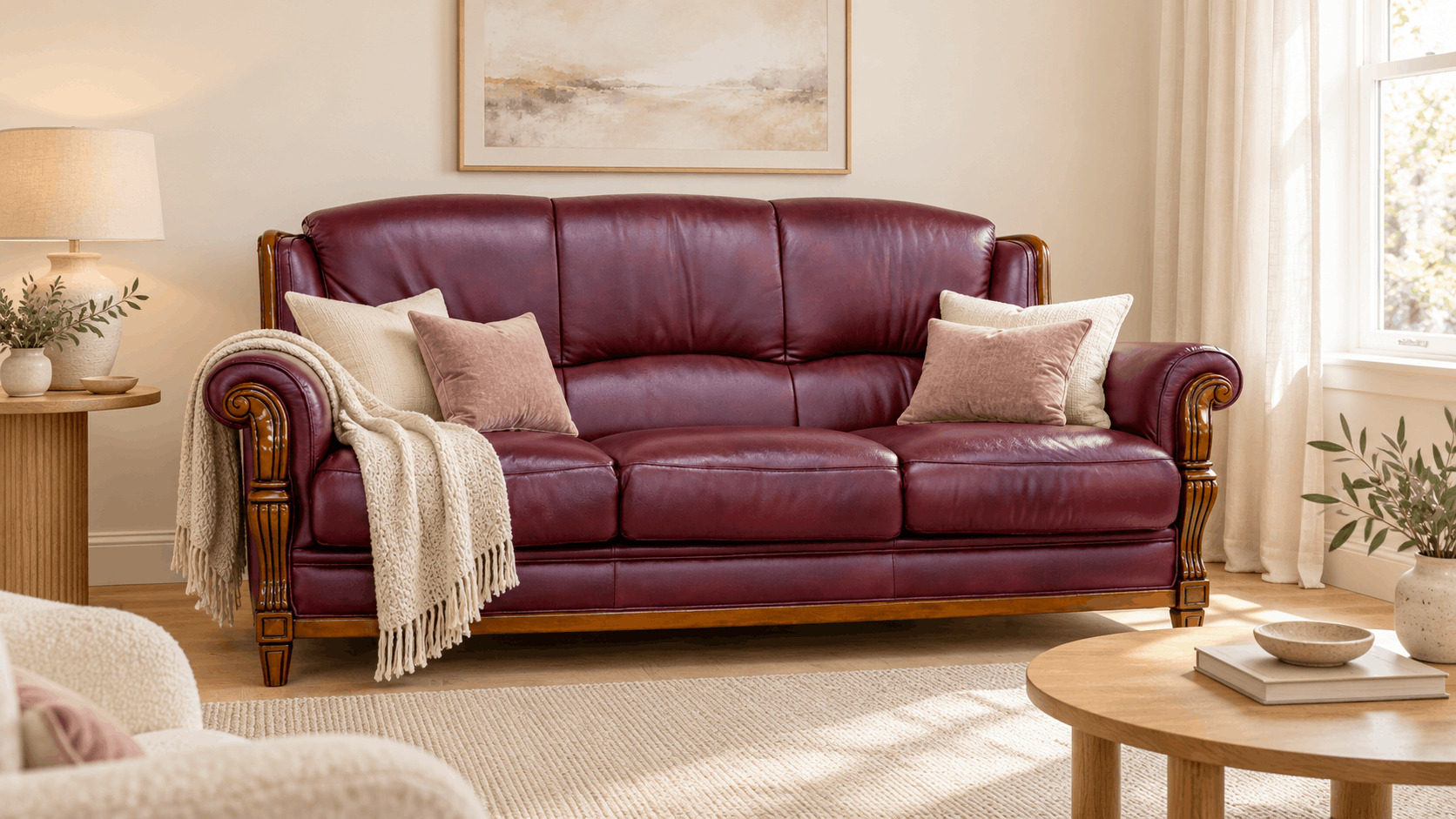
Warm white is one of the simplest backgrounds for a burgundy sofa. It gives the colour plenty of contrast without creating the stark effect that bright white sometimes produces.
Choose ivory, soft cream or an off-white with a slightly warm undertone. These shades help the room feel light while letting a deep burgundy couch remain the focal point.
This approach is particularly useful in smaller rooms, where dark walls and dark furniture together can reduce the feeling of openness.
For a classic starting point, the Ancona 3 Seater Italian Leather Sofa can bring rich burgundy colour into an otherwise pale scheme.
2. Pair Burgundy with Soft Grey for a Cooler Look
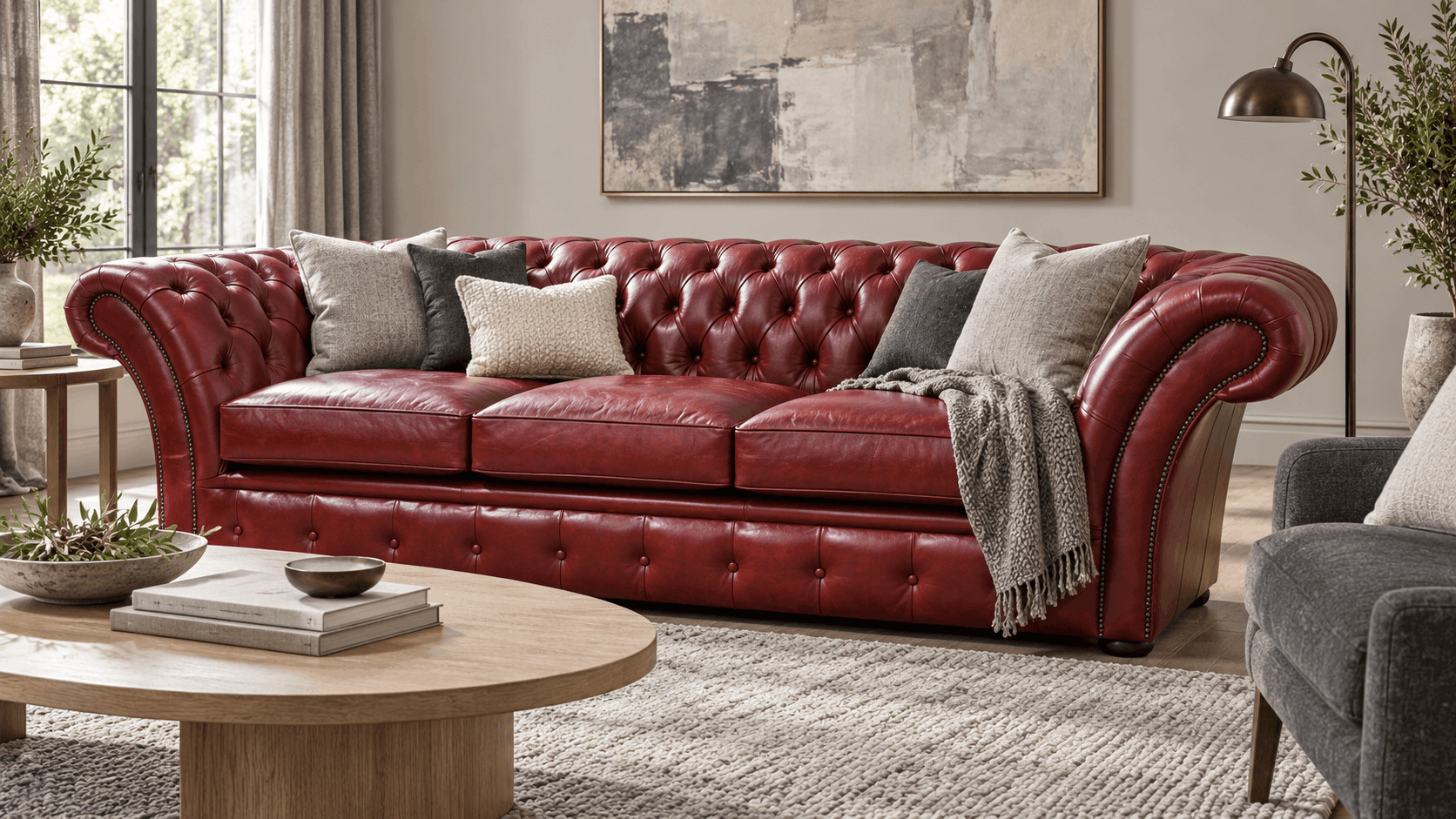
If cream feels too warm, soft grey creates a more restrained palette.
Choose a grey that is neither very blue nor extremely dark. Pale stone grey, warm grey and greige can all soften the richness of burgundy without competing with it.
Add:
- pale grey walls;
- an oatmeal or grey rug;
- black or dark bronze lighting;
- cream cushions for contrast.
This combination works especially well with contemporary styles, where you want the sofa to feel sophisticated rather than overly traditional.
3. Try an Olive or Sage Green Accent
Green is one of the strongest partners for burgundy because both colours have a natural, earthy quality.
Sage gives the room a softer look, while olive creates more depth. You could use green through an accent wall, pillows, curtains, ceramics or an occasional chair.
Keep the remaining palette relatively quiet. Burgundy, olive, cream and warm wood are already enough to create a complete colour scheme.
For living room ideas with burgundy sofa seating that feel warm but not overly formal, this is one of the easiest combinations to use.
4. Bring in Navy or Deep Blue
Burgundy and navy create a rich combination without looking overly colourful.
Instead of painting every wall blue, try introducing navy through:
- an armchair;
- curtains;
- patterned cushions;
- artwork;
- a rug with small blue details.
A pale neutral background keeps the two deeper colours balanced.
This can work particularly well if your burgundy sofa has a smooth leather finish, as blue fabric or velvet adds a different texture.
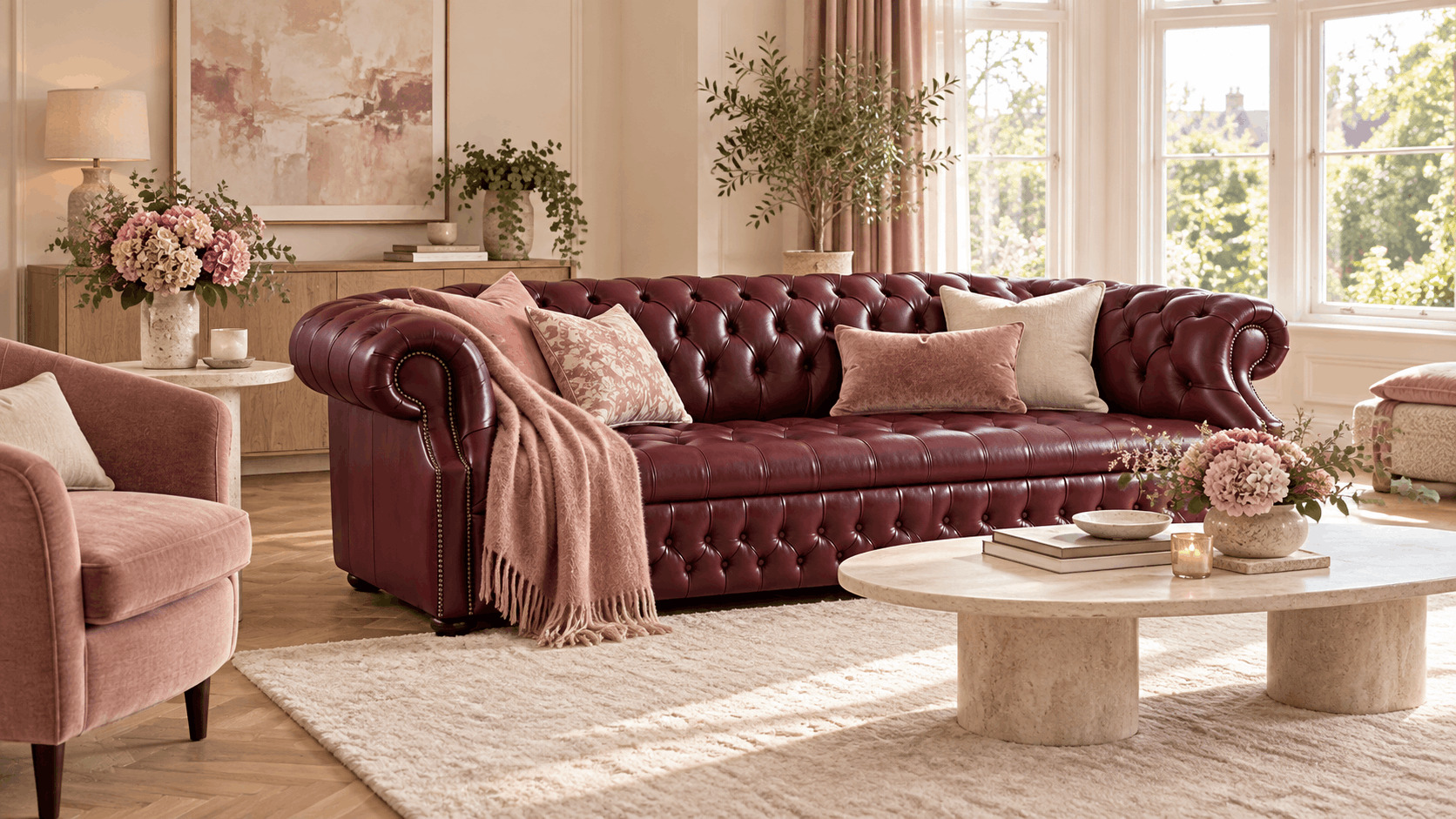
5. Add Dusty Pink for a Softer Scheme
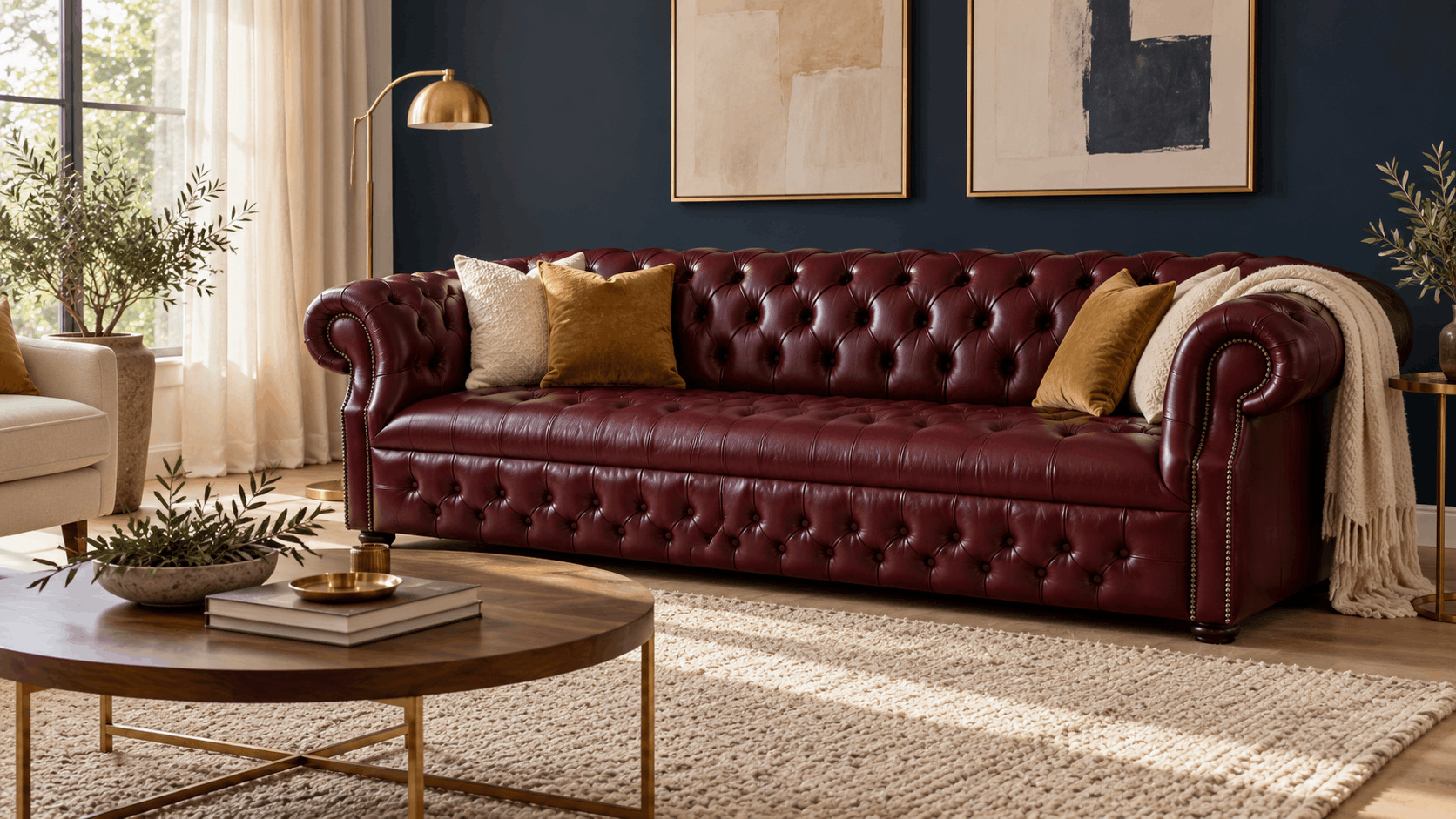
Burgundy and pink belong to the same broad colour family, but the contrast between a deep burgundy sofa and muted blush accents can make the room feel lighter.
Avoid very bright candy pink. Dusty rose, blush and muted pink are easier to live with.
Use them sparingly:
- one or two cushions;
- a throw;
- flowers;
- artwork;
- a small chair.
This is one of the more creative approaches to burgundy because it keeps the palette tonal while avoiding an overly dark room.
6. Use Mustard or Ochre for Warm Contrast
Mustard, ochre and muted gold bring energy to burgundy.
You do not need much. One mustard cushion, a ceramic lamp base or a patterned rug can be enough.
The combination works especially well with dark wood and brass, making it suitable for a traditional, retro or eclectic room.
If you like this direction, our Retro Living Room Ideas guide offers more ways to mix warm upholstery, wood and characterful accessories.
7. Create a Dark Accent Wall
A burgundy sofa does not always need light walls.
In a room with good natural light, a deep accent wall can create a dramatic, stunning backdrop. Charcoal, dark olive, navy or even a deep warm brown can work.
The trick is to balance the rest of the room.
Use:
- lighter flooring or rug;
- pale curtains;
- metallic lighting;
- neutral cushions.
A dark wall behind the sofa can make the upholstery appear richer while turning that part of the room into a clear focal point.
8. Introduce Natural Wood
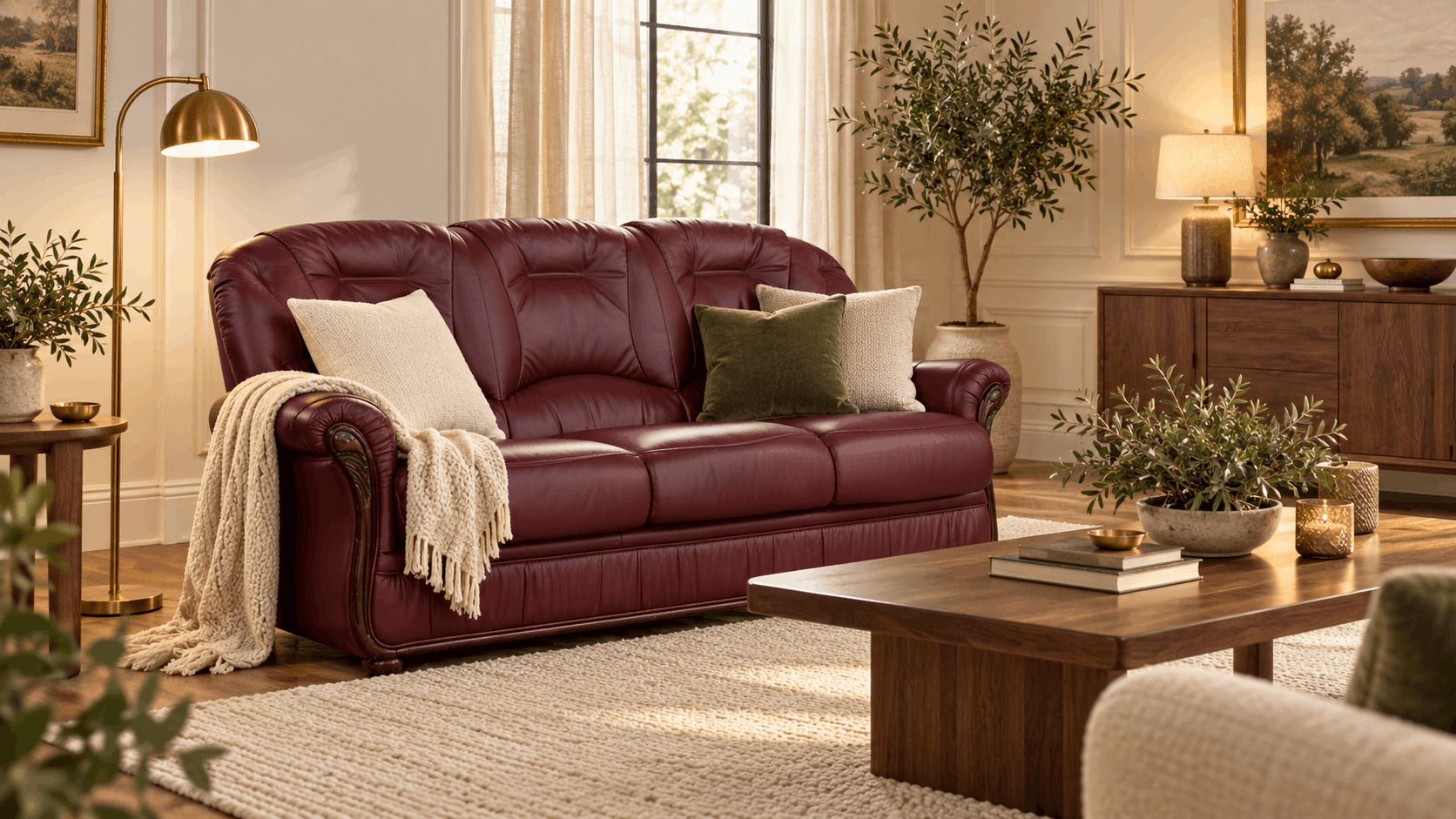
Wood is one of the easiest materials to use with burgundy.
Light oak makes the room feel fresher, while walnut and dark wood strengthen a more classic aesthetic.
A simple combination might include:
- burgundy sofa;
- warm white walls;
- walnut coffee table;
- cream rug;
- brass floor lamp.
The Debora 3 Seater Sofa in Genuine Italian Leather is one option if you want a richer leather sofa that can sit comfortably alongside traditional wood finishes.
9. Choose a Rug That Grounds the Sofa
The rug is important because it creates a visual base between a strong-coloured sofa and the floor.
For an understated effect, choose:
- cream;
- oatmeal;
- faded beige;
- warm grey;
- subtle traditional patterns.
For a stronger room, look for a patterned rug that contains a small amount of burgundy alongside navy, olive or tan.
Avoid trying to find a rug that exactly matches the sofa. Too much burgundy can make the room feel themed.
10. Mix Cushion Colours Instead of Matching Them
Matching every cushion to the sofa removes contrast.
Instead, select two or three supporting shades and vary the texture.
For example:
- one cream textured cushion;
- one olive velvet cushion;
- one patterned cushion containing burgundy and beige.
Our guide on How to Arrange Cushions on a Sofa explains how to combine different shapes, sizes and textures without overcrowding the seat.
This is also a useful approach when researching burgundy couch decorating ideas because changing cushions is one of the easiest ways to update the room without replacing major furniture.
11. Layer Throws and Textures
A burgundy sofa already provides strong colour, so texture can often add more than another bold shade.
Try layering:
- wool;
- knitted throws;
- linen;
- boucle;
- velvet;
- natural woven fibres.
A light cream throw over one arm of a leather sofa can soften its appearance. On a velvet settee, a more structured wool throw provides contrast.
Texture also helps a deep-coloured sofa feel comfy and inviting rather than formal.
12. Use Lighting to Bring Out the Colour
Burgundy can change significantly throughout the day.
Cool daylight may make it appear slightly redder or more purple, while warm evening lighting often brings out brown and wine undertones.
Use more than one source of light:
- floor lamp beside the sofa;
- table lamp;
- wall lights;
- warm ambient ceiling lighting.
Brass and antique bronze work particularly well in classic schemes, while black metal suits a more modern design.
Good lighting is also essential for comfort. The sofa should not only look appealing but provide a useful place for reading and relaxing in the evening.
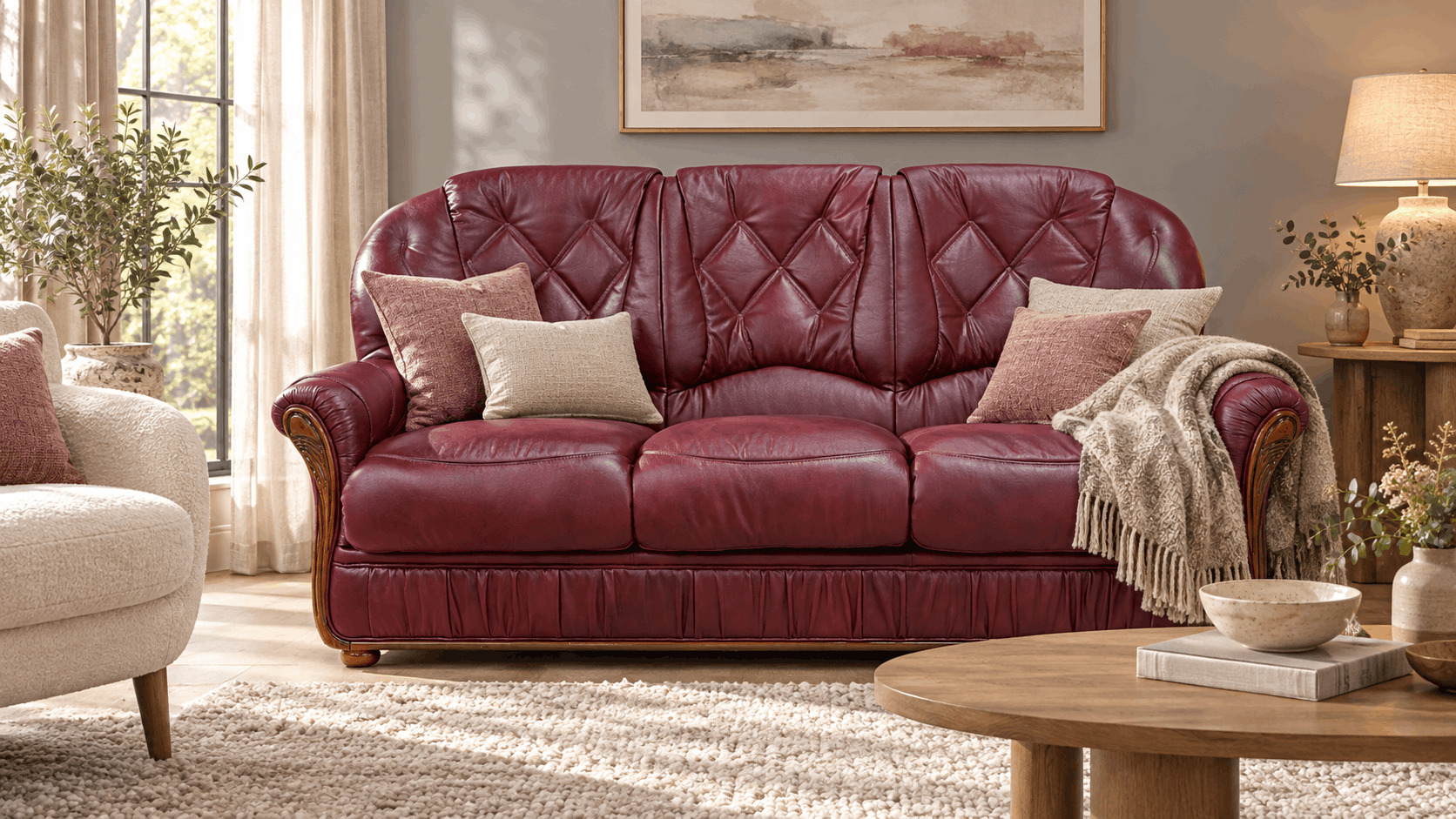
13. Balance Burgundy Leather with Softer Fabrics
A leather burgundy sofa can have considerable visual weight, especially if it has large rolled arms or a traditional shape.
Soften it with:
- fabric curtains;
- wool rug;
- upholstered armchair;
- linen cushions.
The Rome Genuine Italian Leather 3 Seater Sofa can work as the structured centre of the seating area, while softer materials around it prevent the space from feeling heavy.
The contrast between leather and fabric also makes the room more visually interesting than using one material everywhere.
14. Add a Matching Burgundy Chair Carefully
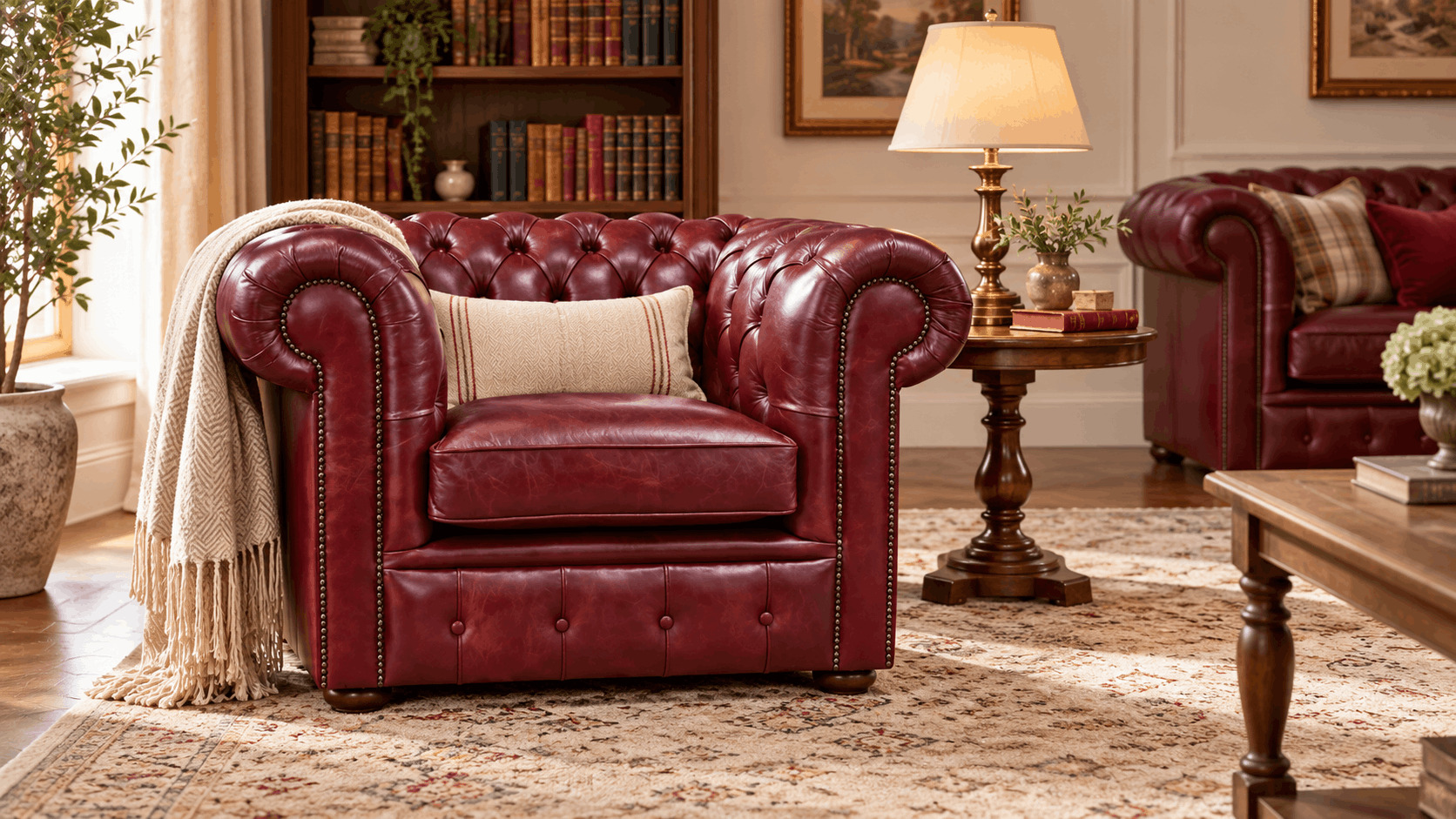
Matching pieces can work, but they need enough breathing space.
A burgundy sofa and burgundy chair look more deliberate if they are separated by a side table, lamp or neutral rug rather than positioned tightly together.
For a traditional reading corner, the Chesterfield Club Chair in Old English Burgundy can extend the colour into another part of the room.
Use neutral walls and accessories around both pieces to prevent the burgundy from dominating.
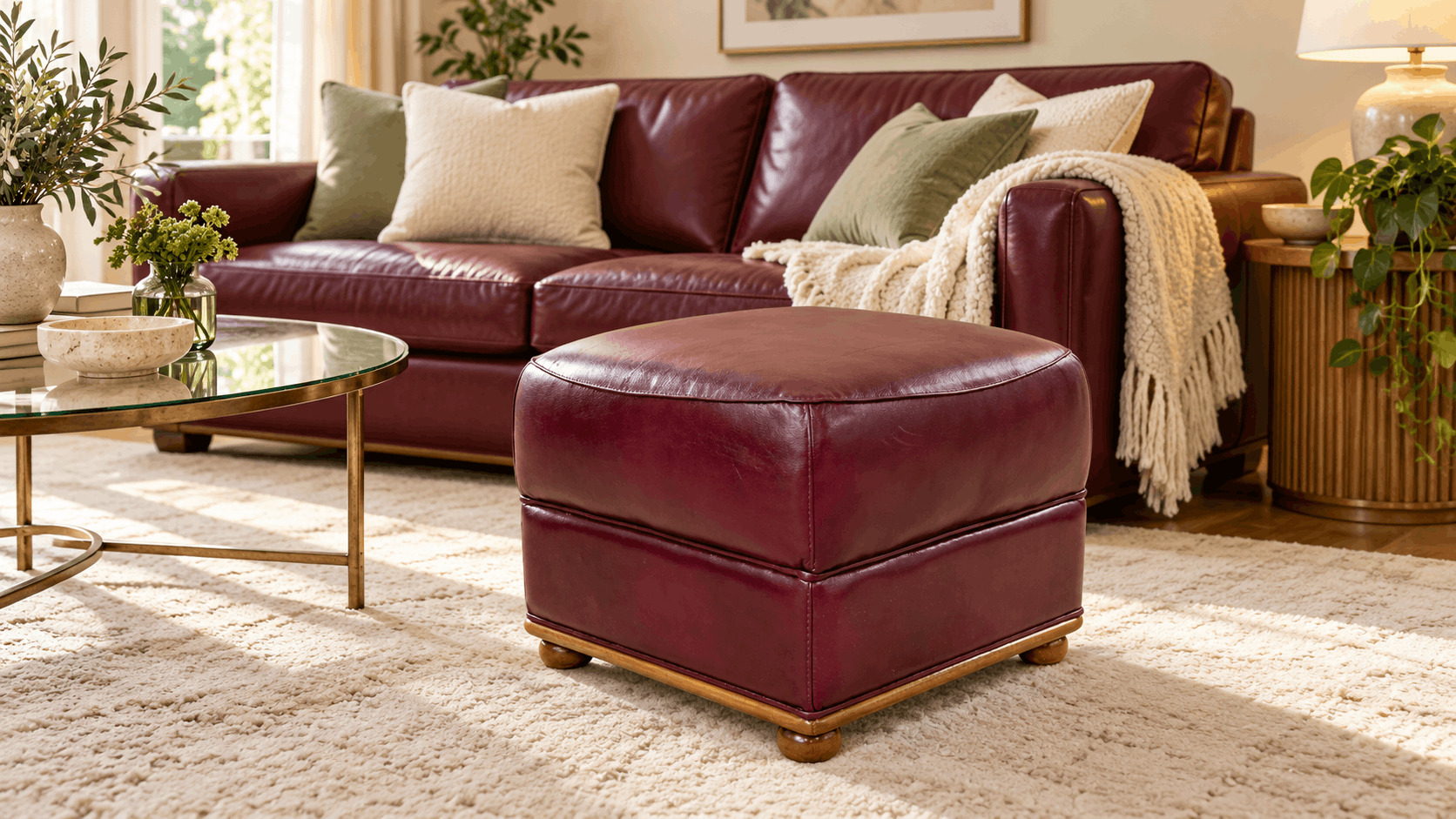
15. Add a Burgundy Footstool Rather Than Another Large Seat
If you want to repeat the sofa colour without buying another large piece, a footstool is a practical option.
A Burgundy Italian Leather Footstool Pouffe Cube can connect different parts of the seating area while also providing somewhere to put your feet or an occasional extra seat.
This works particularly well in a compact living room where another armchair would take up too much floor space.
Keep the coffee table visually lighter so the centre of the room does not become crowded.
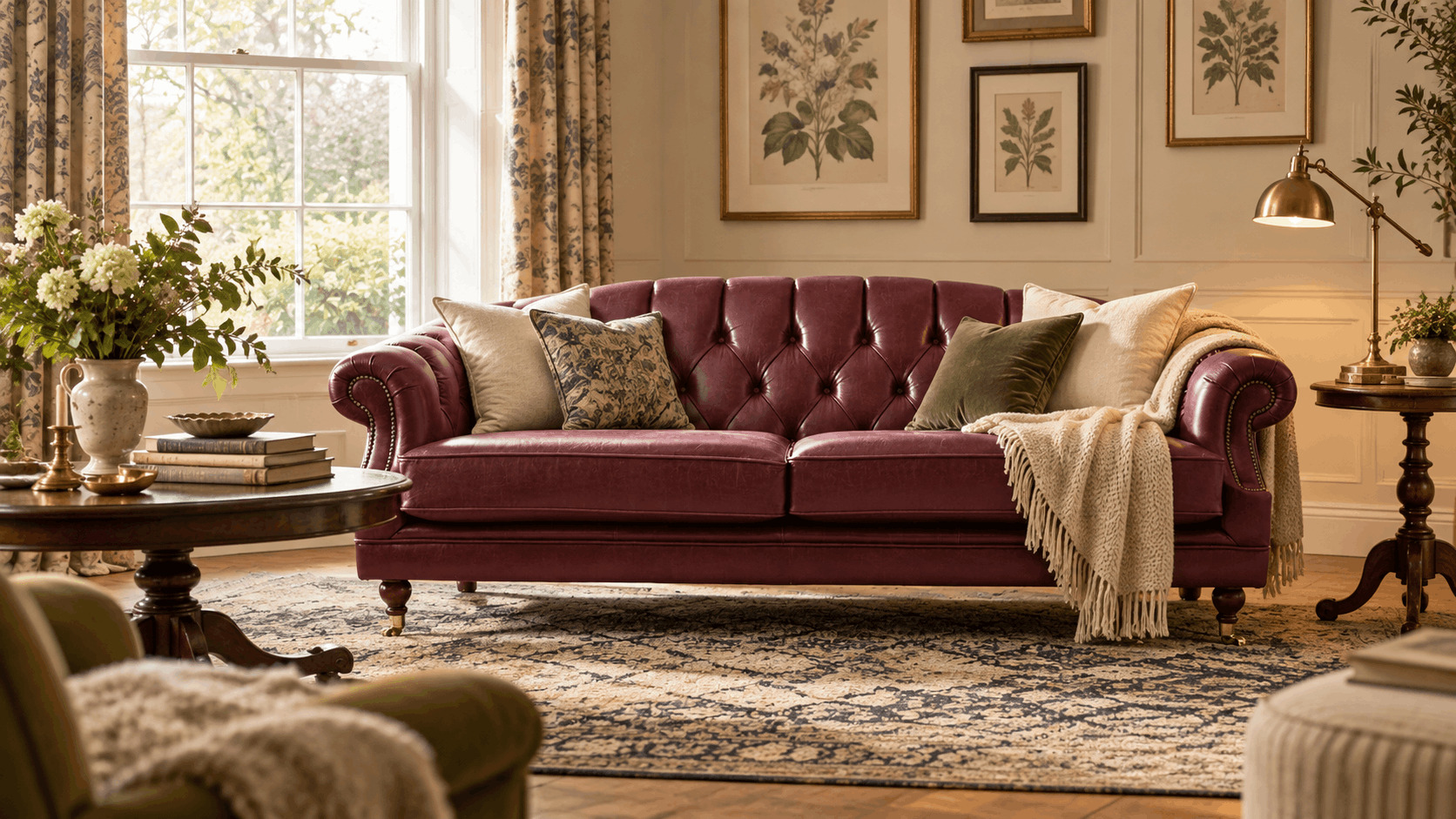
16. Lean into a Traditional Chesterfield Scheme
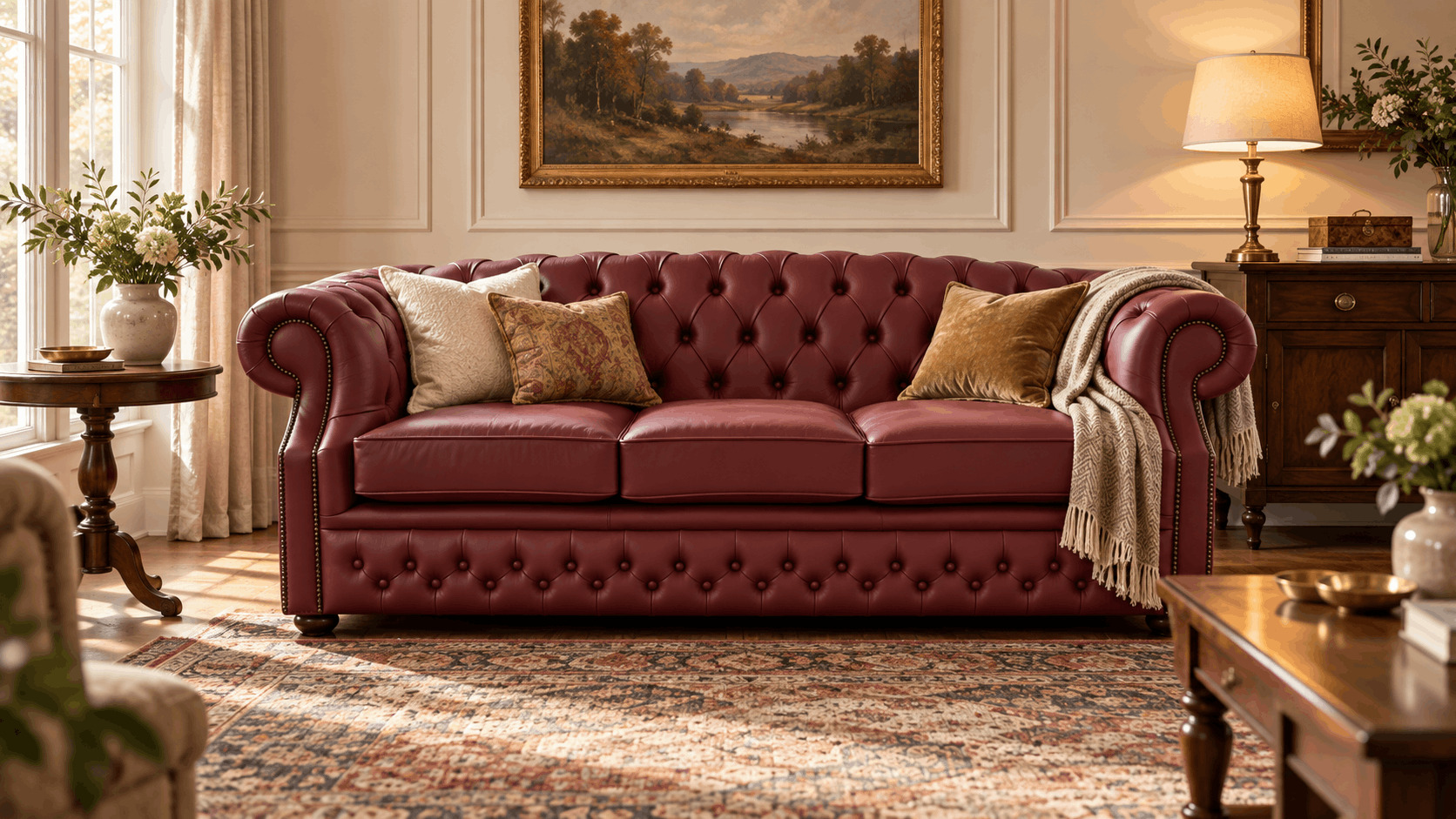
Burgundy naturally suits Chesterfield furniture because the colour emphasises deep buttoning, rolled arms and classic proportions.
For a traditional scheme, combine burgundy with:
- dark or medium wood;
- brass;
- cream walls;
- patterned rugs;
- framed pictures;
- warm lighting.
Models such as the Chesterfield Buckingham 3 Seater Sofa and Victoria 3 Seater Chesterfield Leather Sofa show how a rich leather sofa can become the centre of a room with strong traditional charm.
At Designer Sofas 4U, Chesterfield furniture is an important part of our range, with many pieces handcrafted in the UK and bespoke options available for customers who need a different size or finish.
17. Give Burgundy a More Contemporary Setting
Burgundy does not have to look vintage.
A cleaner environment can make the colour feel much more current.
Try:
- pale plain walls;
- simple oak furniture;
- black-framed artwork;
- one sculptural lamp;
- minimal accessories;
- a low-pile neutral rug.
A straightforward three-seater or corner sofa in burgundy can then become the only traditional colour in the room.
This approach is particularly effective for people who like the warmth of burgundy but prefer a modern interior.
18. Consider the Sofa Shape as Well as the Colour
Colour is only one part of the decision. The shape of the sofa changes how much burgundy appears in the room.
A two-seater has less visual weight than a large corner sofa. A chaise sofa introduces a wider stretch of colour across the floor plan, while a burgundy sofa bed adds another practical function.
For smaller rooms, the Ancona 2 Seater Italian Leather Sofa can make a strong statement without taking up the same space as a large suite.
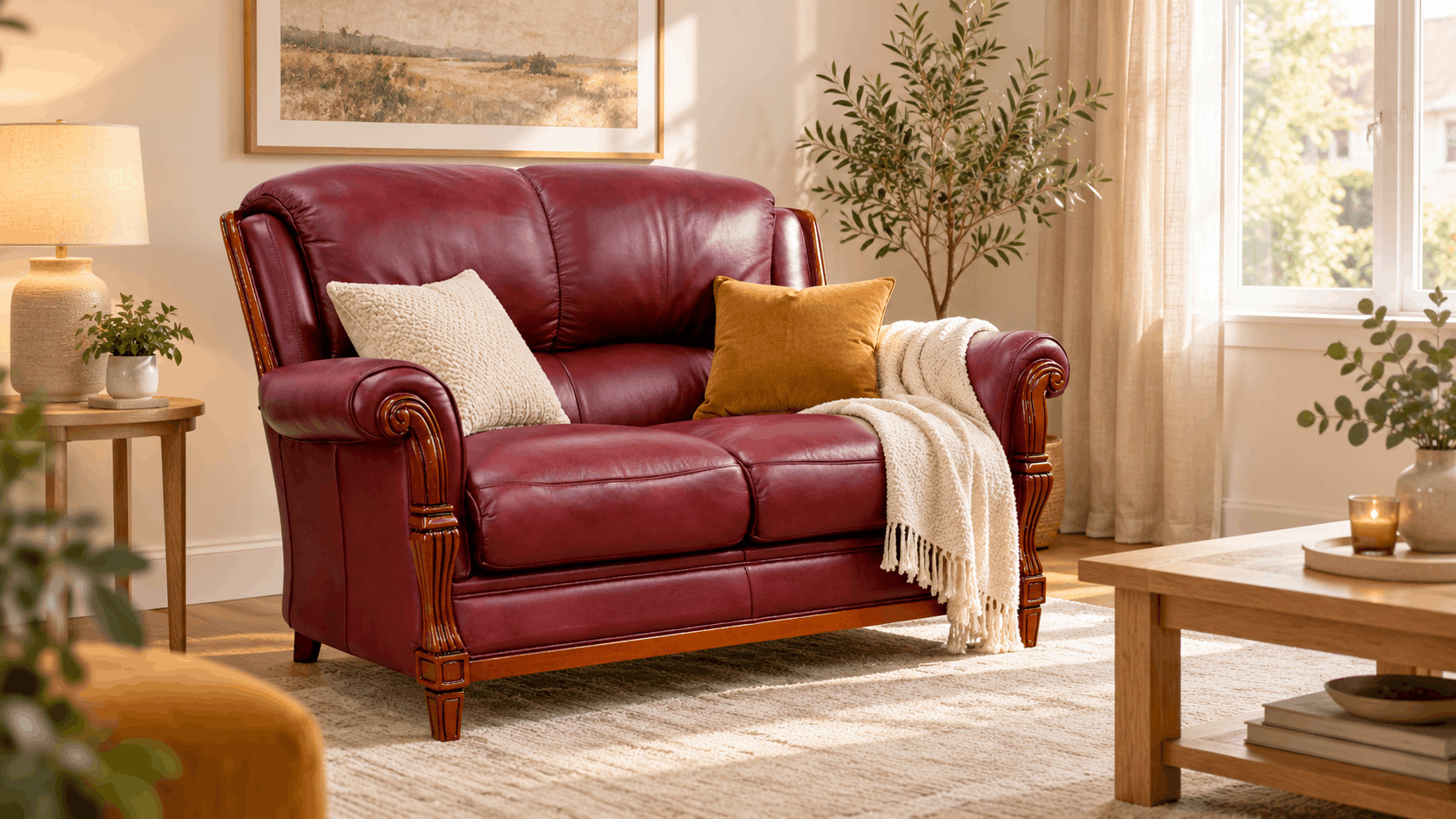
For a more traditional three-seater arrangement, the Chesterfield Pimlico Burgundy 3 Seater Settee offers another way to introduce the colour.
These are useful considerations when comparing maroon sofa living room ideas, because size and silhouette often affect the room just as much as the exact shade.
19. Use Artwork to Connect Burgundy with the Rest of the Room
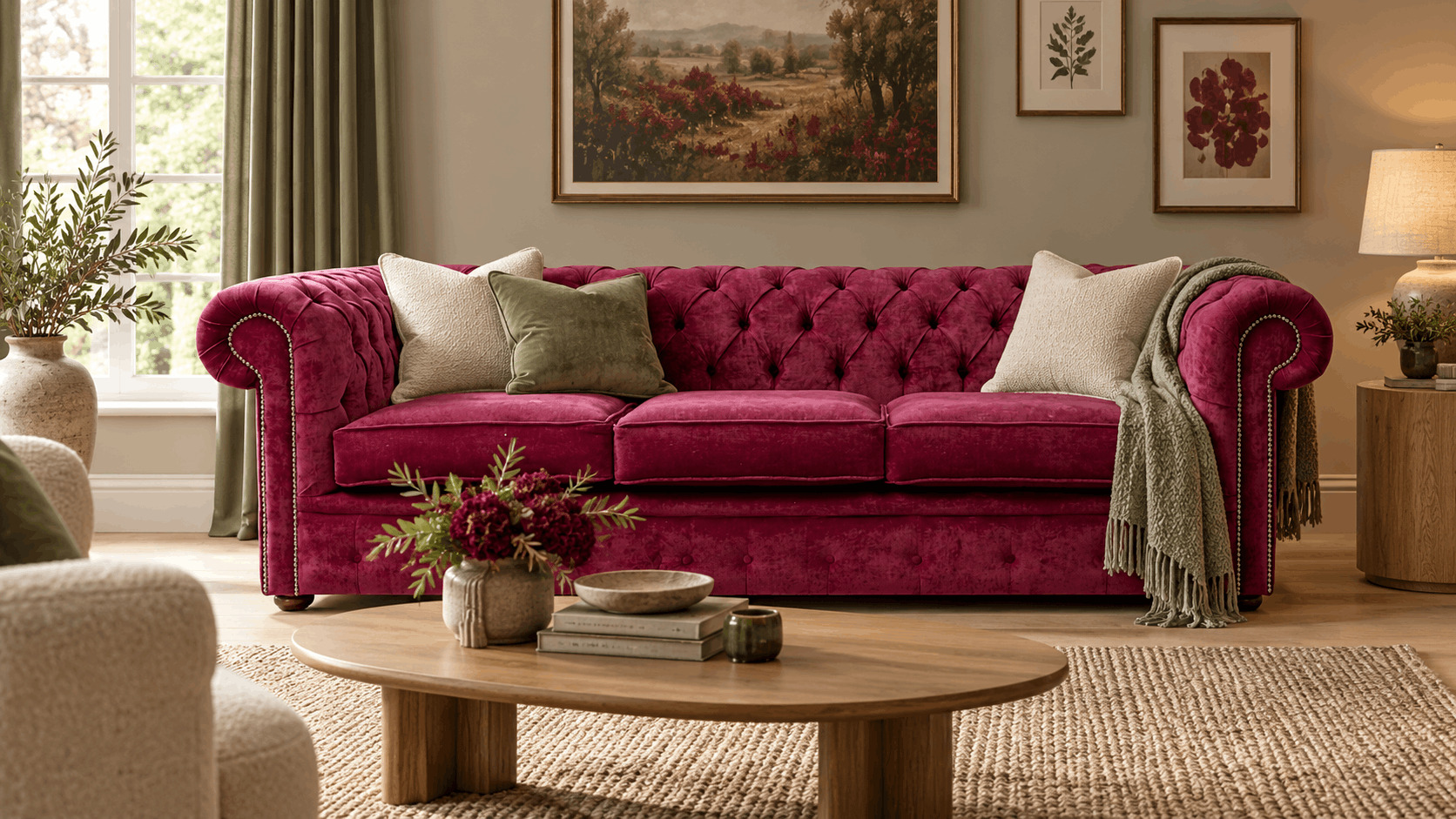
Artwork is a simple way to repeat the sofa colour without introducing more burgundy furniture.
You do not need a painting dominated by red. A small burgundy, rust or wine detail within a larger artwork is enough to create visual continuity.
For example, choose artwork combining:
- cream;
- burgundy;
- olive;
- brown;
- black.
The same principle works with framed photography or abstract pictures.
One larger piece above the sofa often feels more balanced than many small pieces, particularly if the sofa itself has a detailed Chesterfield back.
20. Build the Whole Scheme Around Three Main Colours
One of the easiest ways to avoid overdecorating is to limit the main palette.
Choose:
- the sofa colour — burgundy;
- a base colour — cream, warm white, beige or grey;
- a supporting colour — olive, navy, blush or mustard.
Then use wood, black, brass or another material as a finish rather than treating it as another major colour.
The most effective burgundy couch color schemes usually follow this type of hierarchy. The sofa remains the deepest colour, the base keeps the room calm and the third shade introduces personality.
This also makes future styling easier. You can change smaller accessories without having to redesign the whole room.
If you are collecting living room ideas with burgundy sofa seating for a future redesign, start with this three-colour approach before buying rugs, lamps and cushions.
The same principle can help when researching maroon sofa living room ideas. Maroon may lean slightly browner than some burgundy shades, but a restrained base palette still helps the upholstery look intentional and timeless.
Keep the Room Balanced, Not Over-Matched
A burgundy sofa already has enough presence to carry much of the room's personality. You do not need burgundy curtains, burgundy walls, a matching rug and identical accessories.
Instead, repeat the colour lightly.
A small detail in artwork, a patterned cushion or a footstool is often enough.
Designer Sofas 4U offers burgundy seating across different styles, from Italian leather designs to Chesterfield sofas and chairs, so the right approach depends on the specific model as much as the colour itself. A deeply buttoned leather Chesterfield will naturally suit different decor from a cleaner contemporary sofa.
Think first about the shape, material and way you use the room. Colour should support those decisions rather than replace them.
FAQ
What Colour Carpet Goes With Burgundy Sofa?
Cream, oatmeal, warm beige and soft grey carpets are easy choices because they lighten the floor around a deep sofa. A patterned carpet can also work if it combines burgundy with quieter shades such as taupe, navy or olive. Avoid trying to match the carpet exactly to the upholstery, as some contrast usually gives the room more definition.
What Colour Walls Go With Burgundy Sofa?
Warm white, cream, greige and soft grey are versatile choices for most rooms. For a more dramatic interior, olive, charcoal or navy can work on an accent wall, particularly when the room receives plenty of natural light. Test paint beside the actual sofa or upholstery sample because burgundy can look different under warm and cool lighting.
What Colour Cushions Go With Burgundy Sofa?
Cream, taupe, olive, navy, dusty pink and mustard cushions all work well with burgundy. Choose two or three supporting shades rather than trying to use every colour at once. Mixing velvet, woven fabric and textured cushions can add depth even when the palette itself is simple.
Is Burgundy Better for a Traditional or Modern Living Room?
It works in both. Rolled arms, deep buttoning, dark wood and brass create a traditional or classic look. Cleaner sofa shapes, pale walls, simple furniture and black metal details make burgundy feel much more modern.
Can Burgundy Work in a Small Living Room?
Yes. Use the colour on one main seating piece and keep larger surrounding surfaces relatively light. A burgundy two-seater with pale walls and a neutral rug can create a strong focal point without overwhelming a compact room.
Is Burgundy the Same as Maroon or Oxblood?
They are related but not identical. Burgundy generally has a deep wine-red character and may contain purple undertones. Maroon often appears browner, while oxblood tends to be very deep red-brown. Upholstery material and lighting can make the differences more noticeable.
Should Burgundy Furniture Match Exactly?
Not necessarily. Two burgundy pieces can work together even when the shades are slightly different, particularly if they are separated within the room. Matching everything exactly can make the scheme feel overly coordinated, while subtle variation often creates a more natural result.
How Can I Make a Burgundy Sofa Feel Less Formal?
Pair it with relaxed materials and simple accessories. A light textured rug, casual cushions, natural wood, plants and a soft throw can make even a classic burgundy sofa feel more comfortable and suitable for everyday living.