
.jpg)
How to Restuff Sofa Cushions
Over time, even the highest-quality sofa can start to lose its original comfort and shape. Daily use, body weight, children, pets, and natural wear all take their toll on the cushioning. You may notice sagging seats, flattened back cushions, or decorative pillows that no longer look plump and inviting. In many cases, the solution isn’t replacing the entire sofa, but renewing what’s inside it. As experienced specialists in the design and manufacture of upholstered furniture of different styles and levels of complexity, the team at Designer Sofas 4U has created this guide to help you understand when and how to restuff sofa cushions and restore your furniture to its former comfort and style.
How to Restuff Sofa Cushions and Bring Your Sofa Back to Life
Learning how to restuff sofa cushions can extend the life of your furniture by many years. The process varies depending on the type of cushion and how your sofa is constructed, so it’s important to understand the differences before you begin.
Decorative Cushions vs Seat and Back Cushions
Decorative cushions
Scatter cushions and decorative pillows are the easiest place to start. They are usually filled with loose fibre, feathers, or a fibre-feather mix. If they’ve lost volume but the covers are still in good condition, you can open the seams or zip (if present), remove the old filling, and replace it with fresh filling. This is a simple and affordable way to instantly refresh the look of your sofa.
Seat cushions
Seat cushions take the most pressure and therefore wear out the fastest. These are often filled with foam, wrapped in fibre or feathers for softness. To properly restuff sofa cushions in the seating area, you’ll usually need to replace the foam core entirely. This can dramatically improve comfort and give you back that firm, supportive feel.
Back cushions
Back cushions are typically softer and filled with fibre or feathers. Over time, these fillings compress and shift, creating a slumped appearance. Refill couch cushions at the back by adding new fibre around the existing filling or fully replacing it, depending on the condition.

Can You Restuff Sofa Cushions Yourself?
In many modern sofas, the seat and back cushions come with zipped covers. If your model allows access, you may be able to top up or replace the internal filling yourself. This gives you full control over firmness and comfort, and can be a cost-effective solution for minor flattening.
However, not all sofas are designed for DIY restuffing. Some cushions are fully sealed and stitched closed, making it difficult to access the filling without specialist tools and experience. In these cases, or if your sofa has significant sagging, it’s best to seek professional help.
If you’re unsure whether your sofa can be restuffed at home, you’re always welcome to contact Designer Sofas 4U. We can help restore the shape of your sofa, correct sagging or flattening, and advise on the best solution for your specific model. We work with a wide range of furniture styles and brands – it doesn’t matter whether your sofa was purchased from us or elsewhere. Simply give us a call or send us an email with clear photographs and measurements, and we’ll provide accurate, tailored advice.
Choosing the Right Filling for Your Cushions
The type of filling you choose will greatly affect comfort, support, and durability.
- High-density foam – Ideal for seat cushions where support is essential. It holds its shape well and offers long-lasting comfort.
- Polyester fibre – A popular choice for back and scatter cushions. It’s soft, lightweight, and easy to plump.
- Feather or feather-fibre mix – Luxuriously soft but requires regular plumping to maintain its look.
- Memory foam – Offers personalised support but is usually combined with other materials for the best result.
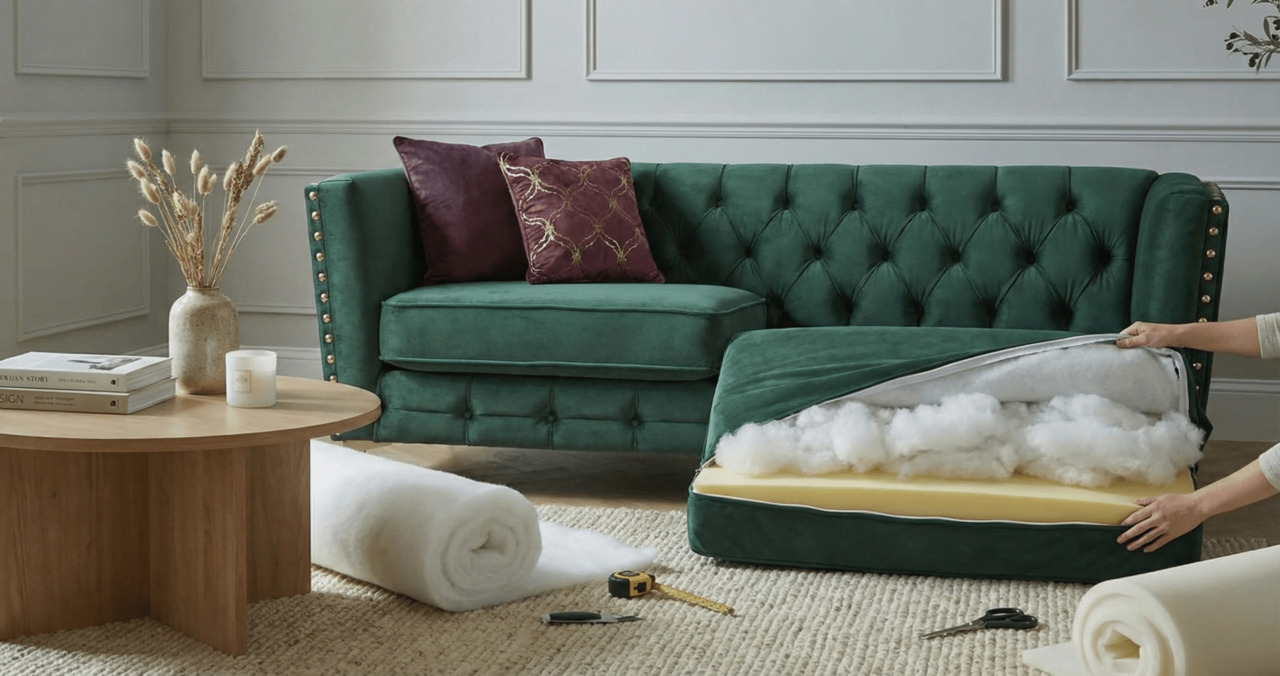
Each filling type serves a different purpose, so it’s often best to mirror the original construction of your sofa or upgrade it based on your comfort preferences.
Signs It’s Time to Refill or Replace Cushion Filling
You don’t need to wait until your sofa feels completely uncomfortable. Early signs that indicate it’s time to refill couch cushions include:
- Visible sagging or dips in seat cushions
- Cushions that no longer bounce back after sitting
- Uneven support across different seating areas
Addressing these issues early can prevent further internal damage to your sofa’s frame and suspension.
Professional Restuffing vs Sofa Replacement
Many homeowners assume that once cushions have flattened, the entire sofa must be replaced. In reality, professional restuffing is often far more economical and environmentally friendly. By renewing the cushioning, you keep your high-quality frame and upholstery while enjoying comfort that feels like new.
At Designer Sofas 4U, we regularly help customers restore beloved sofas that still have strong frames and beautiful coverings but simply need internal renewal.

Conclusion
Restuffing your sofa cushions is one of the best ways to restore comfort, improve appearance, and extend the life of your furniture while maintaining its original character. Whether you’re refreshing decorative cushions, rebuilding seat support, or renewing back pillows on your settee, the right methods make all the difference. If your sofa allows for DIY access, you may be able to handle minor topping-up yourself as a simple fix for early signs of slouching. For sealed cushions or more serious sagging, professional expertise ensures the best long-term result. Our team at Designer Sofas 4U is always here to help, no matter where your sofa was originally purchased. With the right care, your sofa can continue to look and feel exceptional for many years to come.
And if, after all, you decide that it’s time to replace your sofa or add an armchair, footstool, or another piece of furniture for extra comfort and style, we invite you to explore our sofa collections and furniture ranges. With us, you’ll find sofas in a wide range of styles, sizes, and comfort levels – from compact two-seaters to spacious corner sofas and the iconic Chesterfield designs, available in leather, fabric, and velvet upholstery options to suit every interior.
FAQ
What to use to restuff couch cushions?
For seat cushions, high-density foam is usually the best option for long-term support, especially if the cushions feel sunken or uneven. Back and decorative cushions are typically refilled with polyester fibre, feathers, or a fibre-feather mix, depending on the desired softness and maintenance level. These simple tips help achieve the best balance between comfort and durability.
How much does it cost to restuff sofa cushions?
The cost depends on the size of the cushions, the type of filling, and whether the repair is done professionally. Simple DIY fibre refilling can be very affordable, while full foam replacements carried out by specialists will cost more but offer a long-lasting solution. For more precise information tailored specifically to your furniture, you can contact our team by sending clear photos and measurements.
How often should sofa cushions be restuffed?
On average, seat cushions benefit from restuffing or foam replacement every 5–8 years, depending on usage. Back and scatter cushions may need topping up more frequently, particularly if you notice early signs of worn-out filling or sagging in the middle where the sofa is used most.
Is it better to restuff or replace a sofa?
If the frame and upholstery are still in good condition, restuffing is usually the smarter and more economical choice. It refreshes comfort and appearance without the expense of buying a brand-new sofa and requires far fewer steps than a full replacement. However, if you do decide to invest in new furniture, we warmly invite you to explore our collections online at designersofas4u.co.uk, where you’ll find a wide range of sofas and complementary pieces for every interior.