
.png)
Long Living Room Layout Ideas: Best Ways to Balance a Narrow Space
The best long living room layout ideas do not try to make a rectangular room behave like a square one. Instead, they use its length deliberately. A long room can give you space for generous seating, a TV area, a reading corner or even two separate zones, but only if the furniture follows the proportions of the room rather than fighting them.
At Designer Sofas 4U, we have worked with sofas, chairs and different room proportions for many years. One thing quickly becomes clear: choosing good furniture is only half the job. Where you put it affects how comfortable the room feels, whether people can move around easily and whether the overall interior looks balanced.
Good long living room ideas therefore begin with function, not decoration. Before choosing a new couch, coffee table or rug, decide how the room actually needs to work.
This guide covers that process from the beginning: planning walkways, deciding where the TV should go, selecting the right sofa size, creating zones, choosing chairs and then bringing everything together with lighting, colour and decor.
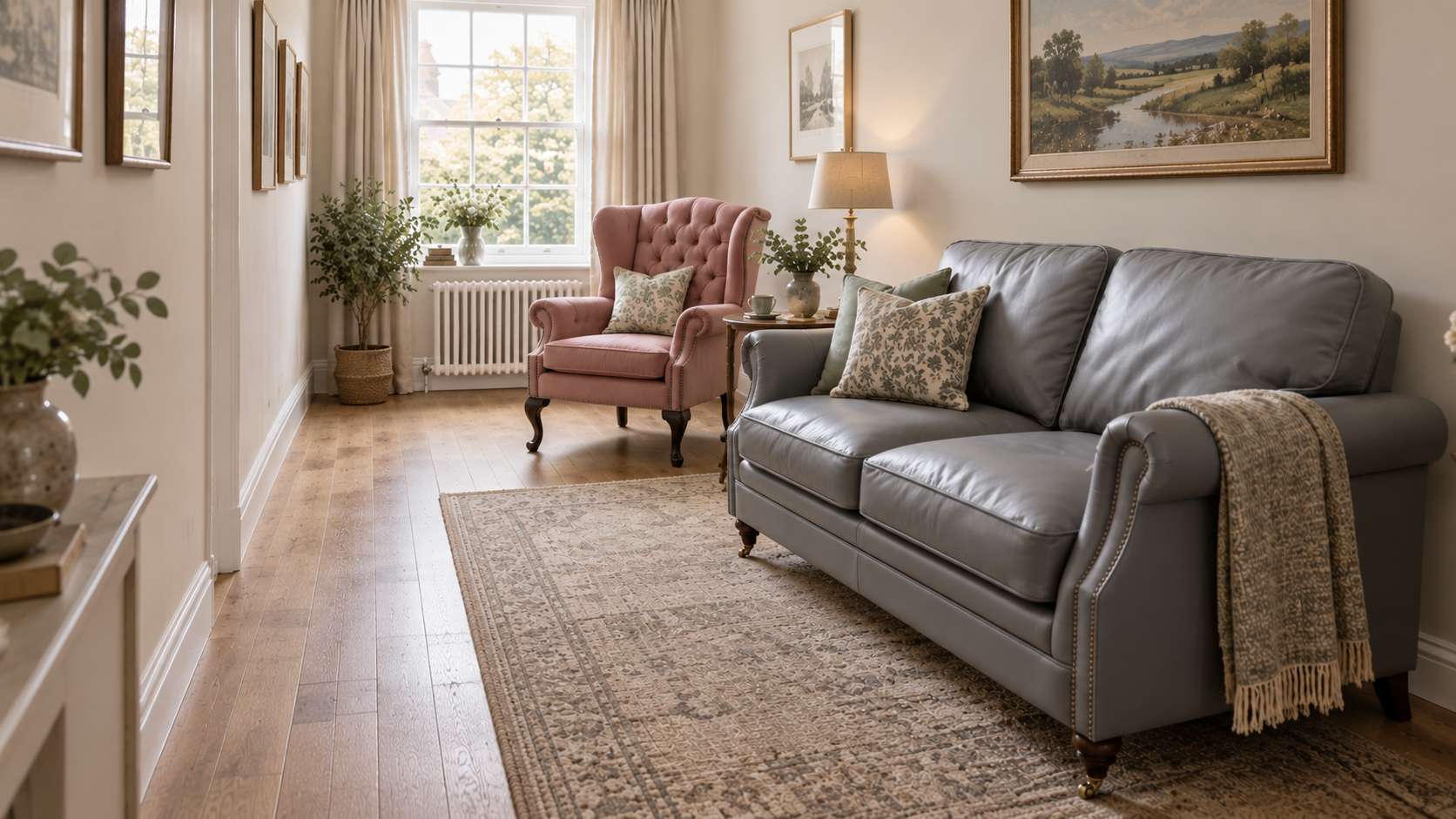
Long Living Room Layout Ideas: Start with the Room's Job
Before moving furniture, decide what the room needs to do every day.
A living room used mainly for television needs a different arrangement from one designed for conversation. A family room may also need open floor space for children, while a larger reception room might benefit from a separate reading area.
Ask yourself these questions first:
- How many people normally need a seat?
- Is watching TV a priority?
- Do you regularly entertain guests?
- Do you need a reading or conversation area?
- Does the room also act as a route to another part of the house?
- Do you need occasional sleeping space?
- Which existing pieces of furniture must stay?
- Is there a focal point such as a window, fireplace or artwork?
Then look at the fixed features.
Mark the position of:
- doors and the space they need to open;
- windows;
- radiators;
- plug sockets;
- built-in shelving;
- fireplaces;
- alcoves;
- access to adjoining rooms.
Do this before deciding where the sofa belongs. It is much easier to plan around these restrictions on paper than to discover after delivery that a sofa blocks a door or leaves an awkward walkway.
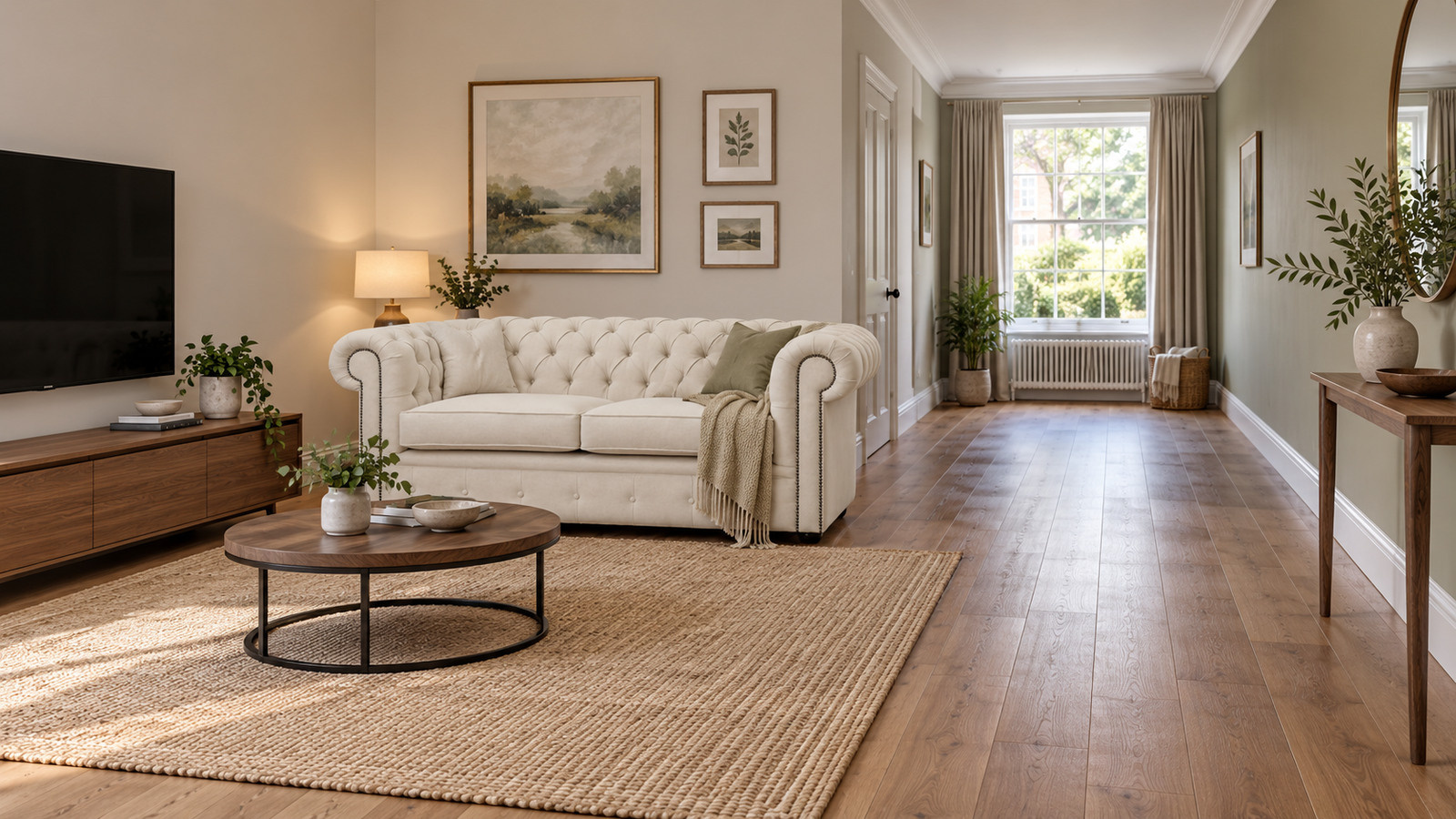
Measure the Whole Furniture Group, Not Just the Sofa
One of the most common mistakes is measuring an empty wall and assuming that anything shorter than the wall will fit.
The sofa is only one part of the arrangement.
You also need room for:
- the depth of the sofa;
- a coffee table or footstool;
- the gap between the sofa and table;
- chairs opposite or beside it;
- the main route through the room.
A long narrow living room layout can fail even when every individual piece technically fits.
Try this before ordering
Use masking tape to mark furniture directly on the floor.
Outline:
- the sofa;
- chairs;
- coffee table;
- rug;
- TV unit;
- any console or side tables.
Then walk through the room normally.
Can two people pass each other? Can you sit down without hitting the table? Can a door open fully? Can you reach the window?
This simple exercise gives you a much more realistic picture than dimensions on a product page alone.
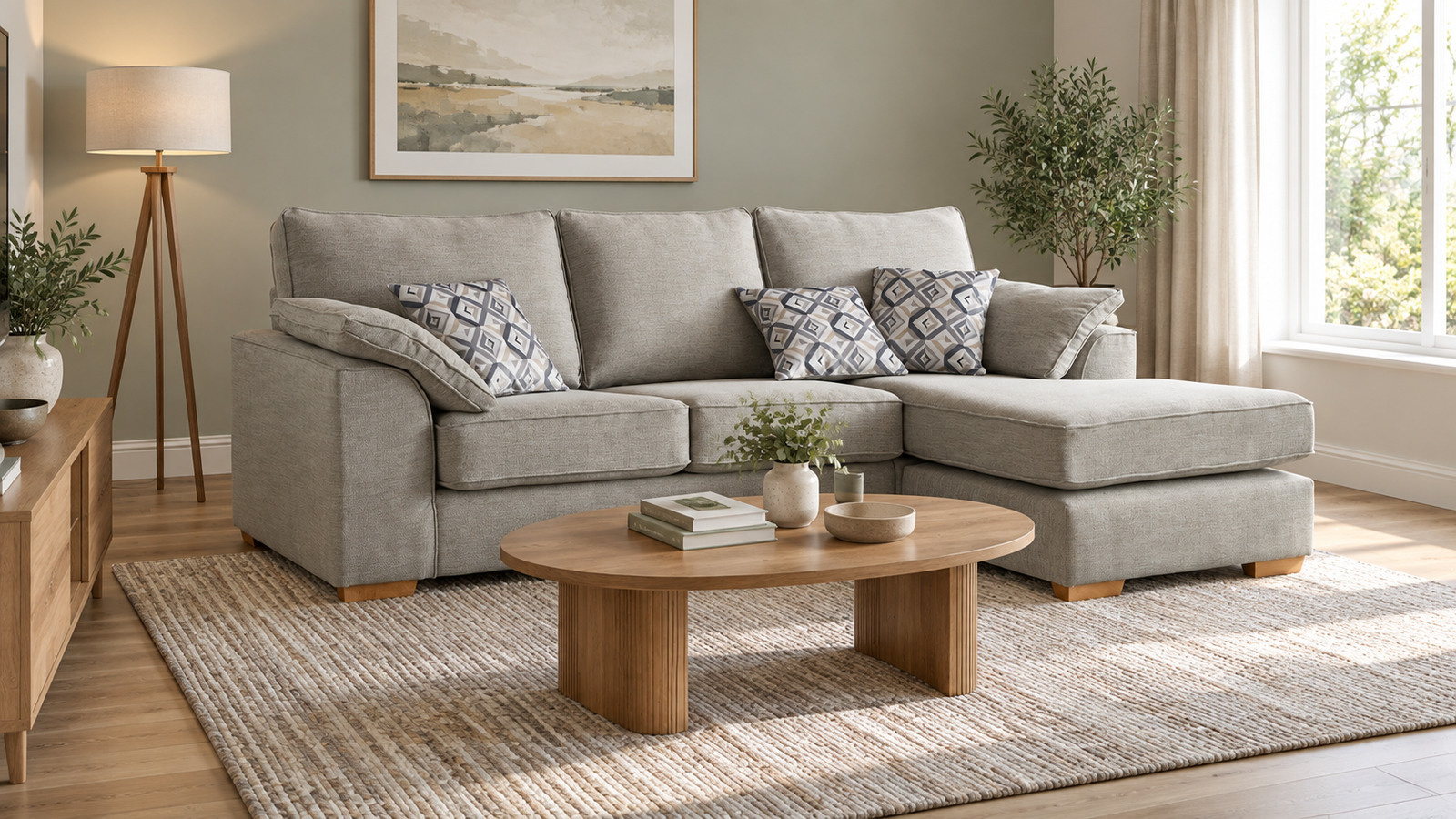
Rectangular Long Narrow Living Room Layout: Build One Strong Seating Zone
A rectangular long narrow living room layout often works best when the furniture is gathered into one clear group rather than scattered from one end of the room to the other.
This approach is especially useful when the room is long but not large enough to justify two separate zones.
A simple layout recipe
Try:
- one main sofa against or close to a long wall;
- one or two chairs opposite or at an angle;
- a coffee table in the centre;
- one large rug connecting the seating;
- a TV or focal point opposite the sofa.
The rug is important because it visually tells you where the seating area begins and ends.
Avoid placing a small rug only under the coffee table. Ideally, the front legs of the sofa and chairs should sit on the rug.
For tighter rooms, consider a 2 seater sofa or a balanced 3 seater sofa rather than choosing the largest sofa the wall can accommodate.
A pair of arm chairs can then provide extra seating without creating the solid visual block of another full sofa.
For a more traditional look, Chesterfield chairs can work particularly well alongside a sofa.
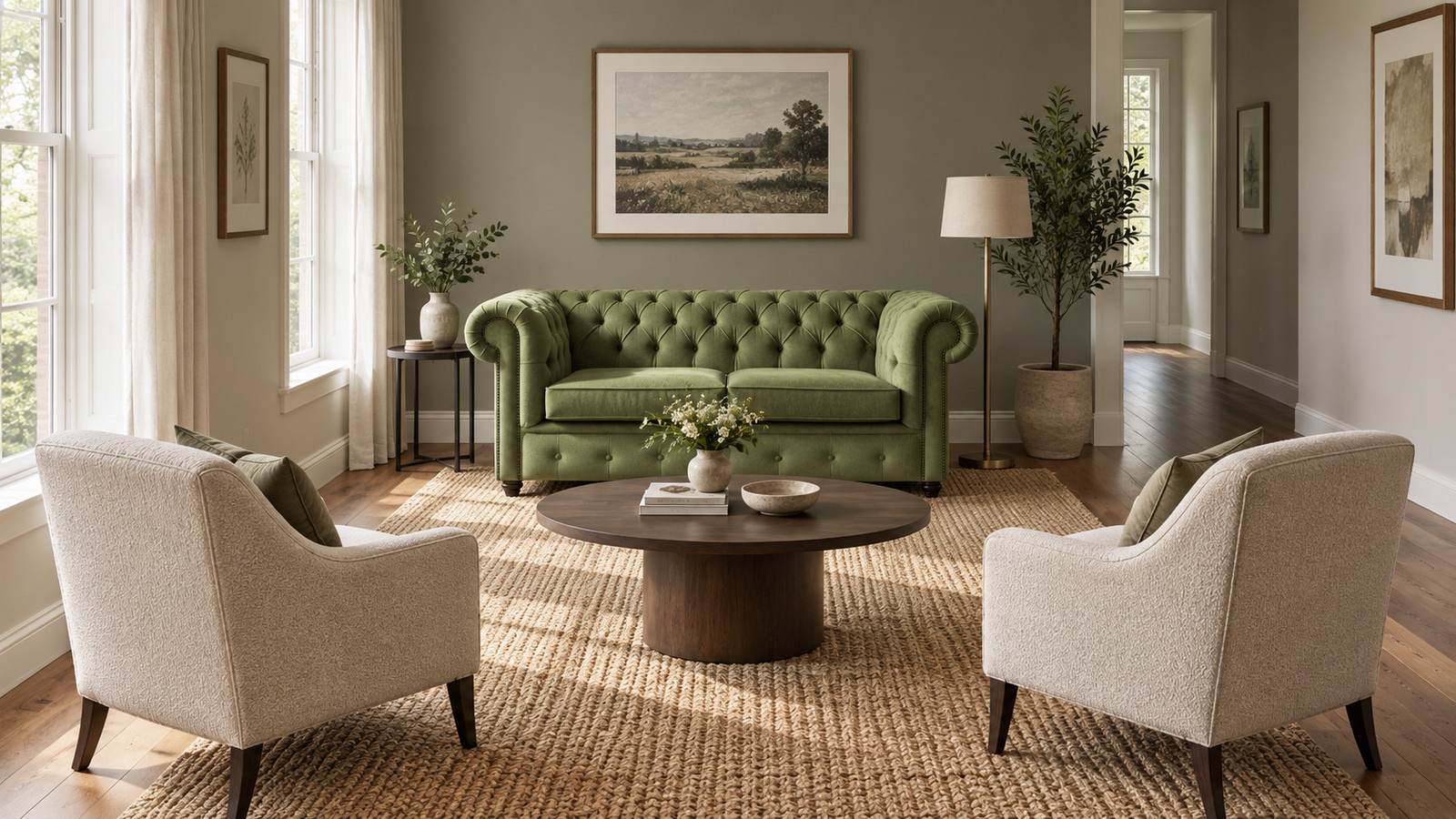
Rectangular Long Narrow Living Room Layout: Create Two Useful Areas
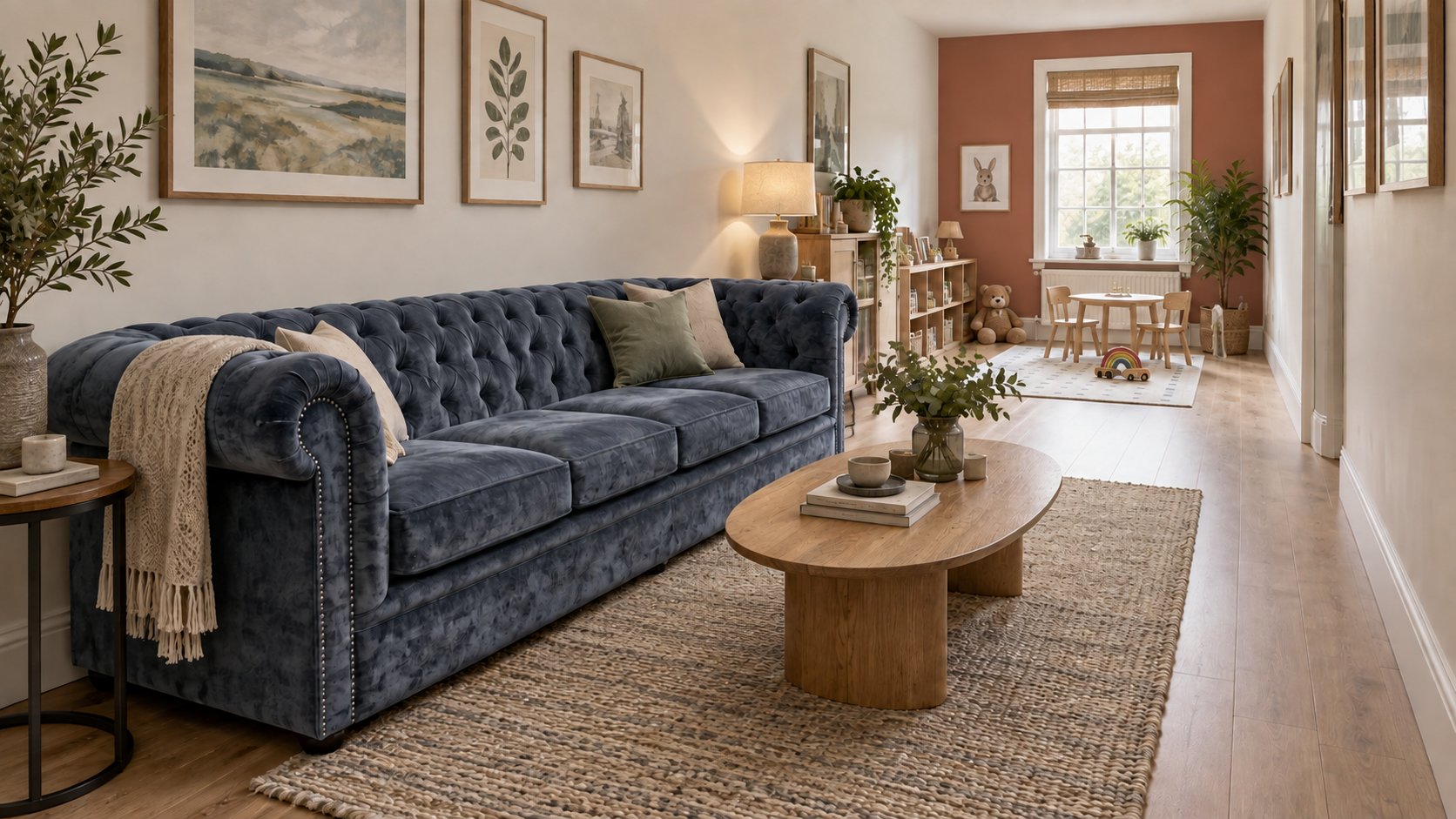
A second rectangular long narrow living room layout is to divide the length into two zones.
This works best when the room is long enough that a single furniture group leaves a large unused section.
Instead of filling that empty area with random furniture, give it a purpose.
Zone combinations that make sense
TV area + reading corner
Use a sofa and TV at one end, then a comfortable chair, lamp and side table near a window.
Main seating + conversation area
Create the principal sofa arrangement at one end and place two chairs with a small table at the other.
Living area + workspace
Keep the desk away from the main seating where possible and use lighting or a rug to separate work from relaxation.
Family seating + open floor area
Useful if children need space to play without removing furniture every day.
You do not need a screen or physical partition between the zones.
Instead, separate them with:
- rugs;
- lighting;
- the back of a sofa;
- a console table;
- changes in furniture orientation.
Repeat one or two colours or materials in both areas so the room still feels connected.
Narrow Living Room Layout: Protect the Main Walkway
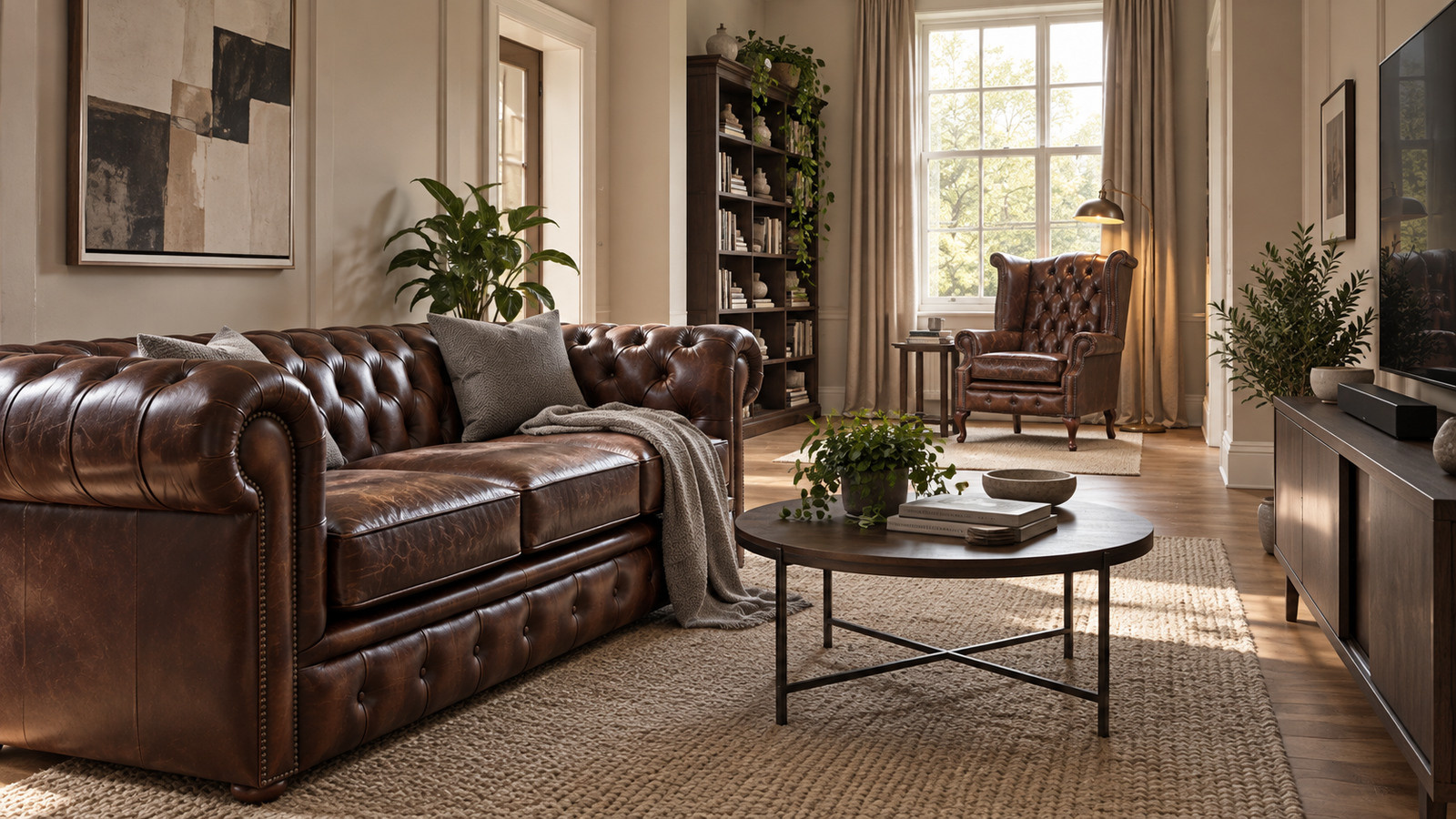
A narrow living room layout should be planned around movement before anything decorative is added.
If someone has to squeeze behind a chair, step around a footstool or walk between the sofa and TV every time they cross the room, the arrangement will become frustrating very quickly.
Keep these areas clear
- the route between doors;
- access to windows;
- paths to adjoining rooms;
- space in front of cupboards;
- the area where dining chairs need to pull out, if the room is open-plan.
Ideally, the main route should run beside the seating area rather than through it.
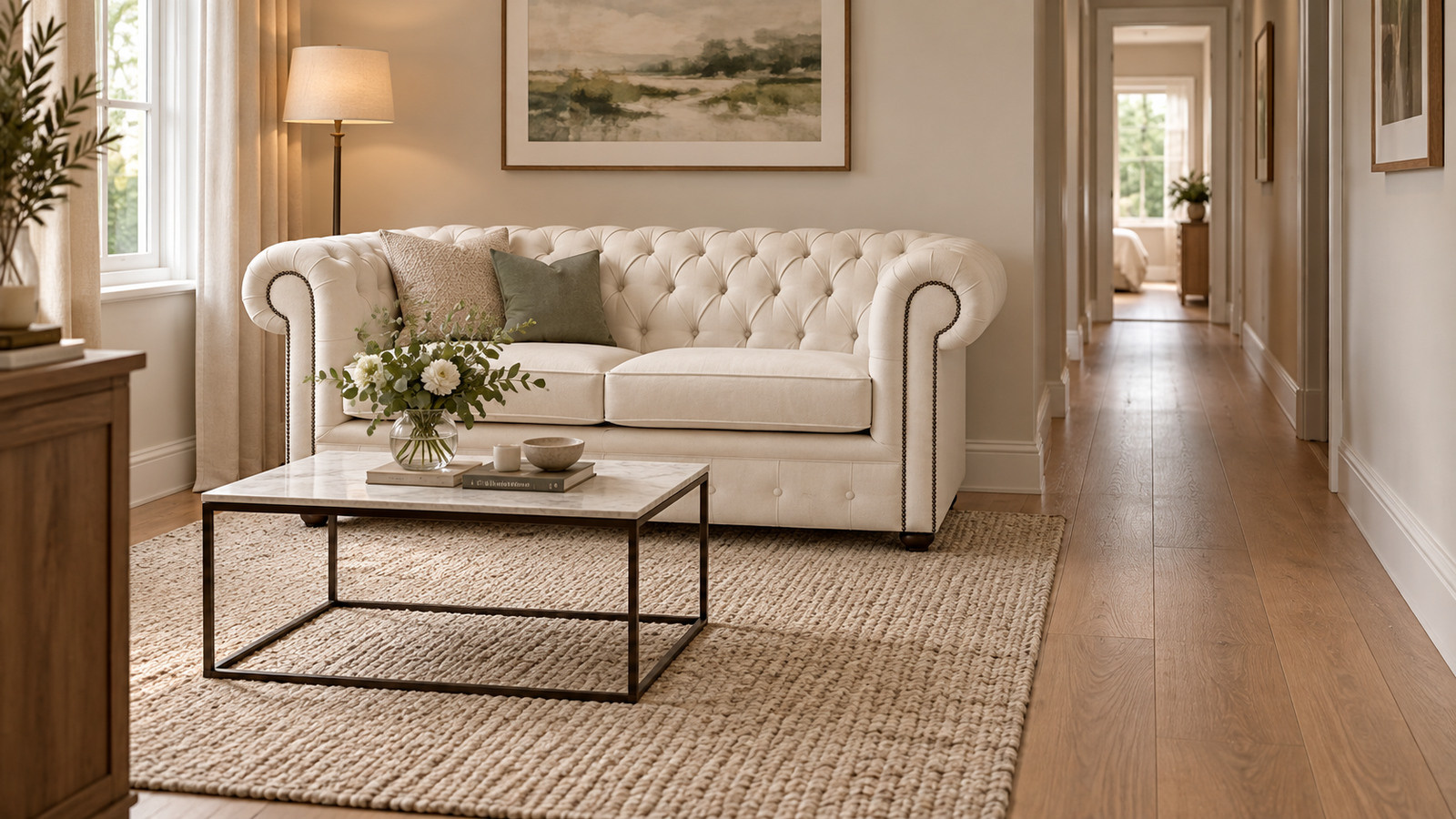
Useful swaps in a tight room
Instead of a large rectangular coffee table, try:
- an oval table;
- a round table;
- nesting tables;
- two small occasional tables;
- a movable footstool.
One of the easiest narrow living room ideas is simply to remove one unnecessary piece of furniture. More furniture does not automatically make a room more useful.
Narrow Living Room Layout: Decide Where the TV Belongs
A narrow living room layout often revolves around television placement, so decide this before finalising the sofa.
There are two common options.
TV on the short wall
This arrangement works well when:
- you want the sofa to face down the length of the room;
- the room is not excessively long;
- the short wall has enough uninterrupted space;
- there is no severe glare from a window.
It can make the TV the clear focal point.
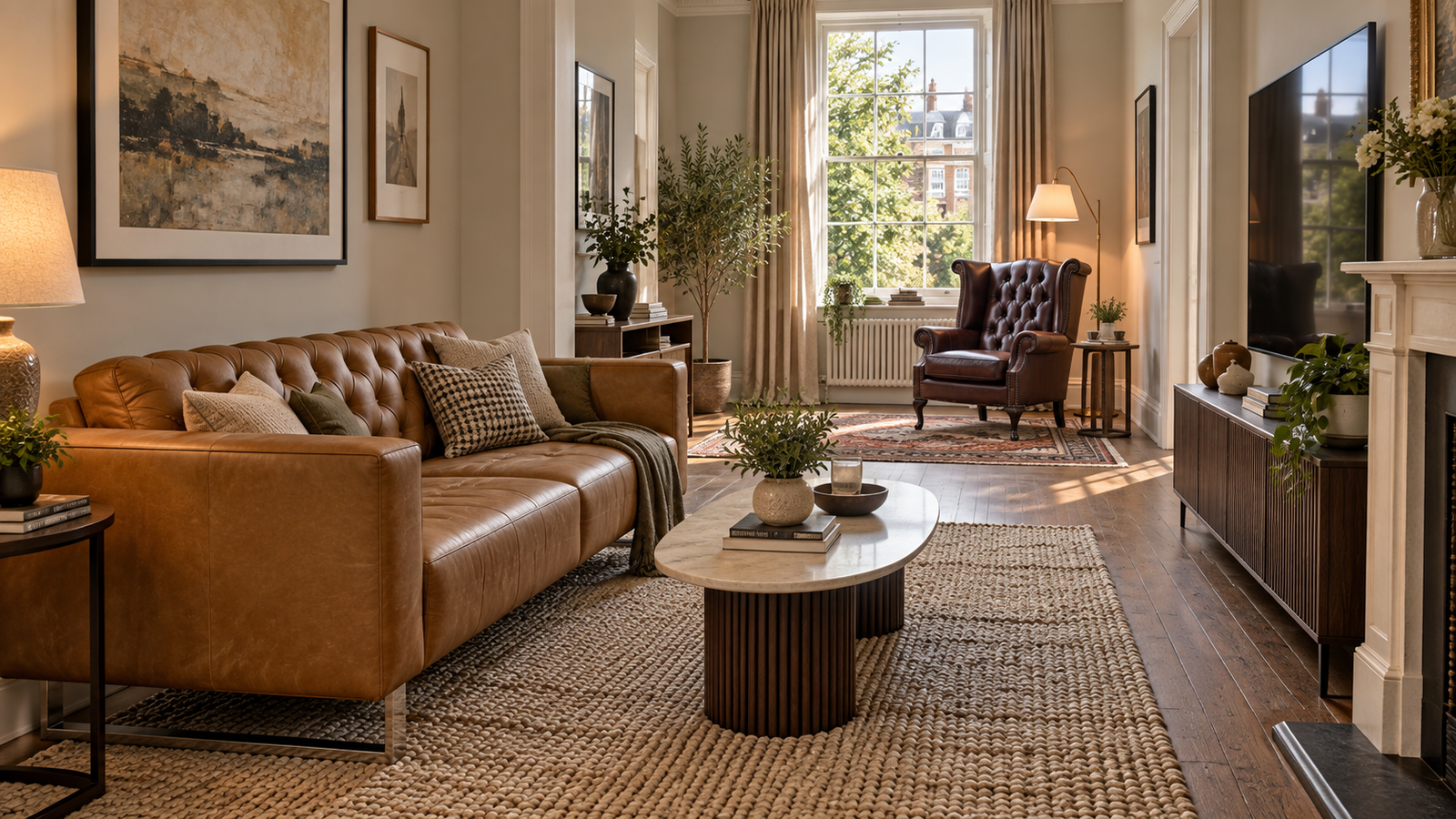
TV on a long wall
This may be better when:
- the room is very long;
- you want a more compact viewing zone;
- the sofa can sit directly opposite;
- you want the remaining length for another purpose.
Do not force the sofa into an uncomfortable position simply because an existing socket happens to be nearby.
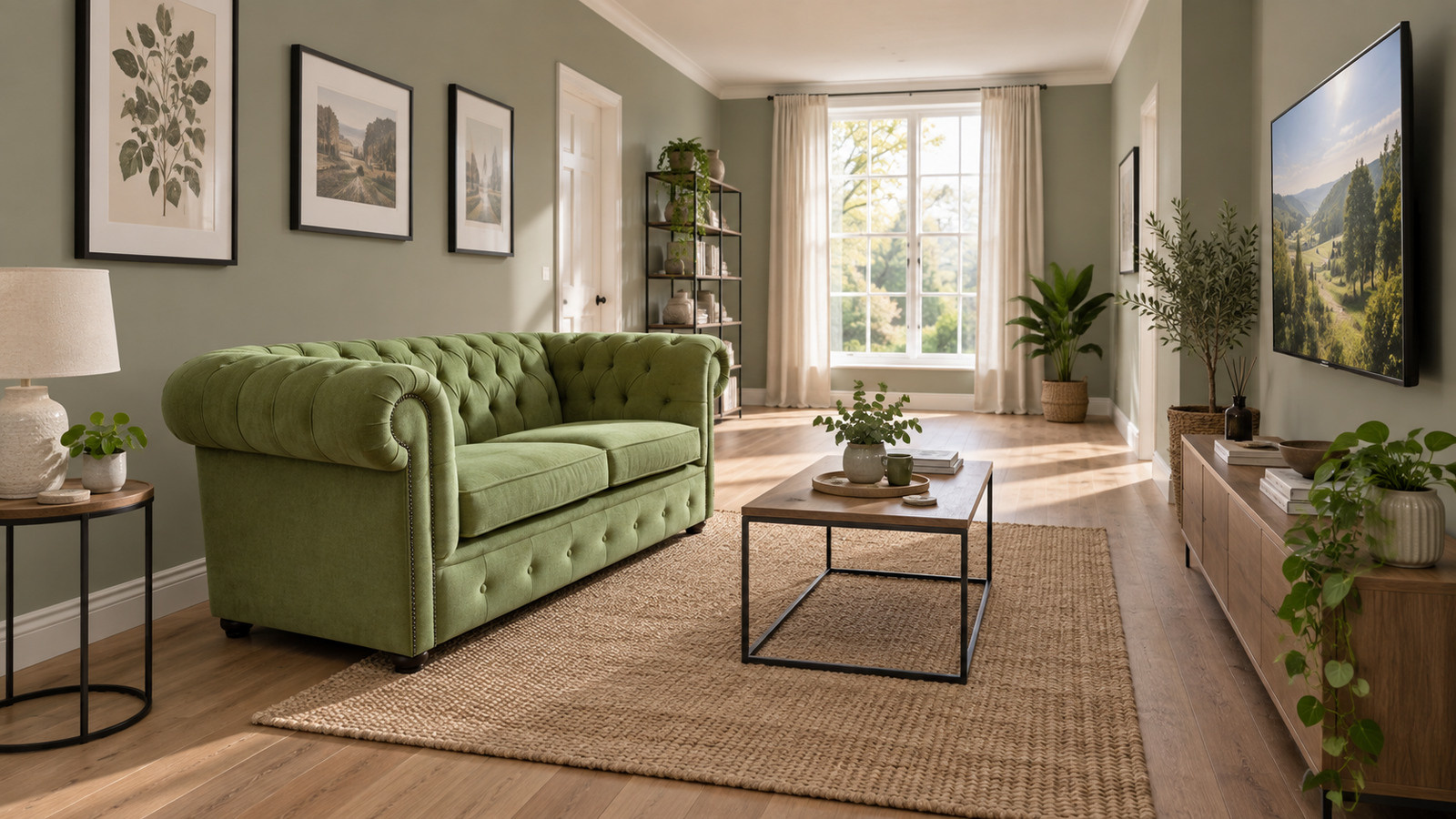
Also check the TV from the actual sitting position. A technically attractive arrangement is not successful if everyone has to turn their head to watch it.
Living Room Layouts for Long Rooms: Six Configurations That Work
There are several practical living room layouts for long rooms, and no single configuration suits every home.
Here are six useful starting points.
1. One Sofa Opposite the TV
This is the simplest option.
Use:
- one sofa;
- TV opposite;
- rug between them;
- slim coffee table;
- optional chair at one end.
It works particularly well in a relatively narrow room because most larger pieces remain parallel to the walls.
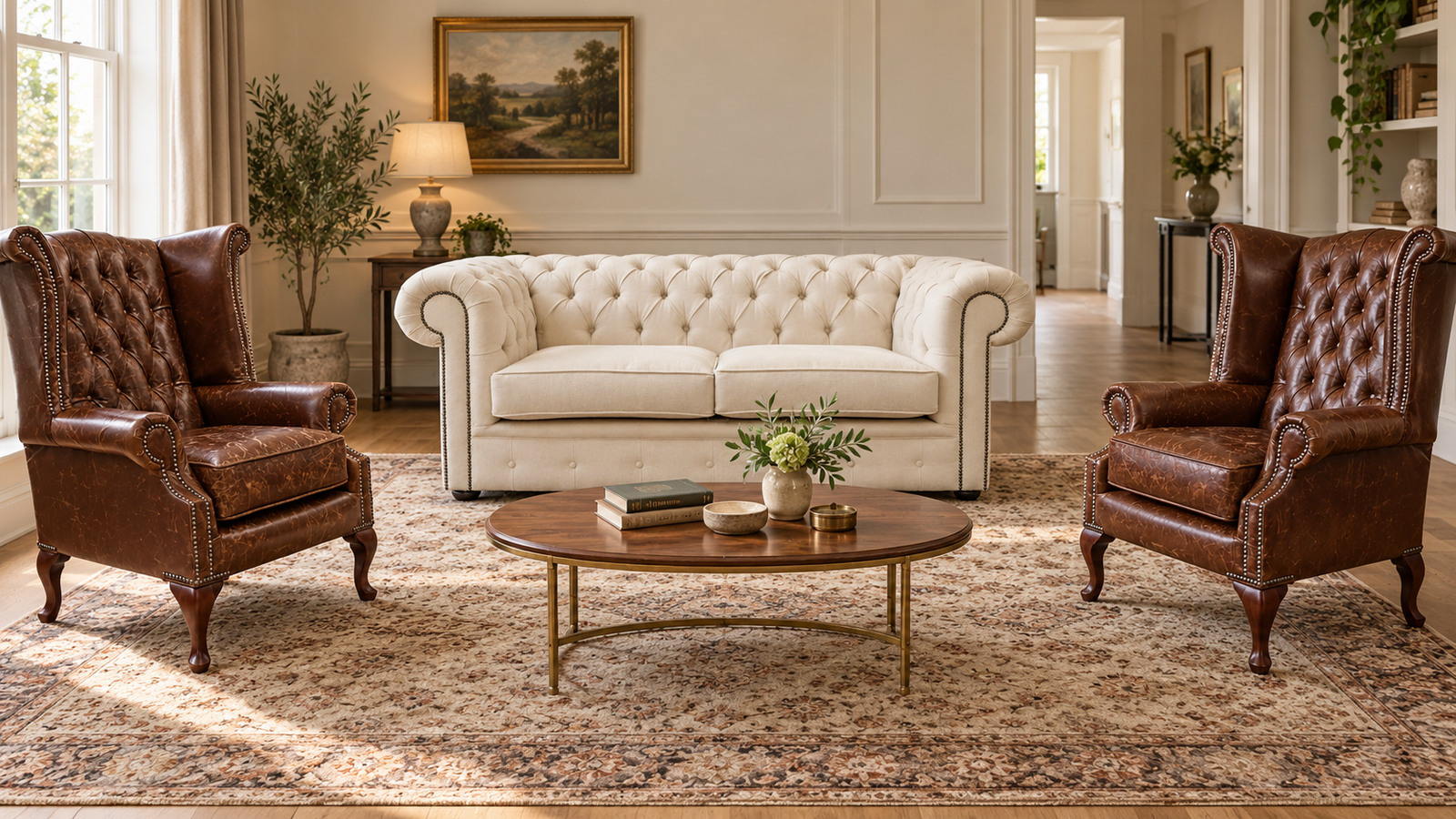
2. Sofa with Two Chairs Opposite
This is better for conversation.
The arrangement might be:
sofa → coffee table → two chairs
The chairs can be slightly angled towards the sofa rather than sitting perfectly straight.
Advantages include:
- better face-to-face conversation;
- easier movement;
- more flexibility than a second sofa;
- the ability to move chairs when entertaining.
A classic chair can also sit next to a more modern sofa if the colours or materials relate to one another.
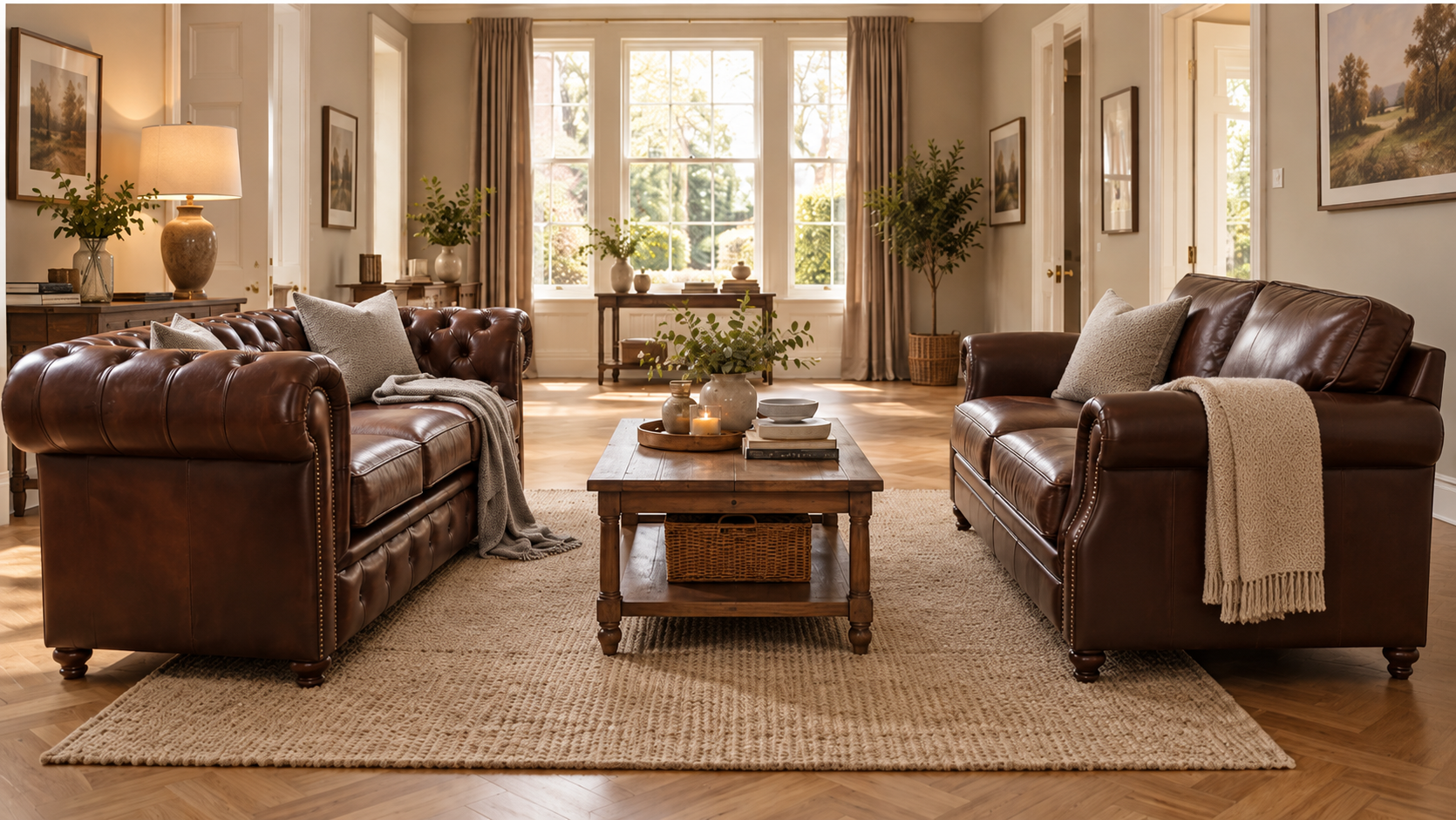
3. Two Sofas Facing One Another
This can look balanced in a wider rectangular room.
It works particularly well when there is a focal point at one short end.
The sofas do not have to match in size.
For example:
- one large sofa for everyday family seating;
- one smaller settee opposite;
- a shared rug;
- central coffee table.
If the room is generous enough, a 4 seater sofa can act as the dominant piece.
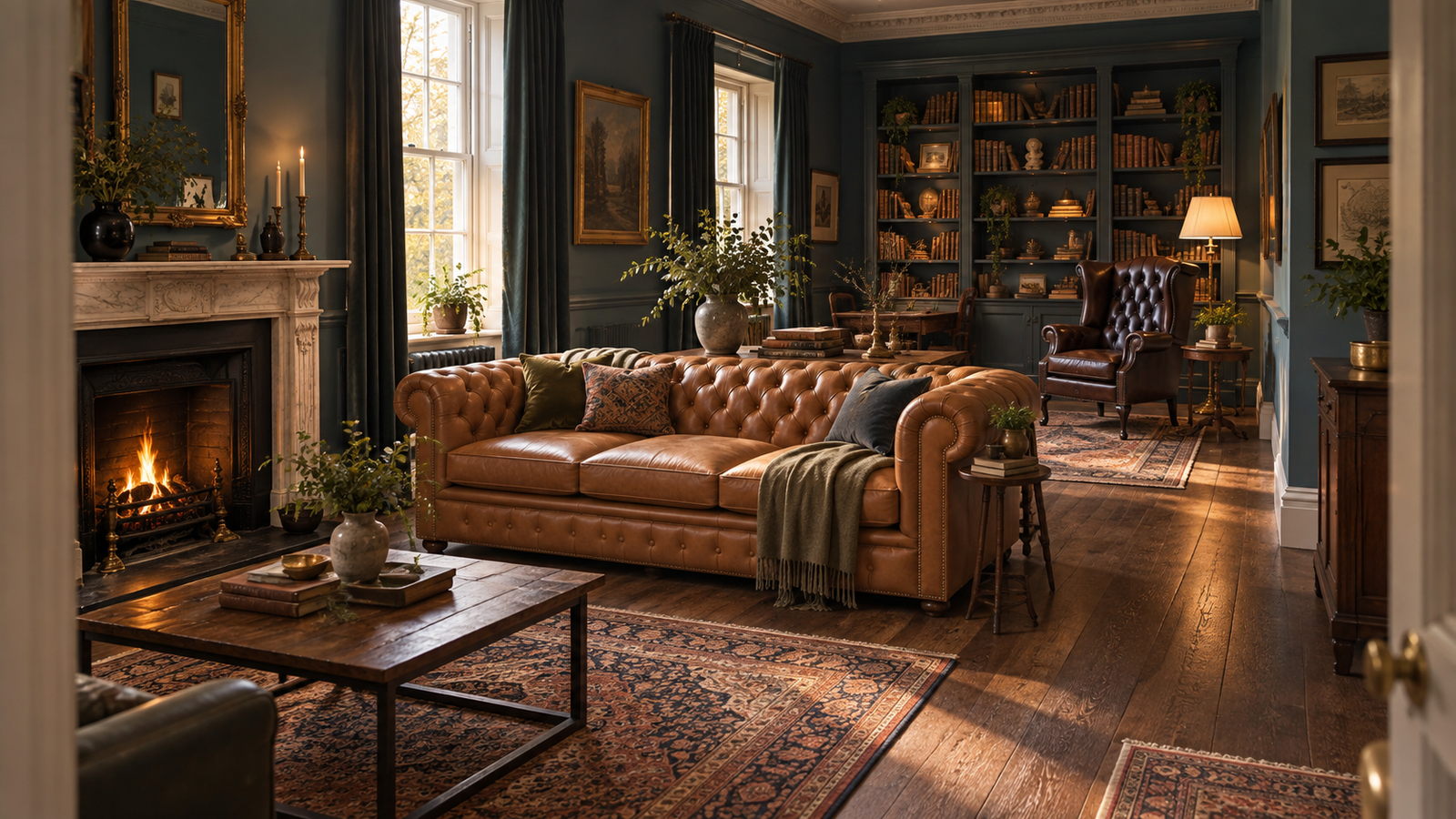
4. Sofa Across the Width of the Room
Turning a sofa across part of the room can stop an especially long space feeling like a corridor.
The sofa effectively creates a boundary.
Behind it you might have:
- a reading area;
- console table;
- small desk;
- bookcase;
- second seating area.
Make sure there is still a clear route around the end of the sofa.
5. Corner Sofa at One End
A corner sofa can put a lot of seating into one area without spreading chairs throughout the room.
It can be a good choice when one end of the room naturally works as the main relaxation zone.
The crucial point is orientation.
The projecting section should never block the main walkway.
For more detail, see our Living Room Ideas with a Corner Sofa.
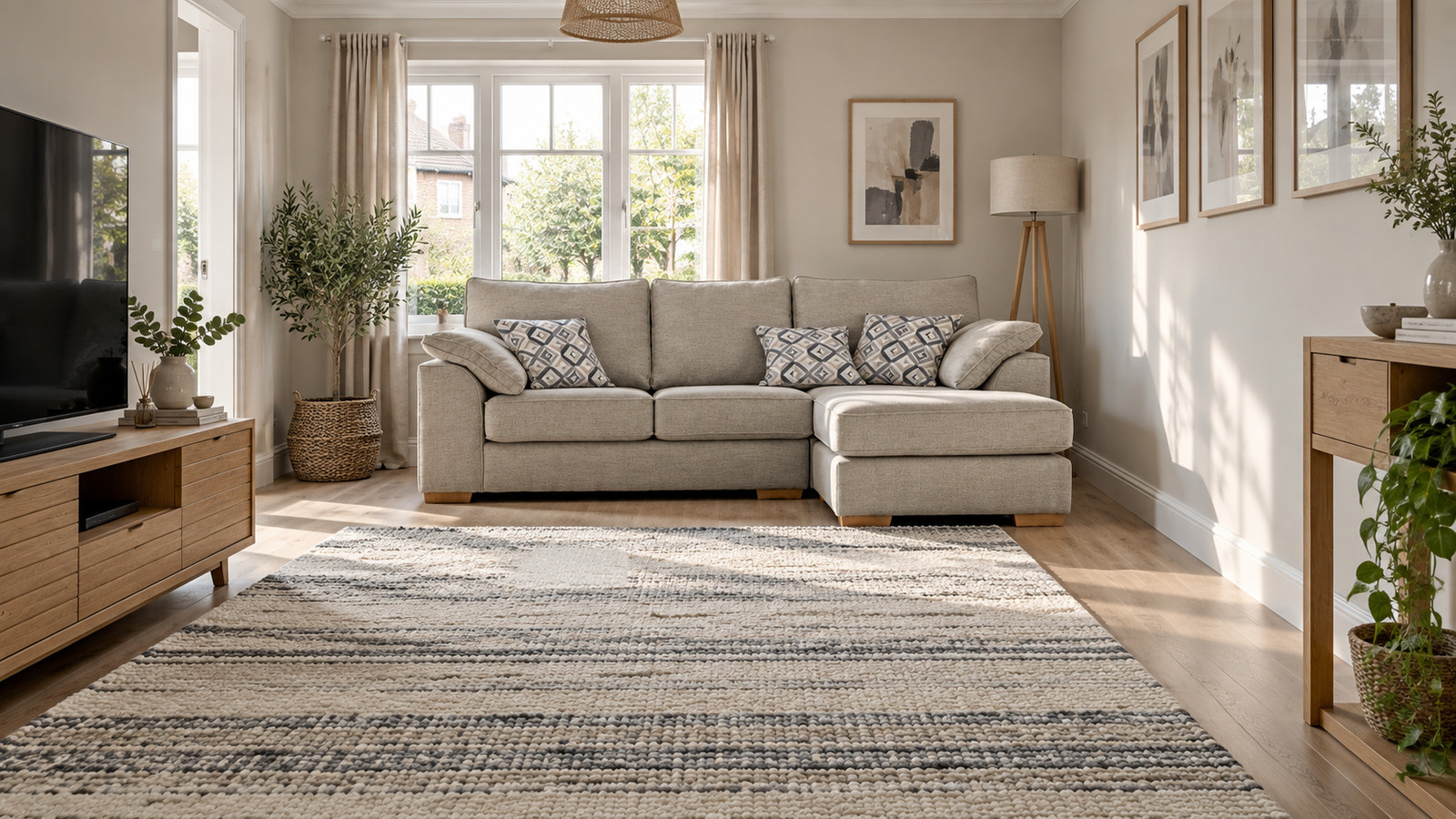
6. Main Sofa Plus Reading Corner
Use the principal end for:
- sofa;
- TV;
- rug;
- coffee table.
At the quieter end, add:
- comfortable chair;
- floor lamp;
- small table;
- book storage.
A chaise sofa can also work here if the room is wide enough.
This layout turns an awkward empty end into a purposeful space.
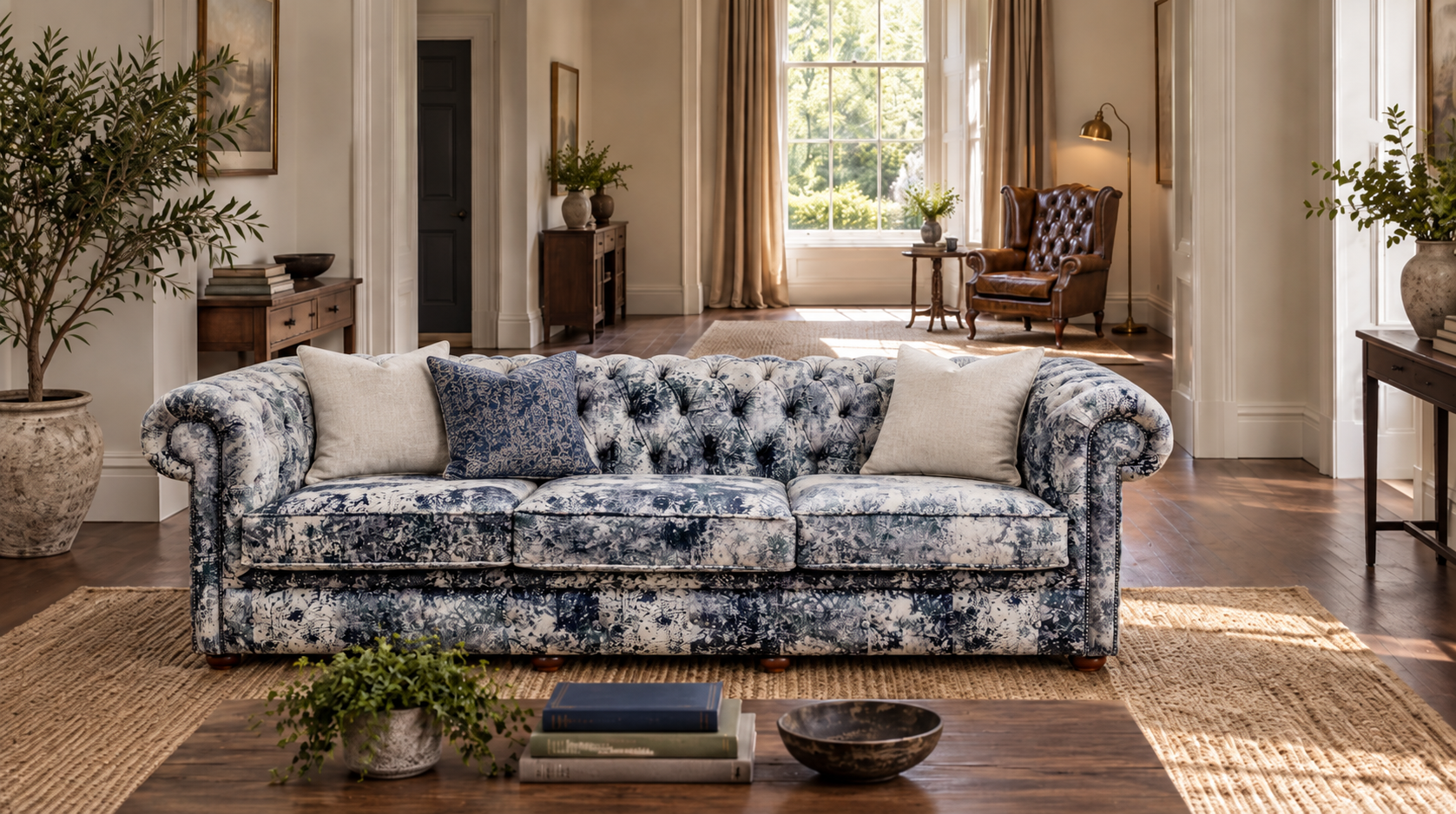
Choose Sofa Size by the Floor Plan, Not the Wall
A long wall can make a large sofa look tempting.
But the width of the room matters just as much.
A deep sofa, coffee table and opposite chair may consume far more floor space than expected.
A practical size guide
A 2 seater sofa makes sense when:
- the room is particularly narrow;
- you want separate chairs;
- you need to preserve floor space.
A 3 seater sofa works well when:
- you need everyday family seating;
- the room has moderate width;
- you still want flexibility around it.
A 4 seater sofa is better when:
- the room is genuinely large;
- the sofa will be the dominant piece;
- there is enough circulation around it.
At Designer Sofas 4U, our experience with different sofa sizes and made-to-order furniture shows why it is important to consider the whole floor plan rather than one wall measurement. A sofa should deliver comfort, but it should not make every other piece difficult to place.
If one end of the room is especially compact, our guide to Best Sofas for Small Living Rooms can also help when comparing proportions.
Use Chairs to Break Up Long Straight Lines
A sofa, TV unit, console and bookcase can create a series of long horizontal lines.
Adding chairs at an angle breaks this pattern.
Chairs are also useful because they can move.
Why chairs work well in long rooms
They:
- provide flexible seating;
- soften rigid rectangular layouts;
- create better conversation;
- fill awkward corners without dominating them;
- can move when guests arrive.
You do not need matching chairs.
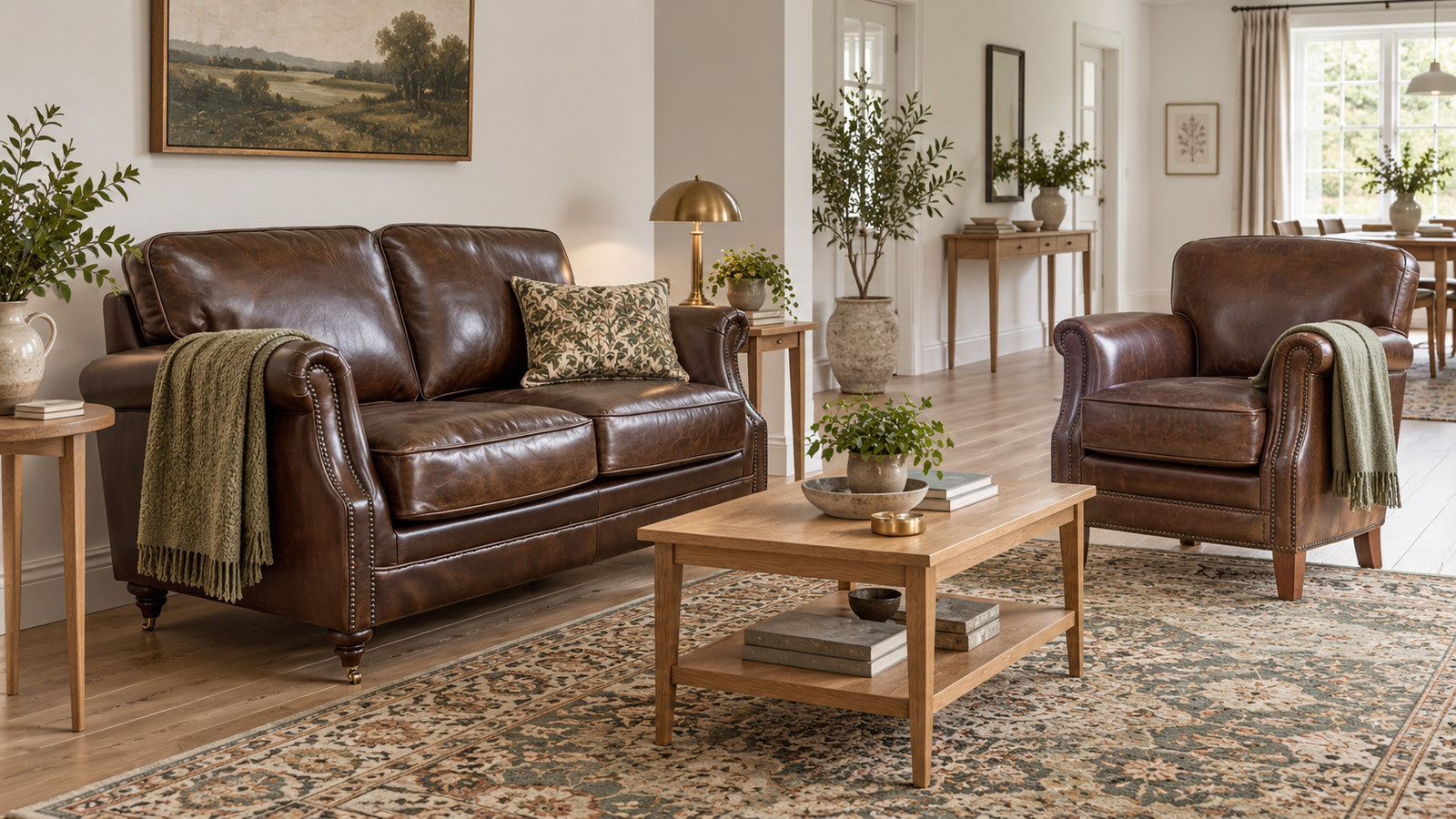
A leather armchair can sit with a fabric sofa. A vintage chair can add contrast beside contemporary furniture.
In a traditional room, deeper upholstered chairs add visual weight and charm.
In a modern room, exposed legs and slimmer arms make the furniture look lighter.
Do Not Treat Every Wall as Furniture Space
When arranging furniture in long living room spaces, it is easy to assume that every long stretch of wall needs something against it.
It does not.
Empty wall space gives the room breathing room.
A useful rule is:
Every piece should provide seating, storage, lighting, surface space or visual balance.
If it does none of those things, ask whether it really needs to be there.
Good furniture placement ideas for a long narrow living room are about purpose rather than simply filling gaps.
For example, opposite a large sofa you may need only a low TV unit rather than a deep cabinet. In another part of the room, one artwork may work better than another console table.
Leather, Fabric or Velvet? Think About Visual Weight
Material affects how large furniture appears.
A dark leather sofa may appear heavier than a pale sofa of exactly the same dimensions.
That does not make leather unsuitable for a long room.
Balance it with:
- lighter walls;
- pale flooring;
- a soft neutral rug;
- slim tables;
- fewer heavy cabinets.
Leather also works beautifully in classic, industrial and traditional styles.
Fabric sofas can create a softer effect. Pale upholstery can make substantial seating feel less dominant, while textured fabric adds depth without demanding a strong colour.
Velvet behaves differently again. It reflects light across the pile, so even a relatively simple sofa can bring richness to the room.
Choose the upholstery according to everyday use as well as appearance.
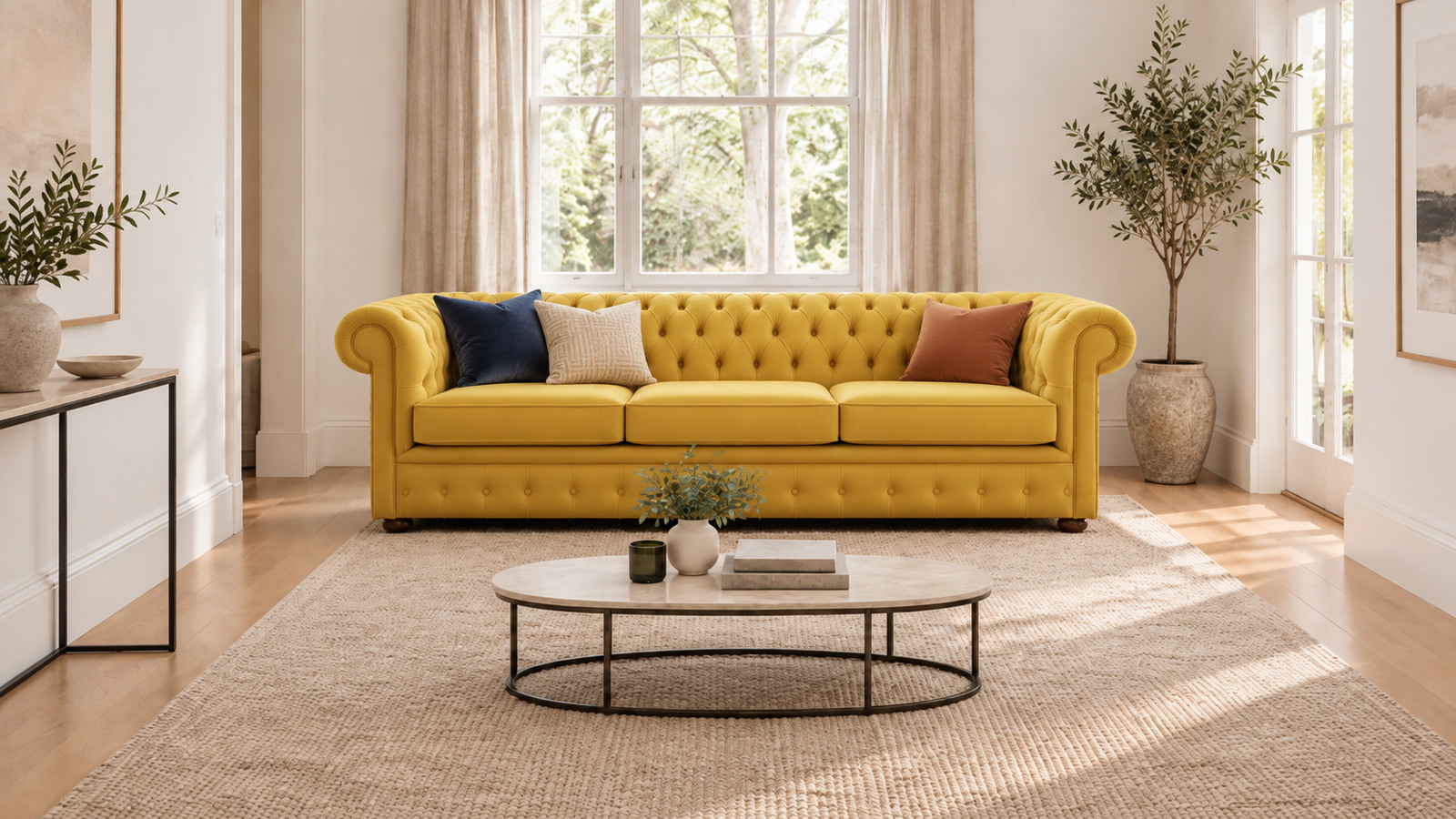
Vintage Pieces Can Stop the Room Feeling Too Coordinated
A perfectly matched furniture suite can sometimes make a long space feel formal and repetitive.
One vintage piece changes the rhythm.
Consider adding:
- an old leather chair;
- vintage sideboard;
- timber occasional table;
- traditional lamp;
- characterful footstool.
You can browse vintage furniture and sofas if you want to introduce different textures and shapes.
Good long living room ideas do not require every item to come from the same collection.
A vintage chair beside a contemporary sofa can look deliberate if you repeat one element — perhaps a wood tone, brass detail or colour — elsewhere in the room.
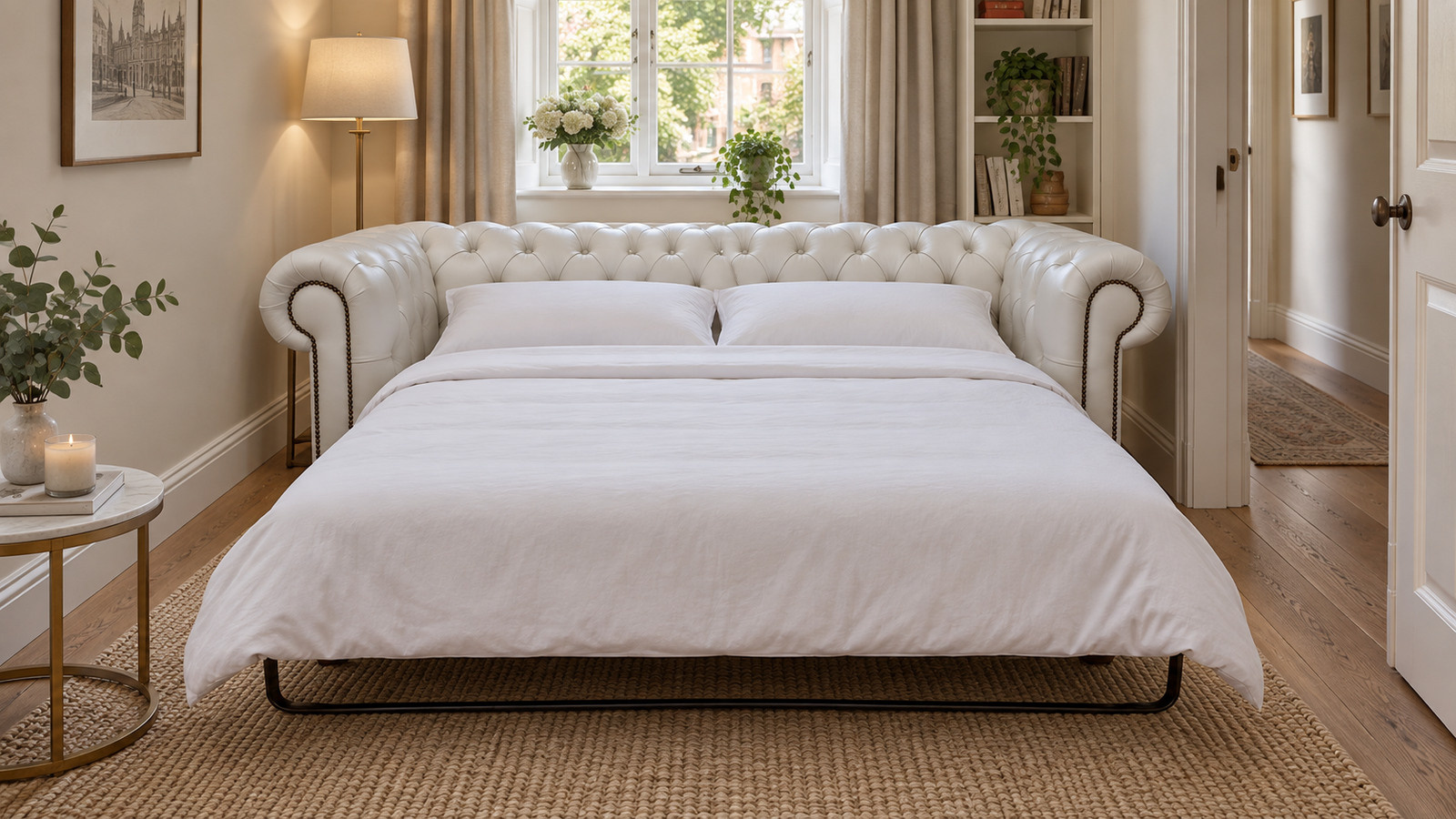
Plan a Sofa Bed in Two Positions
If the living room also needs to accommodate guests, a sofa bed can be practical.
But measure it twice:
Position 1: closed as a sofa.
Position 2: fully opened as a bed.
Check what happens in the second position.
Will you still be able to:
- reach the door?
- walk to the other end of the room?
- access storage?
- move the coffee table?
- use nearby chairs?
A lightweight table or nesting tables make the transition much easier.
In a long narrow living room layout, the extra length can actually be helpful because the bed may extend along the room rather than across the main route.
Let the Rug Define the Seating Area
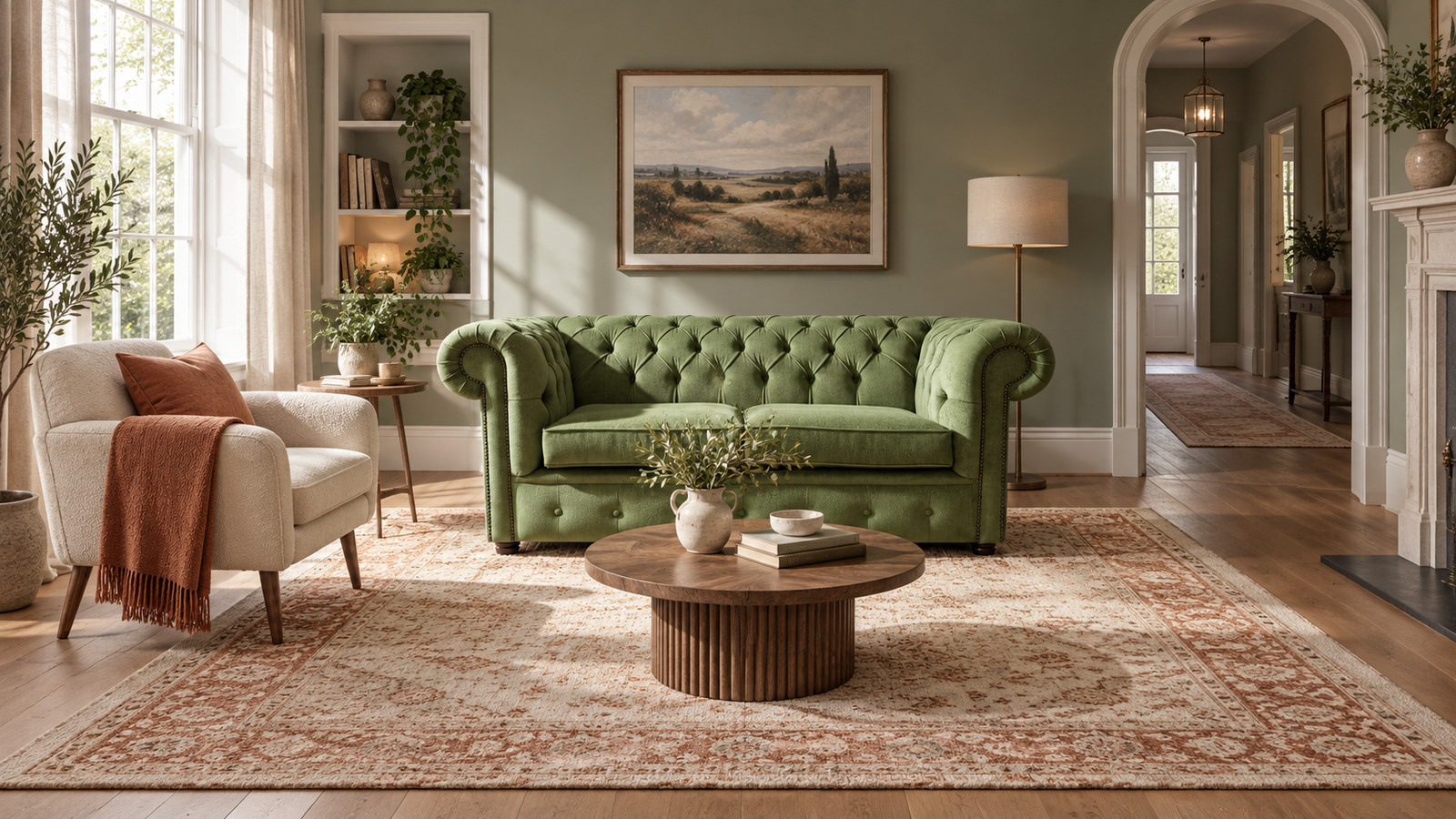
A rug should connect furniture visually.
It should not look like a small island underneath a coffee table.
For one seating area
Choose a rug that reaches beneath at least the front legs of:
- the main sofa;
- nearby chairs.
For two zones
Two rugs can work, but they should have something in common.
That might be:
- colour;
- pattern style;
- material;
- tone.
They do not need to match exactly.
Avoid very long, narrow rugs that run straight down the room if they make the space look even more corridor-like.
A wider rug usually helps the seating area feel broader and more grounded.
Use Lighting to Create Different Zones
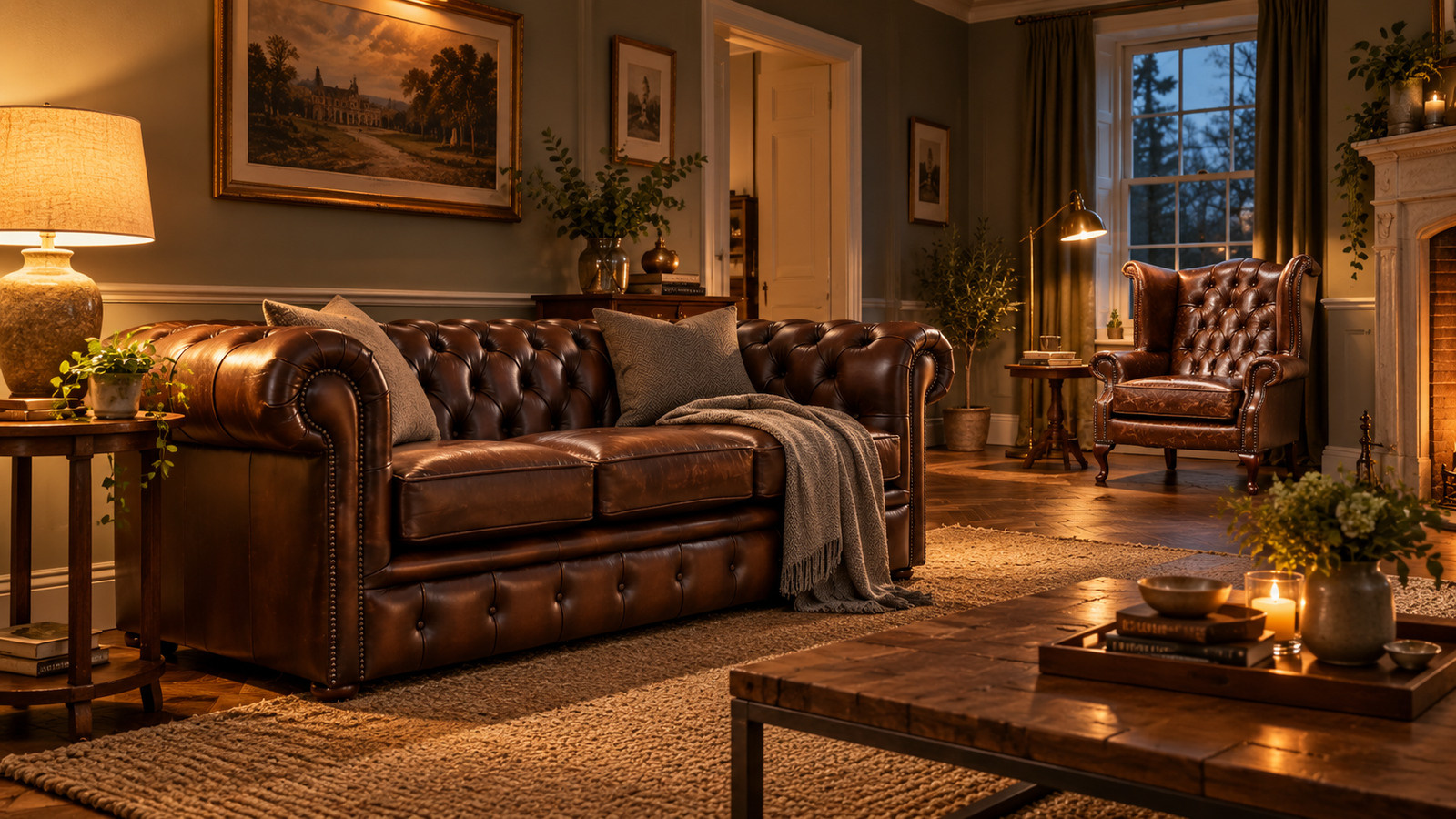
One ceiling fitting rarely does enough in a long room.
Use layers instead.
Main seating zone
Try:
- floor lamp beside the sofa;
- table lamp on a side table;
- dimmable overhead lighting.
Reading corner
Use:
- directional floor lamp;
- warm bulb;
- small side table.
Secondary zone
A pendant or pair of wall lights can distinguish the area without adding furniture.
Lighting creates invisible boundaries.
At night, each section of the room can feel purposeful rather than part of one long, uniformly lit space.
Choose Coffee Tables Around Movement
A rectangular room does not automatically need a rectangular coffee table.
Consider how people actually walk through the space.
Round or oval tables
Useful when:
- people regularly pass beside the table;
- the room contains many straight lines;
- you want fewer hard corners.
Nesting tables
Useful when:
- space is limited;
- you entertain occasionally;
- you want tables that can move.
Rectangular tables
Useful when:
- the seating group is wide;
- there is generous space around it;
- you need a larger usable surface.
Function should decide the shape.
Avoid Perfect Symmetry When It Makes the Room Feel Rigid
Symmetry can be elegant, but too much of it may exaggerate the long rectangular shape.
You do not always need:
- matching lamps;
- identical chairs;
- two identical sofas;
- matching tables at each end.
Try controlled asymmetry instead.
For example:
- one sofa opposite two chairs;
- one large lamp balanced by artwork at the other end;
- one side table and one floor lamp rather than two identical tables;
- a large picture balanced by a small gallery of pictures.
This tends to suit relaxed modern interiors particularly well.
Work with Windows, Not Against Them
Natural light is valuable in narrow rooms.
Avoid blocking it with unnecessarily tall furniture.
A sofa can sometimes sit beneath a window, provided:
- its back is not too high;
- curtains still open properly;
- radiators remain unobstructed.
A window at the end of the room can also become a destination.
Place a chair and lamp nearby and you immediately have a reading corner.
These narrow living space ideas work because they use features already present rather than adding more objects.
Use Colour to Alter the Visual Proportions
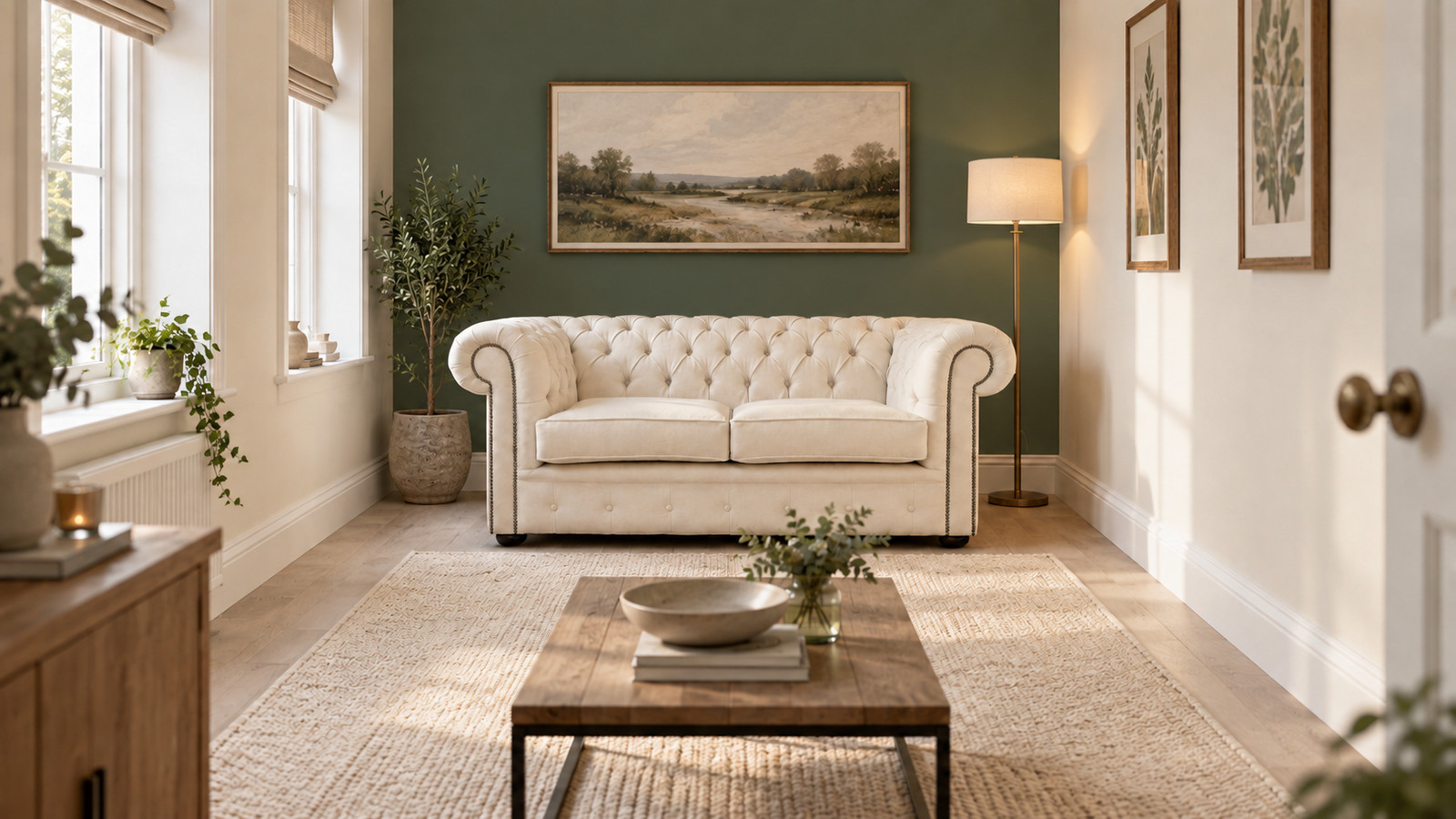
Colour will not physically widen a room, but it can change how the proportions feel.
For a lighter effect, consider:
- warm white;
- pale greige;
- stone;
- light taupe;
- muted sage;
- soft blue.
A stronger sofa can then provide contrast.
Another approach is to use a deeper colour on the short end wall. This can visually bring that wall closer and reduce the tunnel effect.
A long narrow living room interior design can therefore use colour strategically rather than treating paint as decoration added at the end.
Always consider daylight before choosing a strong colour.
Keep Cushions and Decorative Layers Under Control
A long room provides plenty of surfaces to decorate, but that does not mean every one needs accessories.
Start with the main sofa.
A simple mix might be:
- two larger neutral pillows;
- one patterned cushion;
- one throw.
Then stop and assess the room.
If you want more help with proportions and combinations, see How to Arrange Cushions on a Sofa.
For shelves and tables, use a few larger objects rather than many tiny ones.
Think in groups:
Books + vase + plant rather than ten unrelated ornaments.
The result usually feels calmer and more intentional.
Know When a Corner Sofa Is the Right Choice
A corner sofa has obvious advantages.
It works particularly well when:
- you want plenty of family seating;
- one end of the room can become a complete lounge zone;
- the L shape follows the architecture;
- the chaise section does not interrupt traffic.
It may be less suitable when:
- the room is exceptionally narrow;
- there are doors on several walls;
- you frequently rearrange furniture;
- the projecting section would block a route.
A corner sofa creates a relatively fixed layout.
Separate sofas and chairs are easier to adapt later.
Handle Doors at Both Ends Carefully
Some long rooms are effectively passageways because people need to cross them constantly.
The goal is to keep that movement outside the main seating group.
Instead of this:
door → sofa → coffee table → door
Aim for:
door → clear side route → door
with the sofa, rug and chairs grouped beside it.
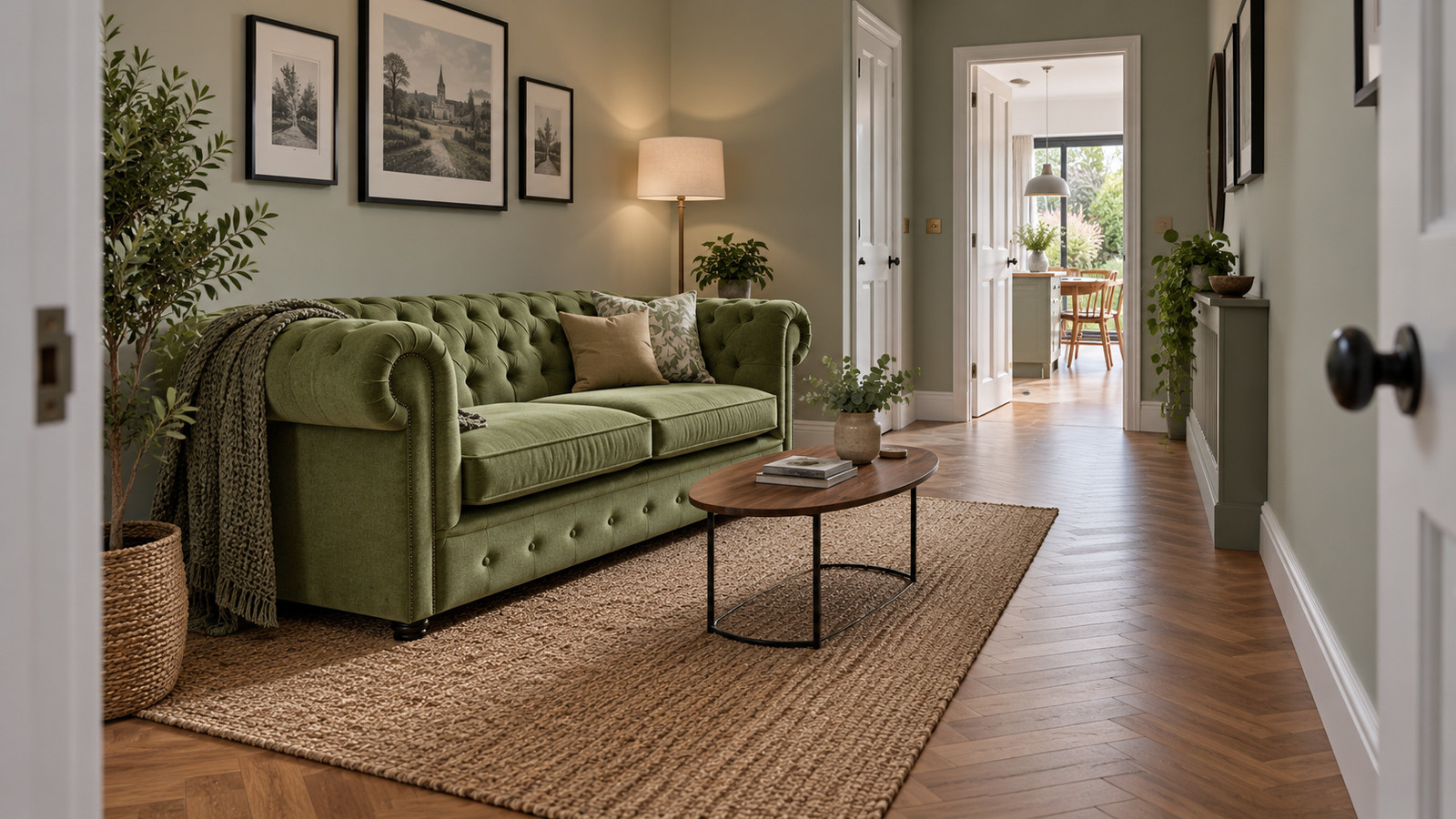
Helpful furniture includes:
- shallow consoles;
- slim side tables;
- wall-mounted shelves;
- compact lamps;
- furniture with exposed legs.
Avoid placing footstools or loose chairs directly in the main route.
Use Bay Windows and Alcoves as Separate Features
A bay window does not have to contain the main sofa.
It can work better as a smaller zone.
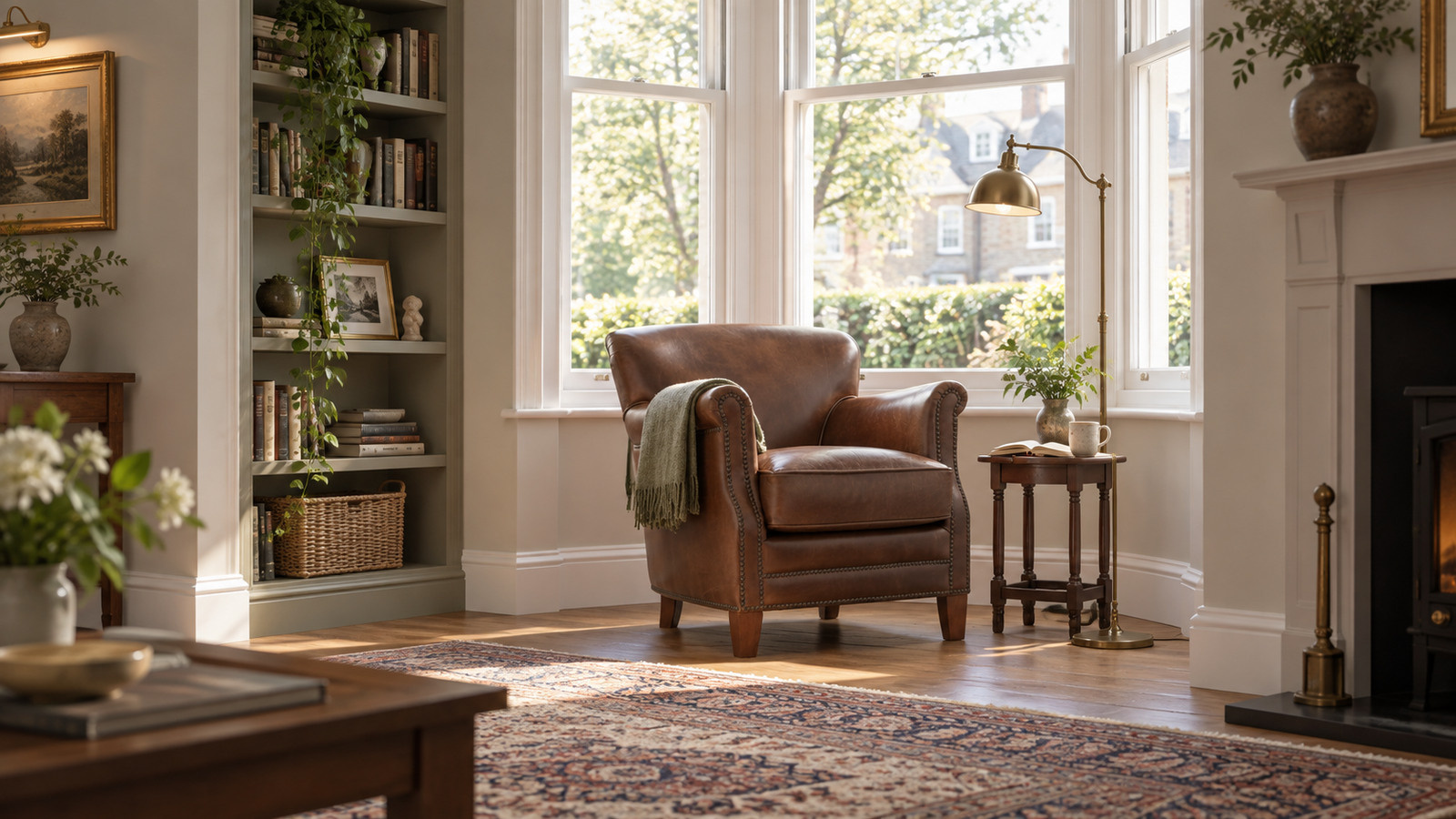
Try:
- one armchair and lamp;
- two compact chairs;
- small café-style table;
- reading seat.
Alcoves can provide:
- shelving;
- media storage;
- cabinets;
- display space.
Using these architectural features reduces the amount of freestanding furniture you need.
Create Conversation Seating as Well as TV Seating
If every chair points directly towards the television, the room may work perfectly for films but poorly for guests.
Try turning at least one chair towards the sofa.
You might arrange seating like this:
TV
chair → coffee table ← sofa
This allows someone in the chair to see both the television and other people.
A chaise sofa can create a similarly sociable effect because one part naturally turns towards the centre of the seating area.
Leave Visible Floor Space
A room often feels overcrowded long before it is literally full.
Visible floor creates breathing room.
Try not to press together:
- sofa and side table;
- chair and cabinet;
- footstool and coffee table;
- plant and lamp.
A small gap between objects can make substantial furniture feel far less imposing.
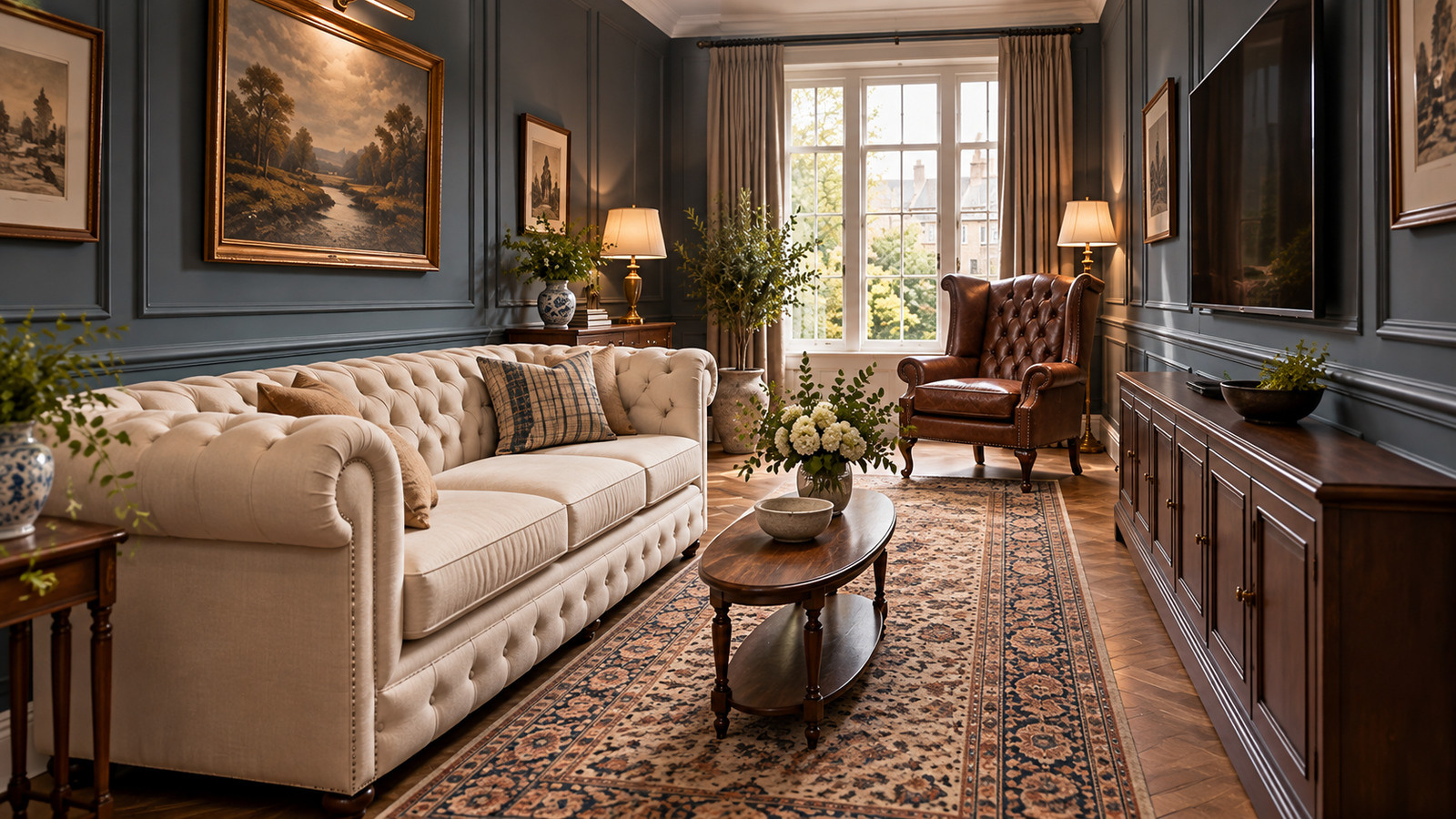
This is especially important with Chesterfield and vintage designs, where rolled arms and strong silhouettes deserve space around them.
Designer Sofas 4U has been producing and working with furniture since 2007, and proportion remains one of the most important considerations when choosing a sofa. Quality furniture should look as though it belongs naturally in a room rather than as though every centimetre has been used simply to make it fit.
Check the View from the Door
Once the room seems finished, leave it.
Then walk back in through the main entrance.
What is the first thing you see?
Ideally, the layout should draw you towards the room rather than present a large furniture barrier immediately in front of you.
If the back of a sofa faces the door, you can soften it with:
- slim console;
- lamp;
- plant;
- decorative bowl;
- a little empty space.
Also consider views from adjoining rooms.
In an open-plan home, the back and side of the sofa may be just as visible as the front.
Consider Sound as Well as Appearance
Large elongated rooms with hard floors can echo.
Soft furnishings help absorb sound.
Useful additions include:
- curtains;
- rug;
- fabric seating;
- cushions;
- upholstered chairs.
If your main sofa is leather, simply introduce softness elsewhere.
Do not cover every surface. A mixture of soft textiles and harder materials such as timber, glass and metal creates balance.
Acoustic comfort contributes to how relaxing a room feels just as much as seat depth or cushions.
Build Some Flexibility into the Plan
Not every item needs a permanent position.
Movable furniture gives you options.
Especially useful pieces include:
- occasional chairs;
- nesting tables;
- lightweight footstools;
- small side tables;
- floor cushions.
A large sofa can remain the anchor while these smaller pieces adapt.
This is useful for parties, Christmas, children's play, overnight guests or simply changing how the room feels.
Common Mistakes to Avoid
Here are the issues that cause the most problems.
1. Buying by wall width alone
Always measure depth and surrounding circulation too.
2. Creating a walkway through the seating
Keep the route beside the main group whenever possible.
3. Buying too much furniture
One good sofa and two chairs can work better than two oversized sofas.
4. Using a rug that is too small
The rug should connect furniture rather than sit alone beneath the table.
5. Filling every wall
Empty space is part of the design.
6. Ignoring the open sofa bed
Always measure both positions.
7. Designing only for photographs
A stunning room still needs to be easy to live in.
8. Making every piece match
A mixture of complementary furniture often gives the room more personality.
A Simple Order for Planning the Whole Room
If the number of decisions feels overwhelming, work through them in this order.
Step 1: Identify traffic routes
Decide where people need to walk.
Step 2: Choose the focal point
TV, window, artwork or another feature.
Step 3: Position the main sofa
This becomes the anchor.
Step 4: Add secondary seating
Chairs, another sofa or a chaise.
Step 5: Choose the rug
Use it to define the furniture group.
Step 6: Add tables
Only where people genuinely need them.
Step 7: Add lighting
Create several useful pools of light.
Step 8: Build the colour scheme
Walls, upholstery, rug and curtains first.
Step 9: Add decor
Artwork, cushions, books and plants come last.
Following this order keeps styling decisions from interfering with the practical layout.
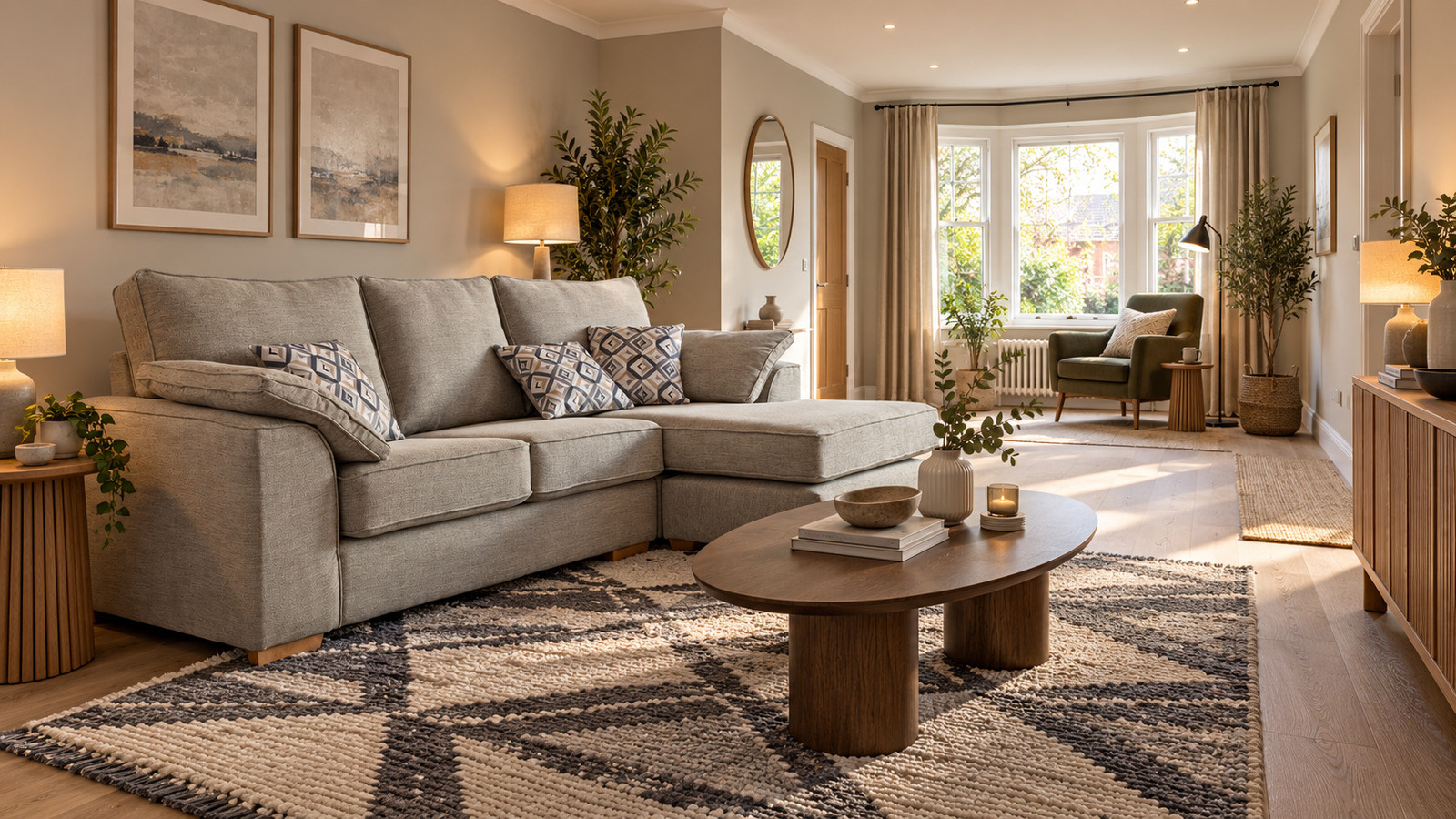
Bring the Layout Together with Style
Once the arrangement works, you can focus on personality.
Your starting point might be:
- a pale fabric sofa;
- a classic Chesterfield;
- a dark leather couch;
- a statement velvet sofa;
- vintage seating.
Then layer one or two supporting materials.
For example:
Warm and traditional: dark wood + brass + patterned rug
Light and modern: pale oak + black metal + linen
Classic and relaxed: leather + wool + timber
Contemporary: glass + textured fabric + sculptural lighting
Do not feel that everything has to follow one rigid style.
Some of the most creative rooms mix old and new.
Final Thoughts: Use the Length as an Advantage
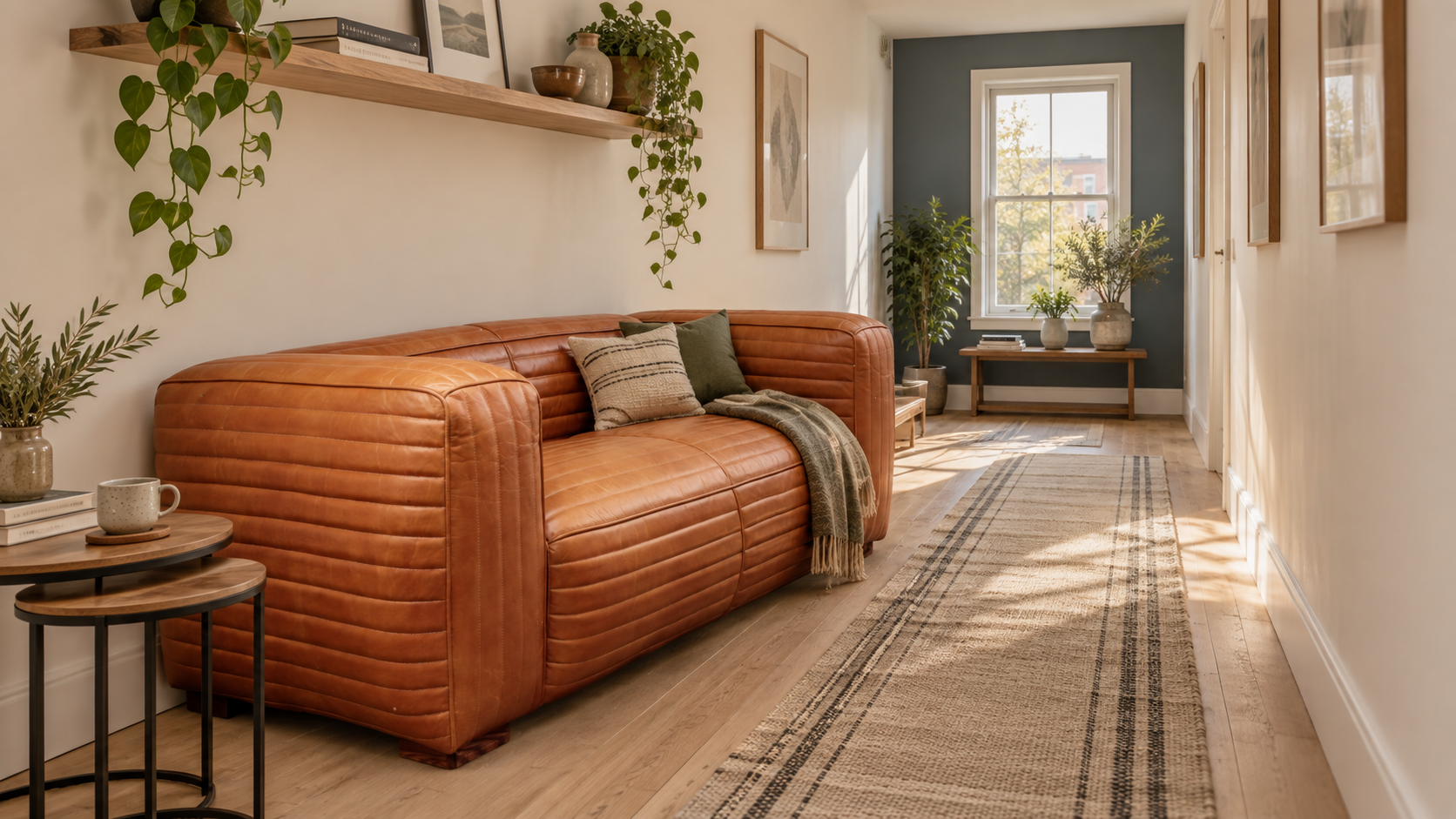
The best long living room layout ideas do not hide the proportions of the room. They turn them into an advantage.
A longer room may give you space for things a compact square room cannot easily provide:
- a separate reading corner;
- two conversation zones;
- generous family seating;
- a TV zone plus open floor area;
- occasional guest accommodation.
Good long living room ideas start with the practical elements: movement, sofa scale and the main furniture group. Rugs, lighting and colour then connect the room visually.
A thoughtful long narrow living room layout should make it easy to walk through the room while still allowing the seating to feel connected.
Do not copy a photograph exactly. Your doors, windows, family habits and dimensions will be different.
If you are selecting furniture for a challenging room, Designer Sofas 4U offers leather sofas, fabric sofas, vintage furniture and sofas, sofa beds and seating in different sizes, giving you more flexibility to build the arrangement around the room rather than forcing the room around the furniture.
The most successful long living room ideas are ultimately the ones that make everyday life easier while giving the room enough character to feel like your own.
FAQ
Should a Sofa Go Against the Wall in a Long Living Room?
Not necessarily. In a particularly narrow room, putting the sofa close to the wall can preserve useful floor area. In a wider room, moving it forward can create a more deliberate seating zone or even divide the space into two areas.
What Is the Best Sofa for a Long Narrow Living Room?
A sofa with moderate depth is generally easier to position than an extremely deep model. Two- and three-seater sofas work well in many rectangular rooms because they leave more space for chairs, tables and walkways.
A corner sofa can also work, provided the extended section does not obstruct circulation.
How Can I Make a Long Living Room Look Wider?
Several changes can help:
- use a wider rug rather than a narrow runner;
- position chairs at an angle;
- avoid lining every item along the walls;
- keep the main route clear;
- use lighter colours on large surfaces;
- introduce round or oval tables to interrupt straight lines.
Where Should the TV Go in a Long Living Room?
Either a short or long wall can work.
A short wall creates a viewing arrangement along the length of the room. A long wall can create a more compact TV zone.
Choose according to comfortable viewing distance, glare from windows and the natural traffic route rather than following one fixed rule.
Can You Have Two Seating Areas in One Long Living Room?
Yes. In fact, a long room is often particularly well suited to this.
One area might contain the main sofa and TV, while the second includes two chairs and a side table or a reading chair and lamp.
Use rugs and lighting to distinguish them without creating physical barriers.
Is a Corner Sofa Suitable for a Narrow Room?
Sometimes.
A corner sofa can provide plenty of seating efficiently, but the projecting section must not block the main walkway.
If the room is extremely narrow or has several doorways, a straight sofa plus movable chairs may offer more flexibility.
How Do You Arrange Furniture When There Are Doors at Both Ends?
Keep the main route to one side of the room rather than through the centre of the seating.
Group the sofa, rug and chairs together, then leave a continuous passage beside them.
Slim furniture and wall-mounted storage can help preserve that route.
What Size Rug Works Best?
Choose a rug large enough to connect the main seats.
As a simple rule, aim to have the front legs of the sofa and neighbouring chairs resting on it.
A tiny rug sitting only beneath the coffee table tends to make the furniture look disconnected.
How Can I Make a Long Living Room Feel Cosier?
Use several sources of light rather than one ceiling fitting. Add a generous rug, curtains, cushions and natural textures.
Breaking the room into smaller functional zones also makes a long space feel more intimate.
Should I Use One Large Sofa or Two Smaller Sofas?
One sofa plus chairs often gives a narrow room greater flexibility.
Two sofas work better when the room is wide enough for them to face each other comfortably without compromising the walkway.
The number of seats you genuinely need should guide the decision.
Can a Sofa Bed Work in a Long Living Room?
Yes. In some cases, the extra room length makes a sofa bed particularly practical because the bed can extend lengthways.
Measure it both open and closed, and make sure doors and walkways remain accessible.
How Do I Make a Long Living Room Look Balanced?
Do not try to distribute furniture evenly across every metre.
Instead:
- create one strong main seating group;
- establish clear walkways;
- give any remaining area a specific function;
- repeat a few colours and materials;
- use lighting and rugs to connect the different zones.
Balance comes from clear relationships between furniture, not perfect symmetry.