
.jpg)
Retro Living Room Ideas: Furniture, Colours and Details You’ll Love
Retro style works beautifully in a living room because it brings back something many modern spaces can benefit from: warmer colour, softer shapes and furniture with more character. It does not have to mean a full redesign. Sometimes one well-chosen piece, a richer palette or a more textured finish is enough to change how the room feels.
The best retro rooms are not exact copies of the 1950s, 60s or 70s. They borrow the parts that still feel useful today: relaxed silhouettes, warm wood, tactile fabrics and lighting that makes the room feel softer in the evening.
In this guide, we will look at retro living room ideas that work in a real home, from sofas and armchairs to colour palettes, materials, rugs, lighting and vintage-style details.
What Makes a Living Room Feel Retro?
A living room starts to feel retro when the eye notices a few clear design cues. It might be a low couch with slim legs, a neat settee with a shaped back, a rounded armchair or a table where the wood grain is part of the look. These pieces do not have to match perfectly. They simply need to share a similar mood.
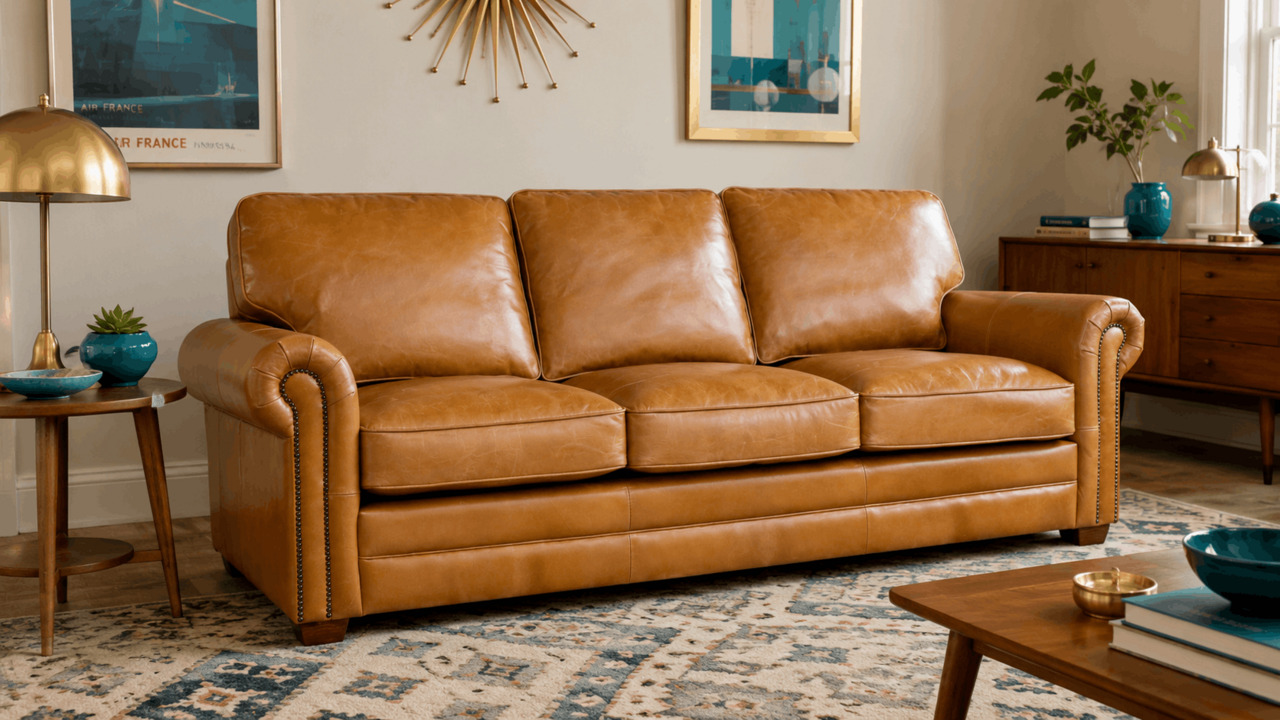
Retro style often comes through in:
- furniture with softer lines, rather than very plain boxy shapes
- wood with warmth and depth, such as walnut, teak or darker stained finishes
- colour that feels rich but not too sharp, like olive, mustard, rust, tan or muted blue
- fabrics with texture, including leather, velvet, corduroy or woven upholstery
- lighting that looks decorative, not just practical
The room does not need to copy one decade. One space may feel more mid-century, while another may lean towards 70s colour and plush texture. What matters is choosing a few clear details and giving them enough room to stand out.
Retro Style Living Room Ideas
Once you know the main design cues, furniture is usually the easiest way to create a retro style living room. A sofa, armchair or chaise takes up more visual space than small decor, so its shape, material and colour can guide the whole room.
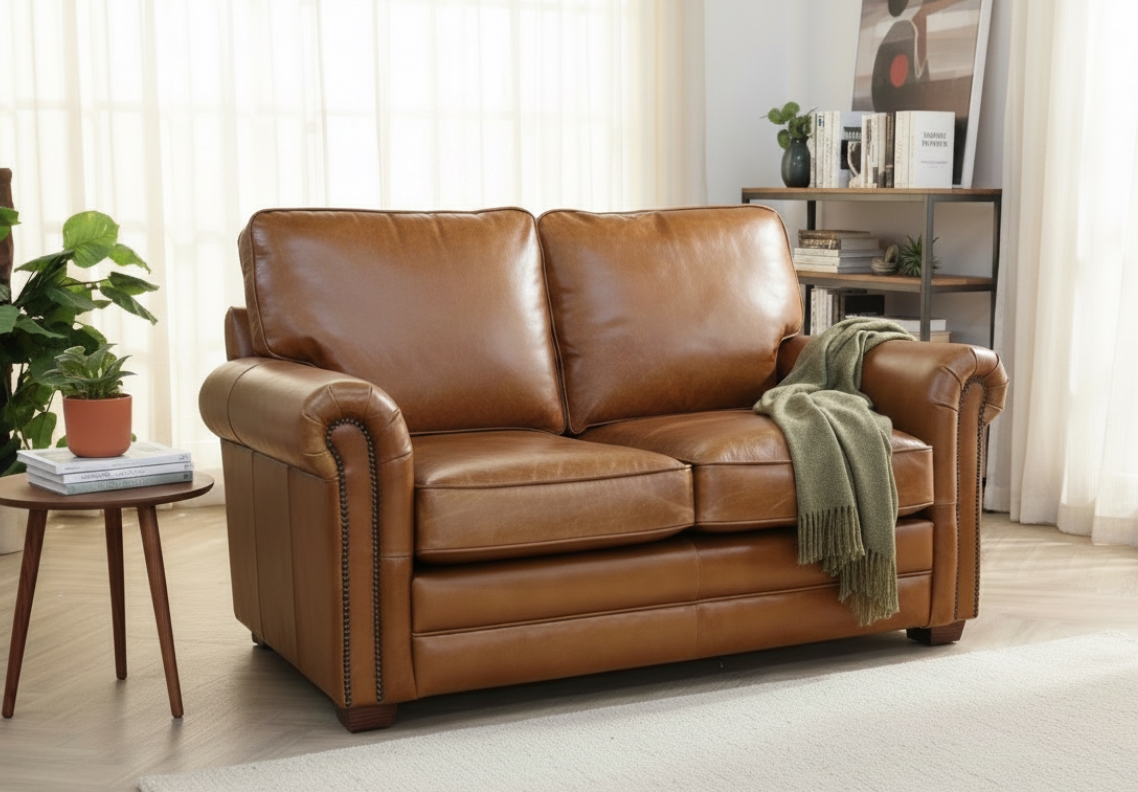
For a smaller living room, a neat 2 seater vintage sofa or compact 3 seater is usually enough. Choose a sofa with a lower profile, a gently shaped back or arms that feel softer than a very square modern design. In a family space, a larger 3 seater vintage sofa can work well with one or two armchairs, especially if the pieces share similar tones rather than matching exactly.
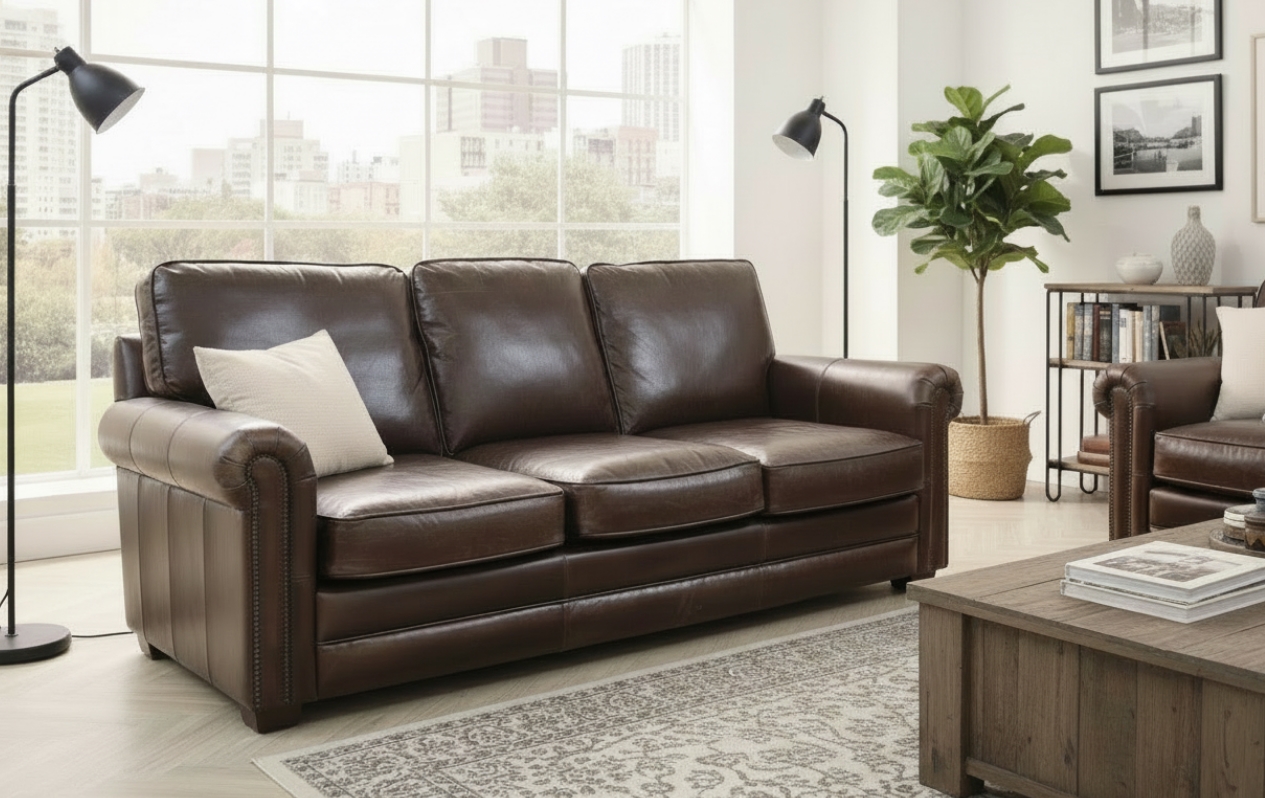
Colour and material make a big difference too. Tan, chestnut, olive and dark brown leather all suit a retro look because they feel warm without being too bright. Velvet or textured fabric can also work beautifully in deeper colours such as forest green, rust, navy or mustard.
Furniture choices that work especially well in a retro room include:
- a sofa or armchair with a clear shape, rather than the plainest straight-line design
- leather or velvet in warm, deeper shades
- wood details, turned legs or darker finishes
- one accent piece, such as a vintage-style chair, chaise lounge or characterful coffee table
If the room is larger, or if you want more relaxed seating for family evenings, a vintage leather corner sofa can give the lounge room a stronger furniture-led look without needing too many extra pieces.
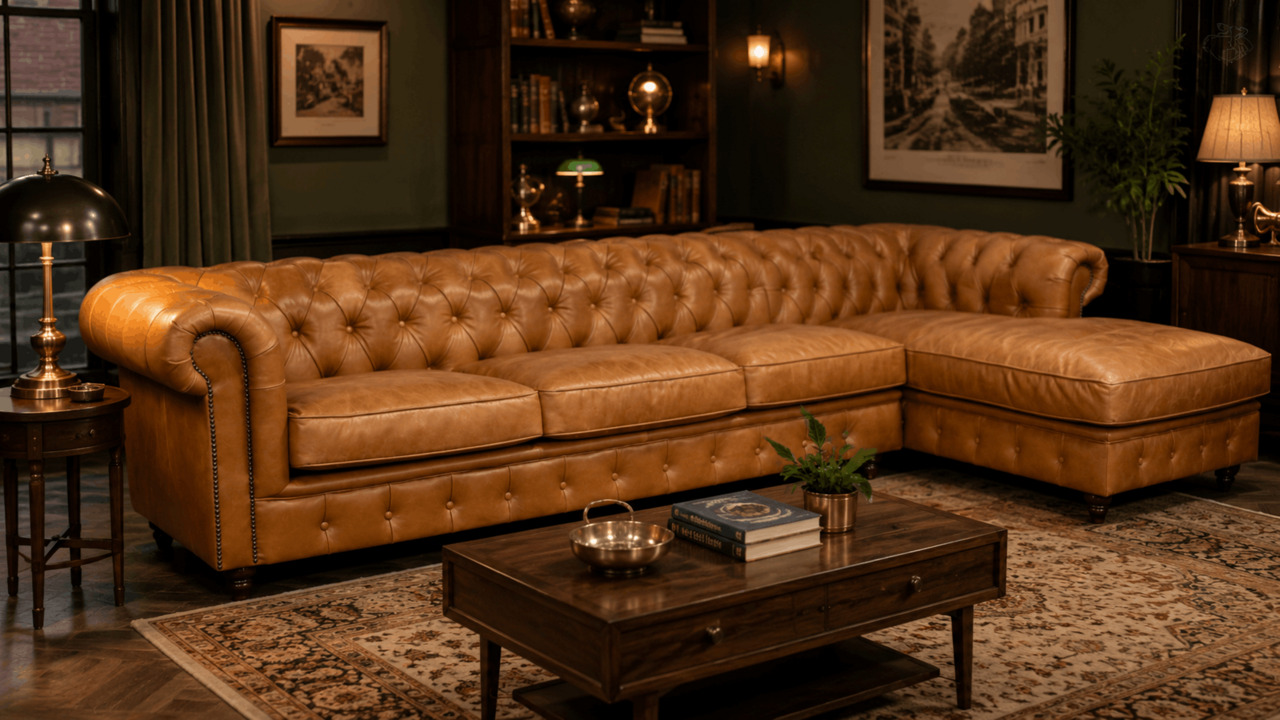
A well-chosen sofa can often do more for retro styling than a room full of small accessories. If the main sitting piece already has the right silhouette and material, the rest of the room becomes much easier to decorate around. This is where browsing vintage-style sofas at Designer Sofas 4U can be a useful starting point, especially if you want the room to feel more considered without changing every detail at once.
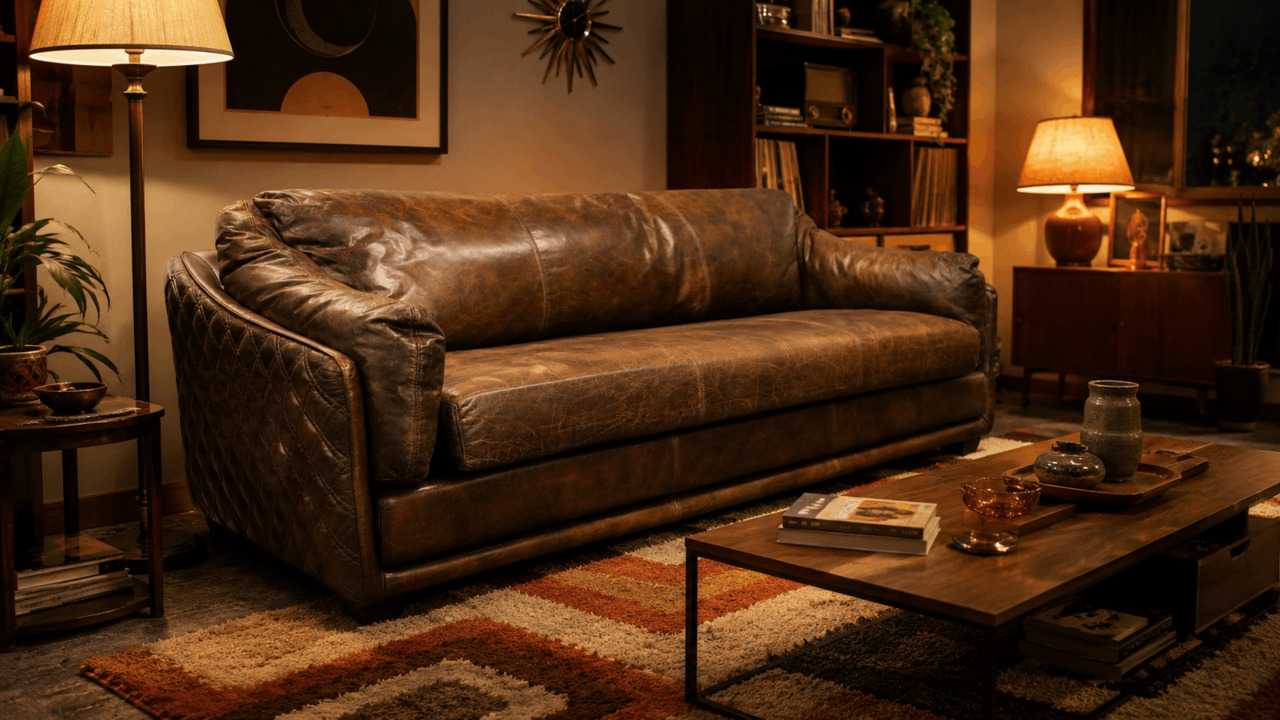
Retro Colours That Feel Warm, Stylish and Easy to Live With
Retro colour does not have to mean a loud room. The most usable schemes are often built around one stronger shade, then softened with wood, leather, cream, beige or soft white. This gives the room a clear retro direction without making it feel too busy.
| Colour palette | Where it works best | What furniture it suits |
|---|---|---|
| Olive green + walnut + cream | Calm living rooms that need depth without feeling dark | Tan leather sofas, walnut tables, cream rugs |
| Rust + beige + dark wood | Cosy evening spaces and more traditional sitting rooms | Brown leather, darker wood, textured cushions |
| Mustard + brown + soft white | Rooms where you want a brighter retro note | Velvet chairs, wooden legs, pale walls |
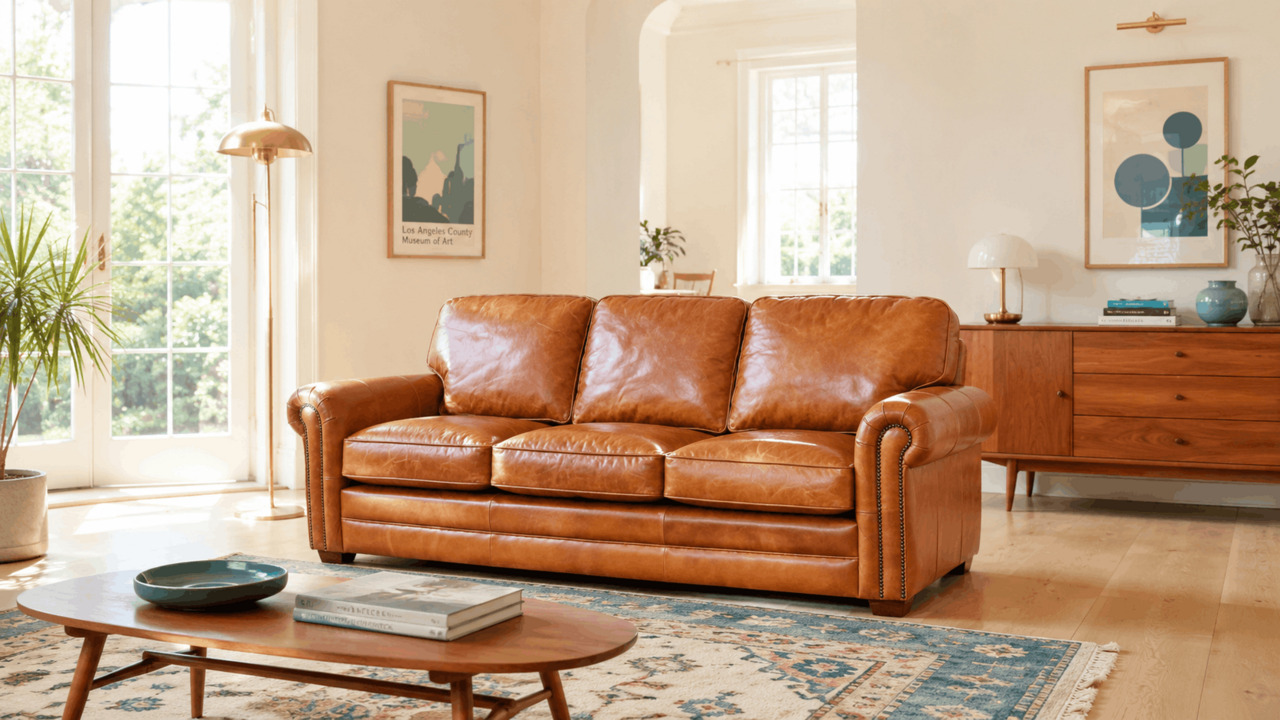
| Teal or muted blue + tan leather + brass | A smarter retro look with a slightly elegant edge | Tan couch, brass lamps, glass or dark wood tables |
The easiest way to use colour is to choose one main accent and repeat it with care. Olive green might appear in a cushion, a framed print and a small footstool. Rust could work in a rug and one piece of artwork, while the sofa stays neutral.
This approach makes the colour feel planned rather than random. It also keeps the space easy to update later. A shade that feels soft in a bedroom can look richer in a living room when it is paired with leather, walnut or brass. If tan leather is your starting point, these tan sofa living room ideas can help you see how warm neutrals, greens, blues and darker woods can work around it. If your sofa is deeper brown, it may also help to compare what colour goes with a brown leather sofa before choosing rugs, cushions or wall colour.
Materials and Textures That Bring Retro Room Design to Life
Materials are what give retro room design its depth. A good room usually mixes something smooth with something soft, so the look feels layered without becoming cluttered.
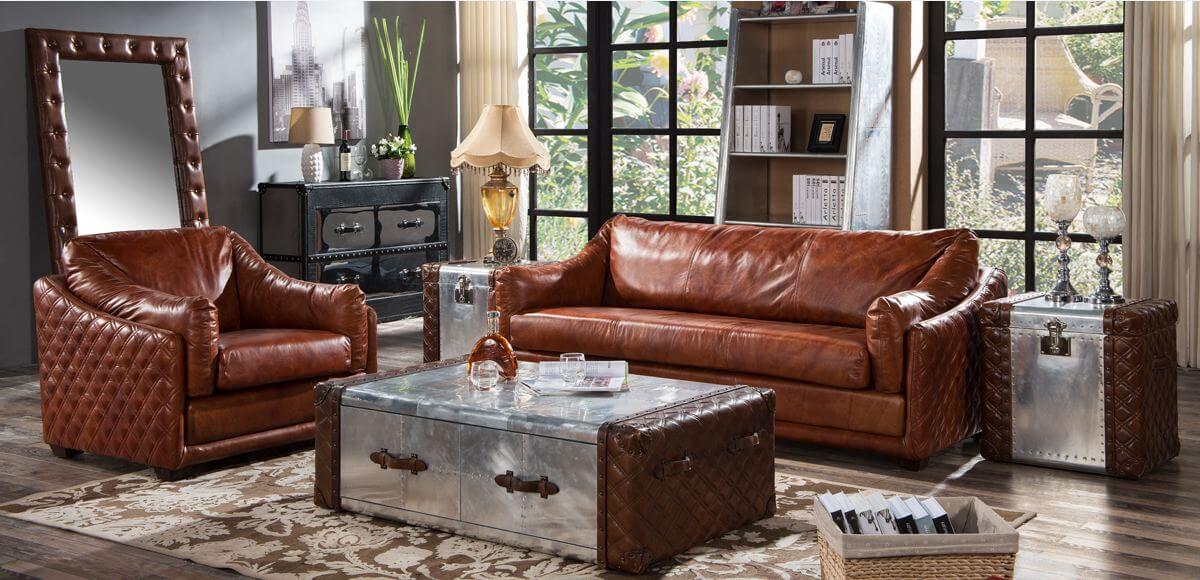
Distressed leather works well with dark wood because both have a natural depth. Velvet feels richer beside brass, smoked glass or a simple wooden table. Boucle-style texture or woven fabric can soften a room with walnut tones. Rattan and cane are useful when you want a lighter retro touch, especially beside glass or metal accents.
Try these pairings:
- If your sofa is leather, place it near dark wood, a wool rug or a brass lamp.
- If your sofa is velvet, balance the plush surface with glass, metal or simple wood.
- If your sofa is neutral fabric, add charm through a cane chair, textured footstool or smoked glass side table.
Corduroy, suede-effect fabrics, visible wood grain and softly aged leather can all support the retro feel. If you prefer a more classic furniture shape, Chesterfield sofas can also work in a retro-inspired room when the leather, colour and surrounding pieces are chosen carefully. The key is to stop before the room becomes too busy. One or two strong textures usually look more timeless than several competing finishes.
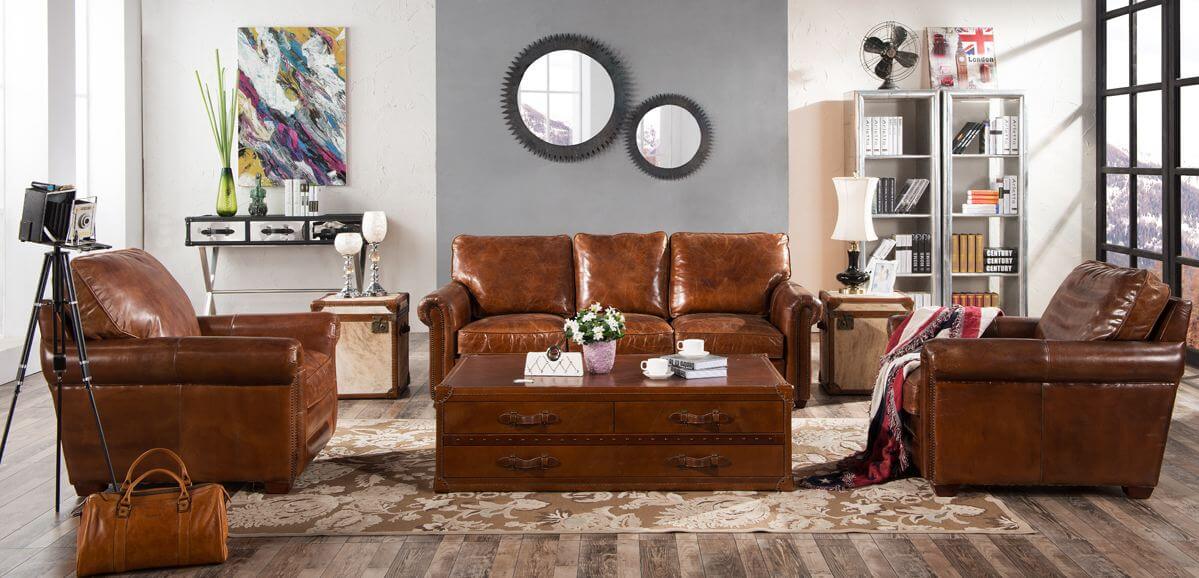
Retro Interior Design Ideas for Rugs, Wall Art and Patterns
Pattern can make retro decorating feel more expressive, but it works best when it has a clear role. Instead of using print on every surface, choose one place where the pattern can lead the eye.
A simple formula works well:
- one main print, such as a geometric rug or abstract artwork
- one supporting detail, such as striped cushions or a patterned footstool
- plain pieces around them, so the room still feels calm and easy to use
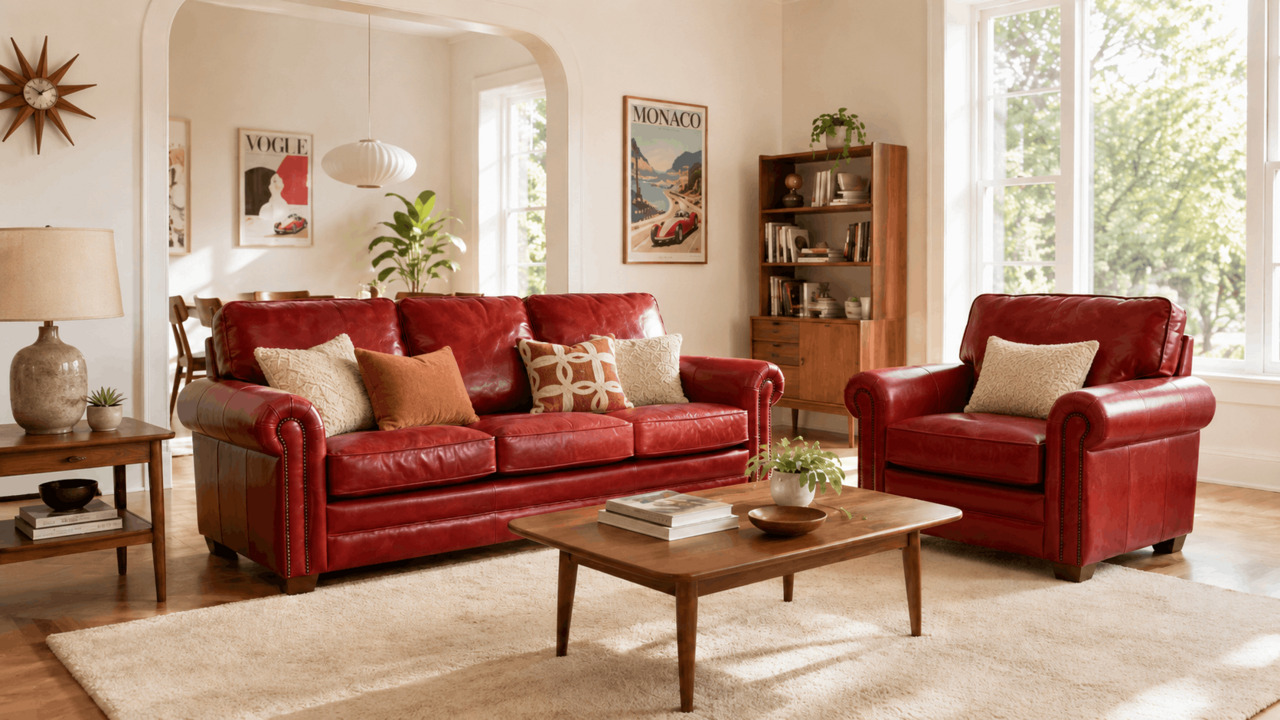
A geometric rug can sit beautifully under a leather sofa or wooden table, especially when it picks up colours already used elsewhere. Framed vintage-style posters are another easy way to decorate with retro character. Look for warm tones, graphic shapes or simple abstract designs.
For a softer touch, use a pattern on two or three cushions only. This keeps the room interesting without making small accessories do all the work. In a small house or flat, this approach is especially helpful because the room still feels open and easy to move through.
Vintage-Style Pieces That Work Beautifully in a Retro Living Room
Retro and vintage-style are closely connected, but they are not quite the same thing. Retro is the wider decorating direction: the shapes, colours, materials and overall mood. Vintage-style pieces are individual items that help support that look.
This does not mean the furniture has to be antique. In many homes, new pieces with vintage character suit everyday use more easily because they offer the look while keeping the comfort people expect now.
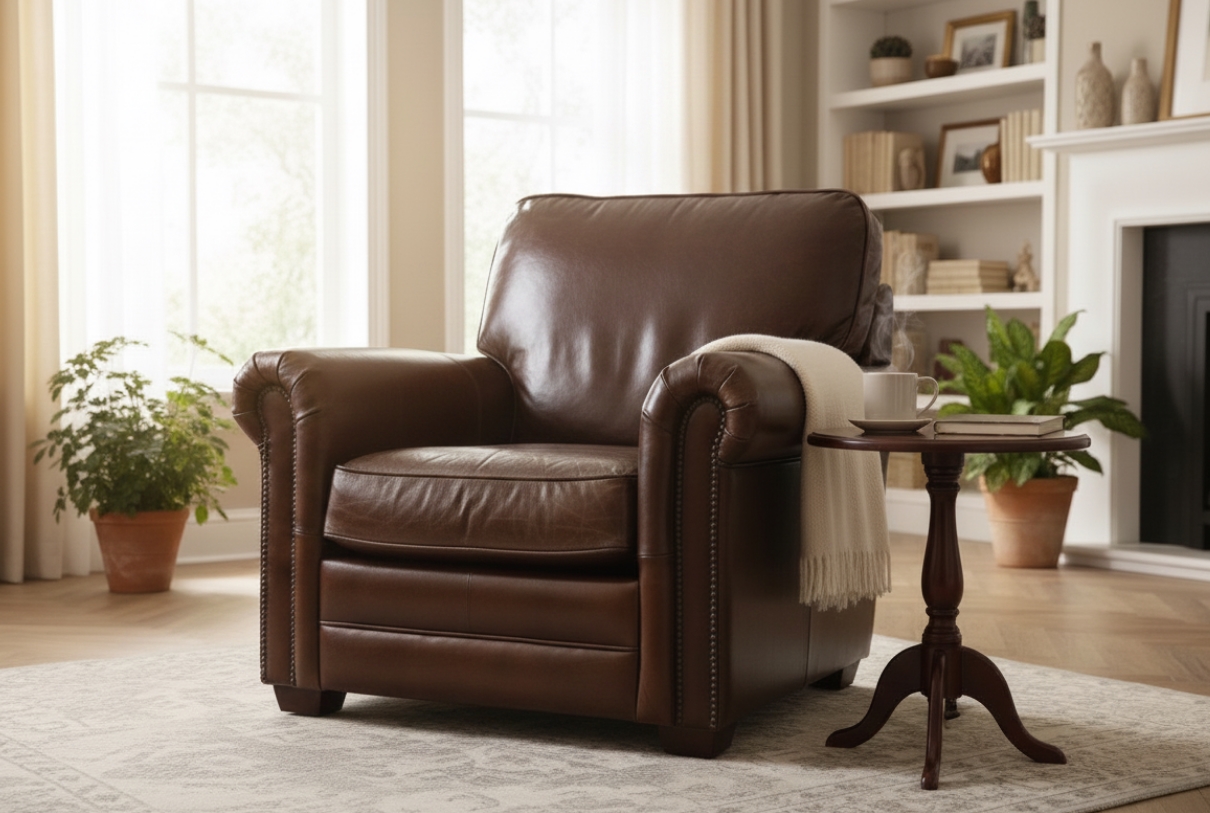
Good choices include a distressed leather armchair, a chaise lounge, a cabinet with darker wood tones, a bookcase with character, or a trunk-style footstool. These pieces are especially useful when the rest of the room has clean walls and simple flooring.
Vintage-style furniture works well when you want to:
- add interest beside a plainer sofa
- bring depth to a room with calm walls
- introduce one traditional detail without filling the whole space
- make the room feel more elegant and collected
If the room needs storage as well as character, vintage cabinets and bookcases can be useful because they give books, ceramics and everyday items a more considered place to sit. Used carefully, vintage-inspired furniture can add depth while keeping the overall look light and easy to enjoy.
Lighting and Small Details That Make the Whole Room Feel More Retro
Lighting can change the mood of a retro living room quickly, especially when it feels warmer and softer than one bright ceiling light. An arc floor lamp beside the sofa can create a relaxed reading corner, while a mushroom-style table lamp on a sideboard adds a rounded retro shape without taking up much room.
Other good choices include:
- brass table lamps for a smarter finish
- smoked glass shades for a 70s-inspired touch
- rattan or fabric lampshades for a softer look
- sculptural lamp bases when the room needs one creative detail
Small finishing touches should support the room, not crowd it. A warm throw over the arm of the sofa, one or two patterned cushions, a ceramic vase, a few books or a side table with a more distinctive shape can make the room feel complete.
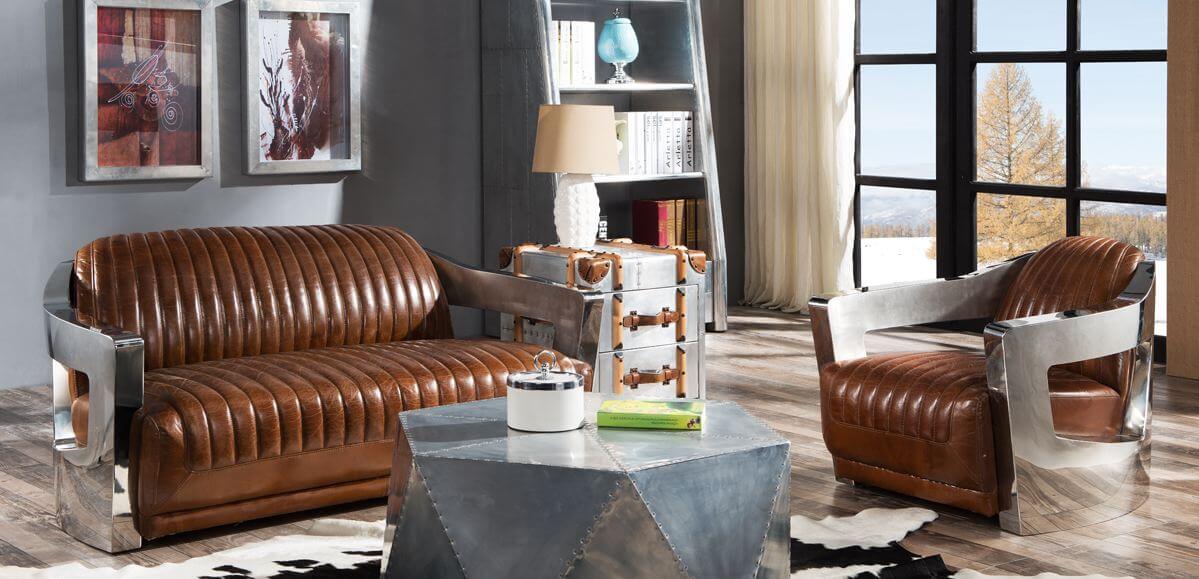
A vintage coffee table can also help here, especially if it brings in wood, leather, metal or a trunk-style shape. These details work best when they echo the larger choices already made in the room. They add personality, but they should not fight with the sofa, rug or main colour palette.
How to Make a Retro Living Room Feel Stylish, Not Old Fashioned
A retro living room feels more current when the layout has a little breathing room. You are not trying to create an old fashioned living room, but a space where past-inspired shapes, colours and materials still feel useful today. A curved sofa, vintage-style chair or bold table will stand out more when the surrounding area is calm and uncluttered.
A few practical tips help keep the look fresh:
- Choose one main wood tone. Mixing walnut, oak, teak and very dark wood in one room can make the design feel unsettled.
- Limit strong colours. One main accent colour, supported by softer shades, is easier to live with than several loud colours at once.
- Add modern contrast. A clean rug, simple curtains or plain walls can stop the retro theme from feeling too heavy.
- Keep comfort visible. A comfy sofa, good lighting and enough space to move around make the room feel like part of a real home, not a display set.
The most common mistakes are using too many decades at once, adding too much small decor, or trying to make every item retro looking. This can make the room feel less relaxed. The best retro living rooms feel warm, practical and well chosen, with clear furniture decisions doing most of the work.
Final Thoughts
Retro style works best when the room starts with furniture that has character, then builds gently through colour, texture and detail. You do not need to change everything at once. A sofa with the right shape, a warmer palette and a few vintage-style accents can quickly make a living room, sitting room or lounge room feel more welcoming and complete.
For a more noticeable refresh, begin with the pieces that shape the room most: sofas, armchairs, coffee tables and accent furniture. Explore Designer Sofas 4U to choose a sofa that brings retro charm, comfort and personality into your living room.
FAQ
How do I start a retro living room?
Start with the part of the room people notice first. For most homes, that will be the sofa, armchair, rug or main table. The easiest retro living room ideas often begin with one clear piece, such as a tan leather sofa, a curved chair or a geometric rug. Once that first choice feels right, use it to guide the colours, lighting and smaller pieces around the room.
What colours work best in a retro living room?
The easiest retro colours to live with are usually rich rather than loud. Olive green, rust, mustard, tan, deep brown, teal and muted blue all work well. Pair them with cream, beige, soft white, walnut or leather so the room feels balanced. For a calmer look, try olive with cream. For something smarter, tan leather with teal and brass can work beautifully.
What kind of sofa looks good in a retro living room?
A lower profile, curved arms, buttoned back, wooden legs or leather upholstery can all suit a retro room. Tan, chestnut, dark brown, olive and deep green are useful colours. A 2 seater is often enough for a compact space, while a 3 seater or corner sofa can help a larger room feel more complete.
How do you make retro style look modern?
Use retro style in a controlled way rather than making every item look period-inspired. A vintage-style chair can sit beside a simple sofa, or a bold rug can work with plain walls and clean curtains. Good lighting also helps. Instead of relying on one bright ceiling light, add a floor lamp or table lamp to make the room feel softer and more current.
Can a small living room have a retro style?
Yes, but it works best when the room is not overloaded. Choose one or two stronger features, such as a compact sofa with slim legs, a patterned rug or a small vintage-style armchair. Keep larger surfaces calmer, especially walls and flooring. This gives the room a retro look while still leaving enough space to move around comfortably.
What is the difference between retro and vintage interiors?
Retro usually means a style inspired by past decades, especially the shapes, colours and materials linked with the 1950s, 60s and 70s. Vintage often refers to older pieces, or new pieces designed with an older look. A room can be retro without using antiques. For example, a new distressed leather armchair or trunk-style table can still support a vintage-inspired retro look.