
.jpg)
Black Sofa Living Room Ideas: How to Style a Bold Centrepiece
If you are exploring black sofa living room ideas, it helps to think beyond colour alone. The result depends on how the sofa is positioned, how much space surrounds it, and how the rest of the room is arranged around it. A well-designed interior is not about adding more elements, but about making sure each one has a clear purpose.
Unlike lighter pieces, a black sofa introduces visual weight. When placement and spacing are handled correctly, that weight gives the room structure rather than making it feel heavy.
Why a Black Sofa Works in Any Living Room
A black sofa is one of the most adaptable pieces of furniture you can introduce into a home. It provides structure immediately and helps define how the space is used.
In open-plan layouts, it can act as a visual boundary without needing walls or partitions. In smaller rooms, it anchors the seating area and creates a clear centre of use.
It also works across different interiors and styles:
- in traditional spaces, it balances softer tones
- in modern interiors, it creates contrast and clarity
- in mixed styles, it acts as a neutral base
There is also a practical side. Dark upholstery handles daily wear more easily, making it suitable for busy households where comfort and durability matter.
This combination of structure, flexibility and visual presence is what gives black sofas their lasting appeal.
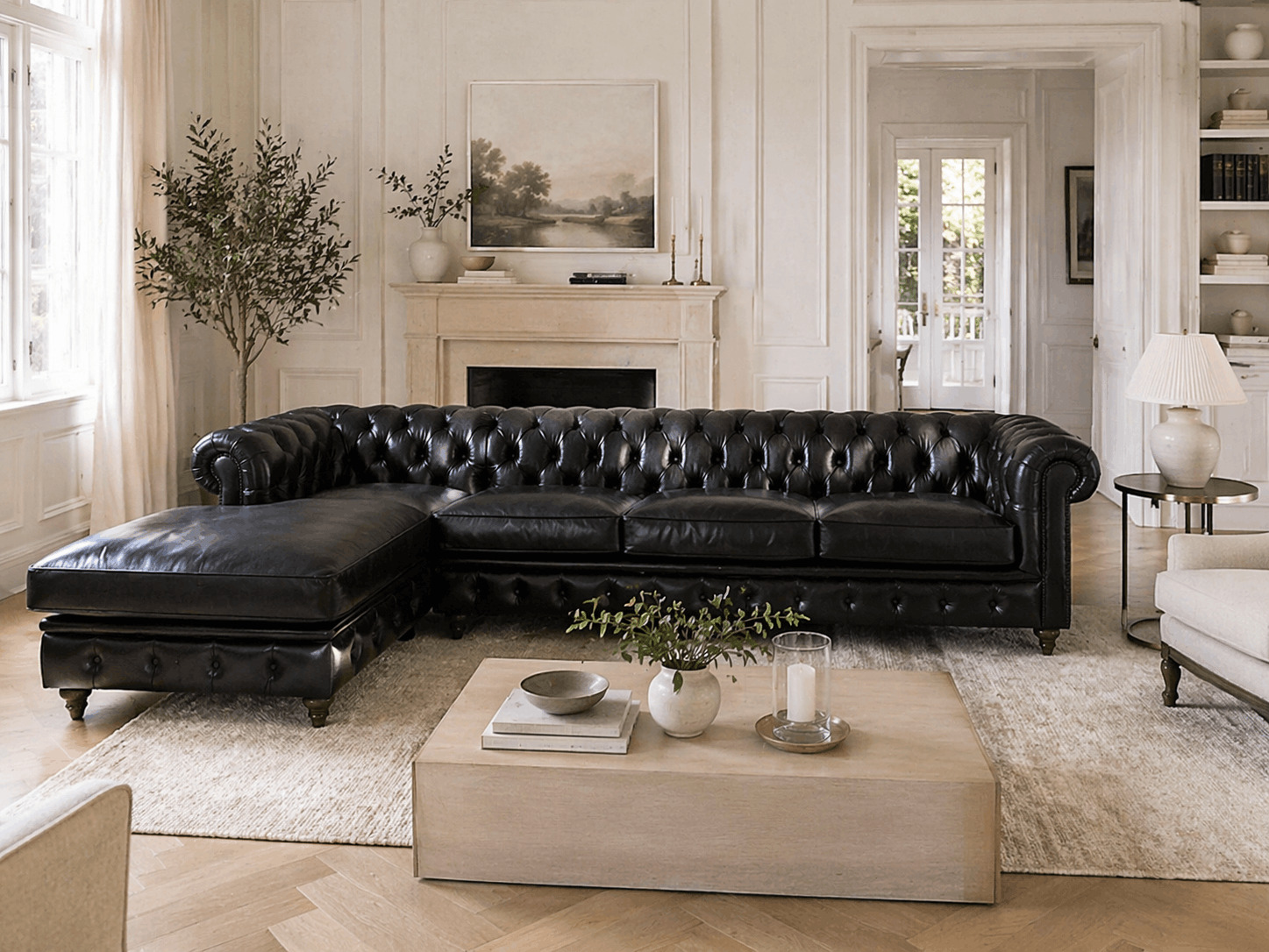
Black Sofa Living Room Ideas That Work in Real Homes
In smaller rooms, the priority is maintaining clear movement. The sofa should not interrupt natural pathways, and there should be enough space to move around it comfortably.
In larger interiors, the sofa helps organise the layout. It can separate a seating area from a dining space or define a dedicated zone for relaxation.
The strongest ideas for living room with black sofa focus on:
- maintaining clear circulation
- placing seating around key activities
- keeping consistent spacing between elements
As a result, the room feels easy to navigate and practical to use.
What Colours Go with a Black Sofa
Colour selection determines how the sofa is perceived within the space and how balanced the room feels overall.
Light Neutrals for Balance
White, cream, beige and soft grey create contrast and reflect light. These tones prevent the sofa from dominating the room and help maintain a sense of openness.
They are particularly useful in smaller spaces where brightness plays a key role in how the room feels.
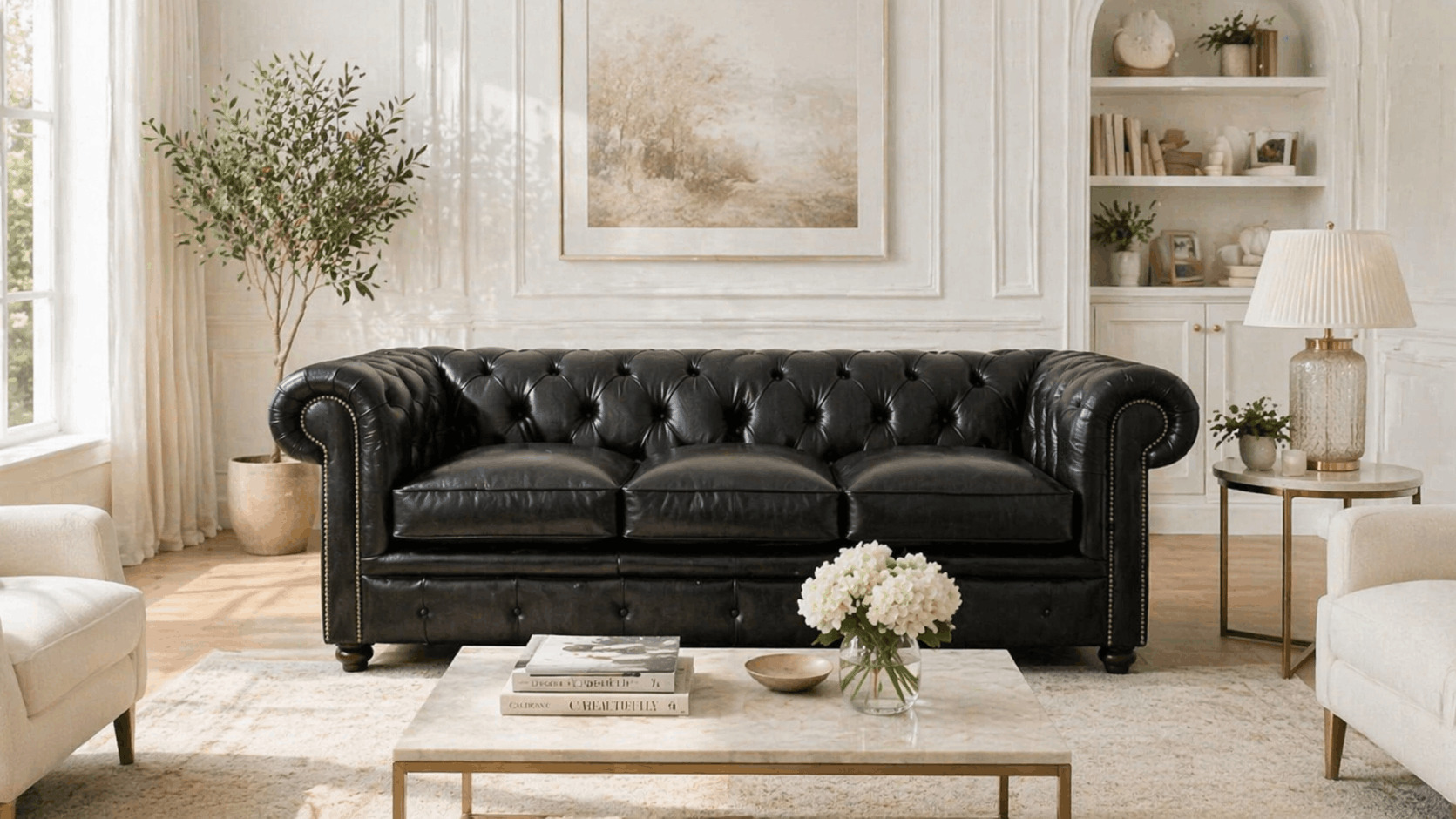
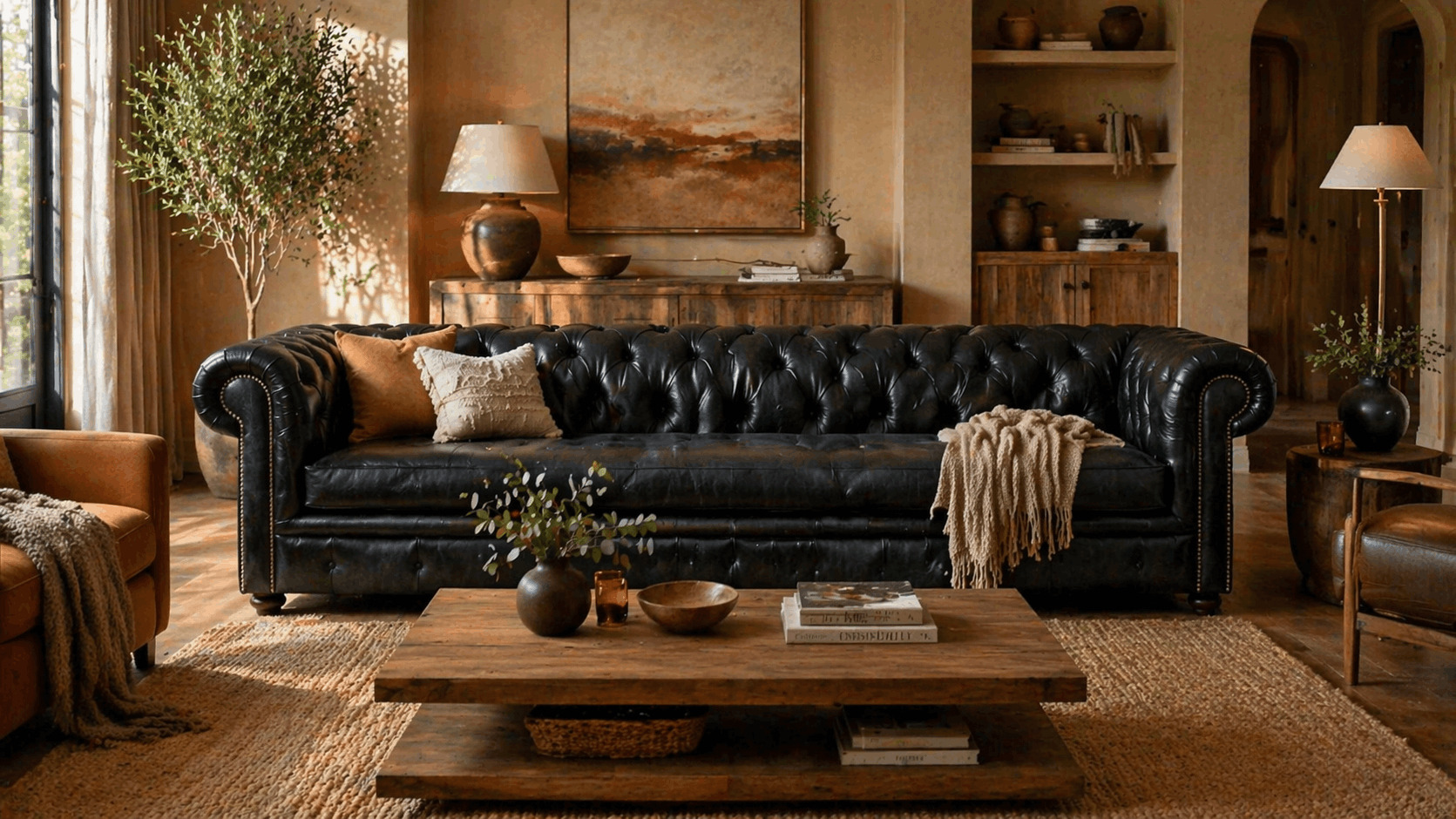
Warm Tones for a Cosy Feel
Tan, caramel and terracotta introduce warmth and reduce the visual sharpness of black.
These shades are well suited to relaxed interiors where comfort and atmosphere are a priority.
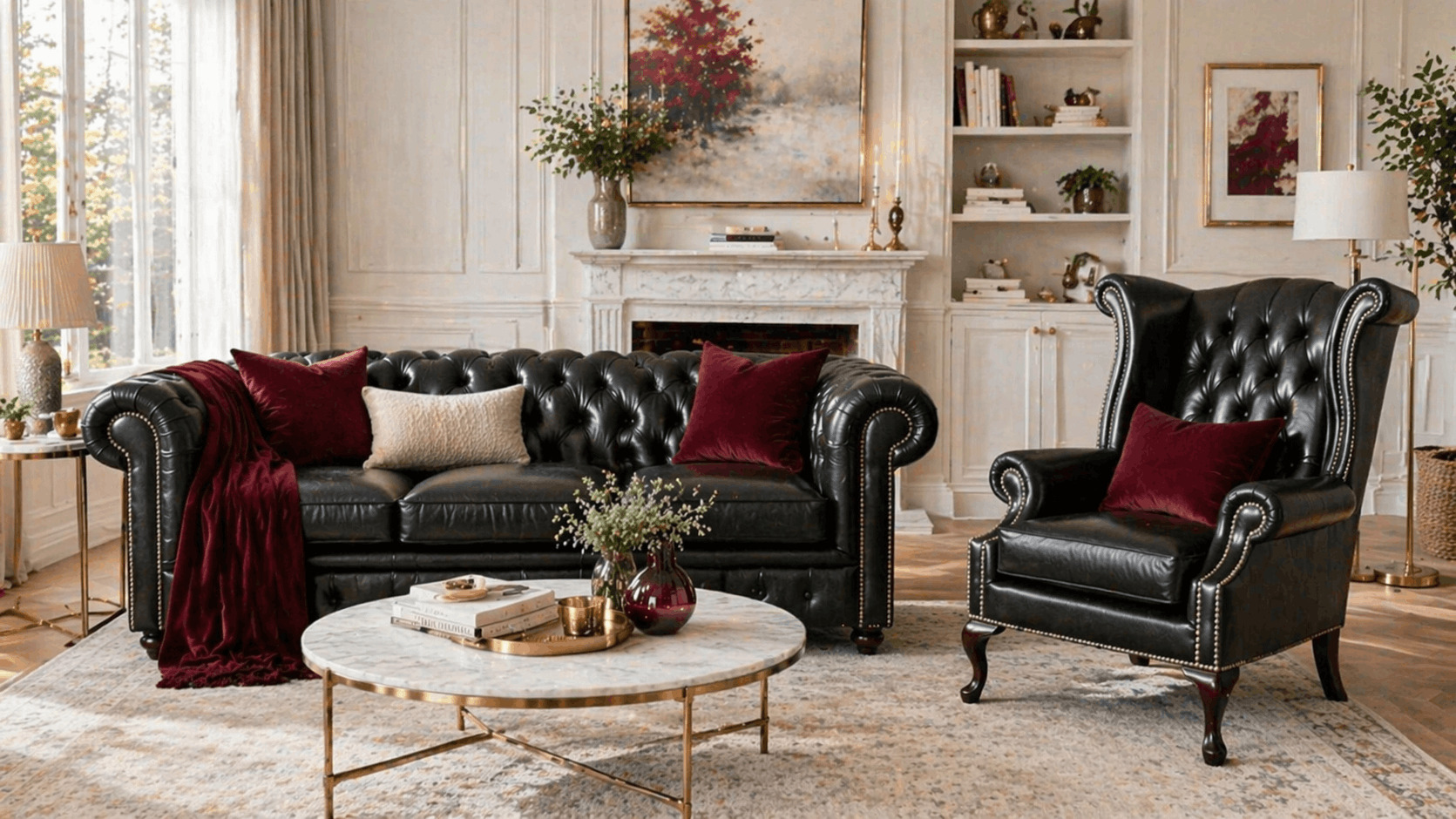
Bold Colours for Contrast
Deeper tones such as navy, emerald, mustard or burgundy add character.
This is where black sofa color combinations become important. Rather than combining multiple bold shades, using one strong accent creates a more controlled and intentional result.
Monochrome Black & White
A monochrome palette remains a classic approach that works across different interiors.
Instead of relying on colour variation, the focus shifts to contrast and material differences, helping the space feel more defined without becoming overly busy.
When choosing living room colors with black couch, the goal is to create balance across the entire room. Walls play a major role — lighter finishes open up the space, while darker tones create a more contained and focused atmosphere.
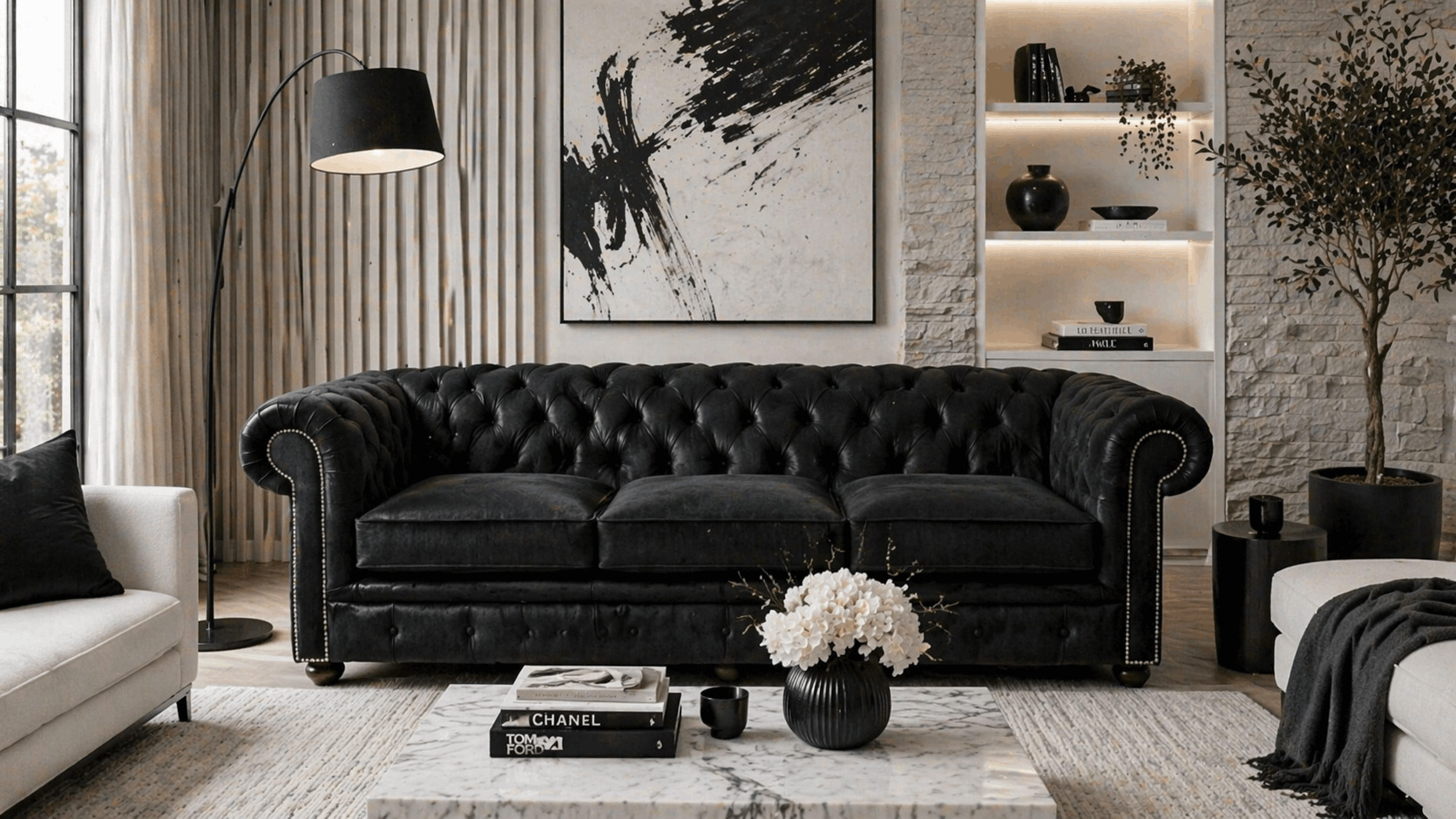
Black Sofa Living Room Ideas by Style
A black sofa adapts to different styles, but the surrounding choices determine how it feels in the room.
Modern Minimalist
Simple forms, clean lines and minimal decoration create a structured environment where the sofa becomes the central visual anchor.
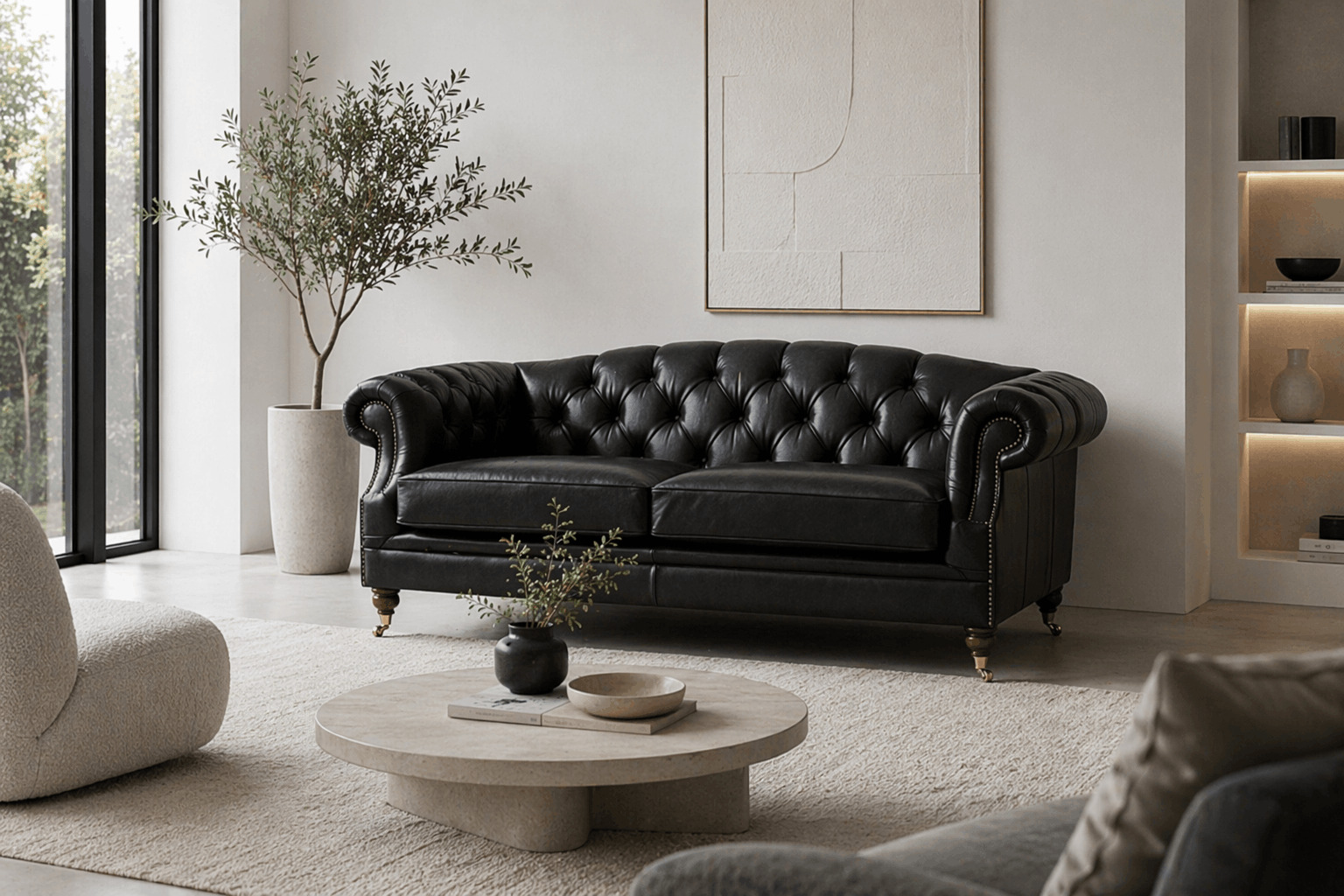
Industrial Loft
Materials such as metal, concrete and exposed wood work naturally with black upholstery, especially in leather finishes, creating a more architectural look.
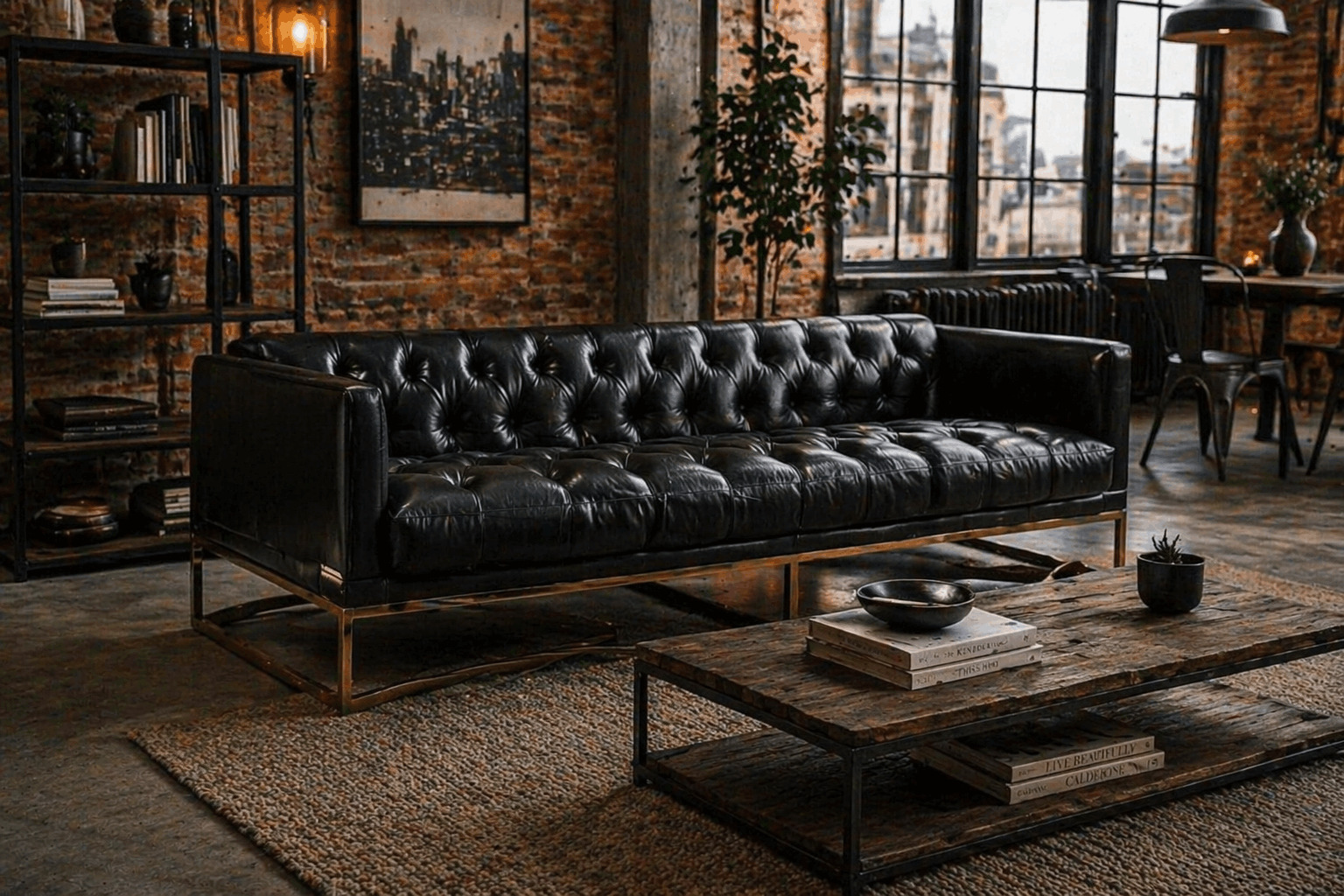
Luxury & Glam
Soft finishes and reflective accents introduce depth and a more refined atmosphere, giving the sofa a more elevated presence.
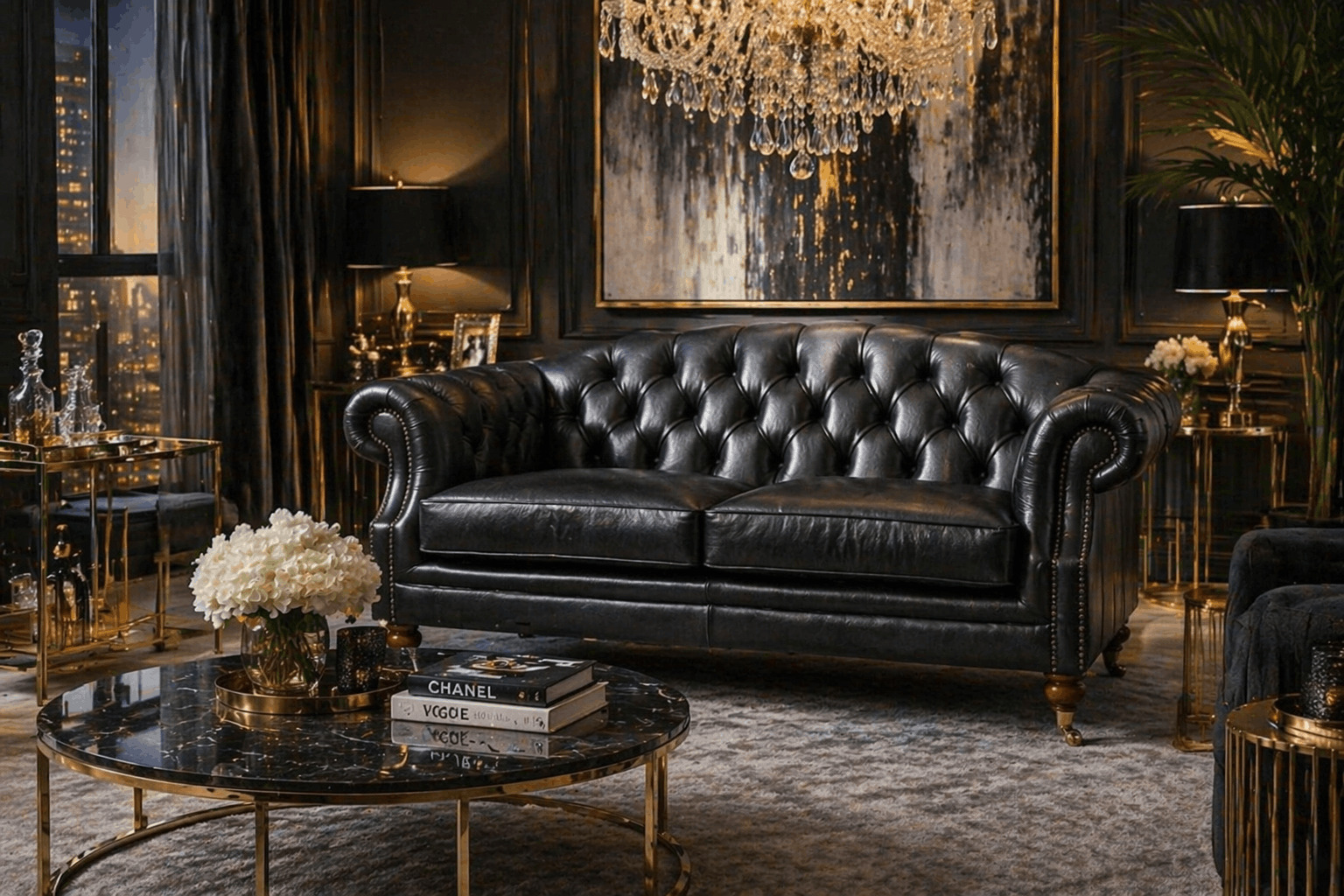
Scandinavian
Light colours and natural materials balance the weight of the sofa, creating a more open and relaxed space.
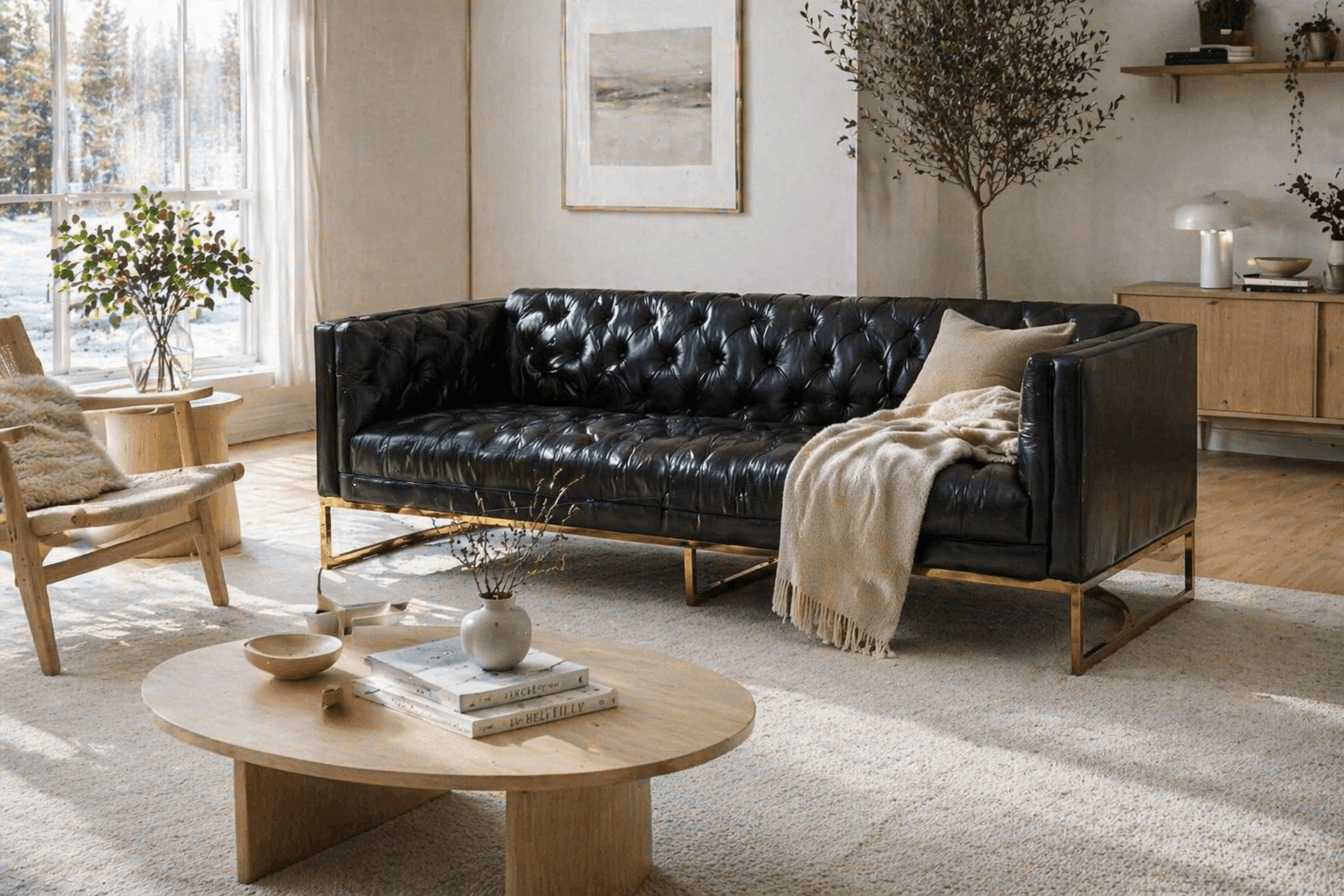
Cosy & Contemporary
Warmer tones and layered elements create a comfortable, everyday environment focused on usability rather than strict styling rules.
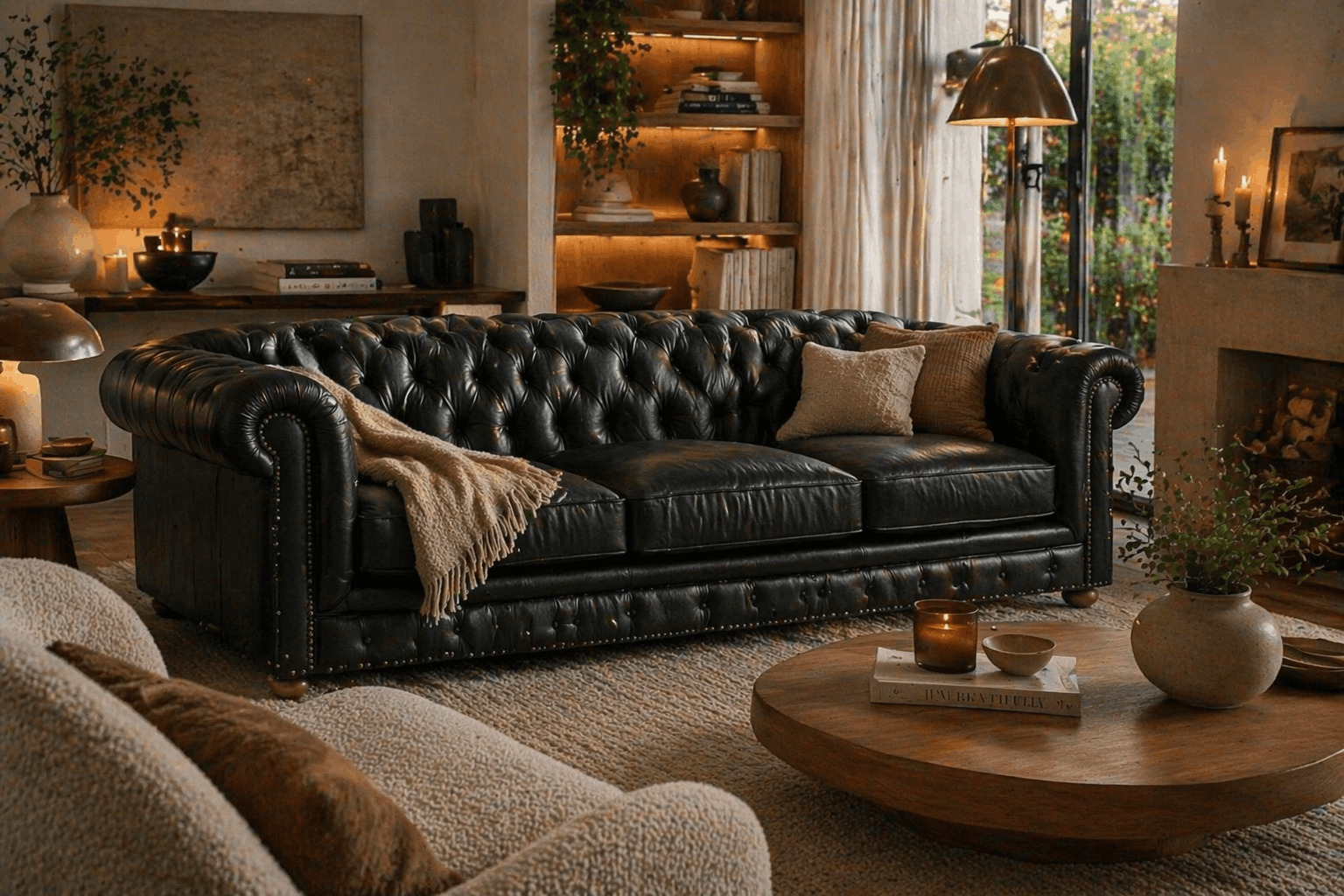
Each direction depends on consistency in design rather than adding more decorative elements. The same principles apply whether you are styling a sofa or a couch, as the balance of colour remains key.
How to Style a Black Sofa for Maximum Impact
Styling a black sofa is about control and placement rather than quantity.
To create a balanced result:
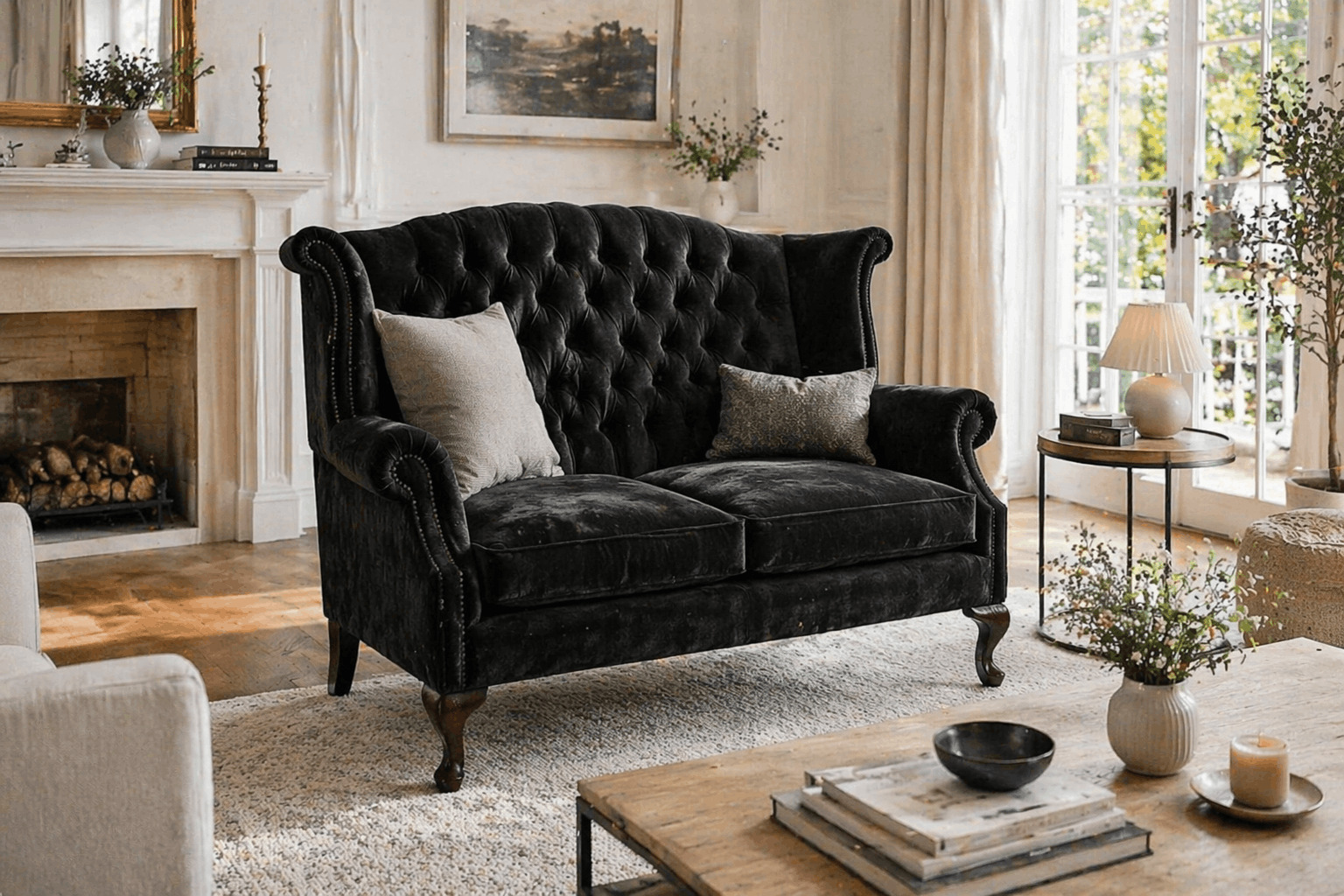
- use pillows in lighter tones to soften contrast
- introduce a cushion with subtle variation
- place a rug to define the seating area
- use layered lighting to shape the space
A more creative approach can include combining different finishes or adjusting proportions to create a more dynamic layout.
Effective living room decor for black sofa should support the overall arrangement rather than compete with it. In well-designed interiors, even small adjustments in proportion or placement can change how the entire room is perceived.
Furniture and Materials That Pair Well with Black Sofas
Natural wood introduces warmth and a sense of charm, helping to balance darker tones. Metal adds contrast, while glass keeps the space visually lighter.
Textiles such as linen, wool and fabric upholstery contribute to comfort and make the environment feel more relaxed.
If you are comparing finishes, this guide to fabric vs leather sofas explains how different materials perform in real homes.
Shape also affects functionality. A corner sofa helps structure open spaces, a chaise sofa supports more relaxed seating, and a sofa bed adds flexibility.
If you are still deciding, you can explore our leather sofas or fabric sofas to compare options.
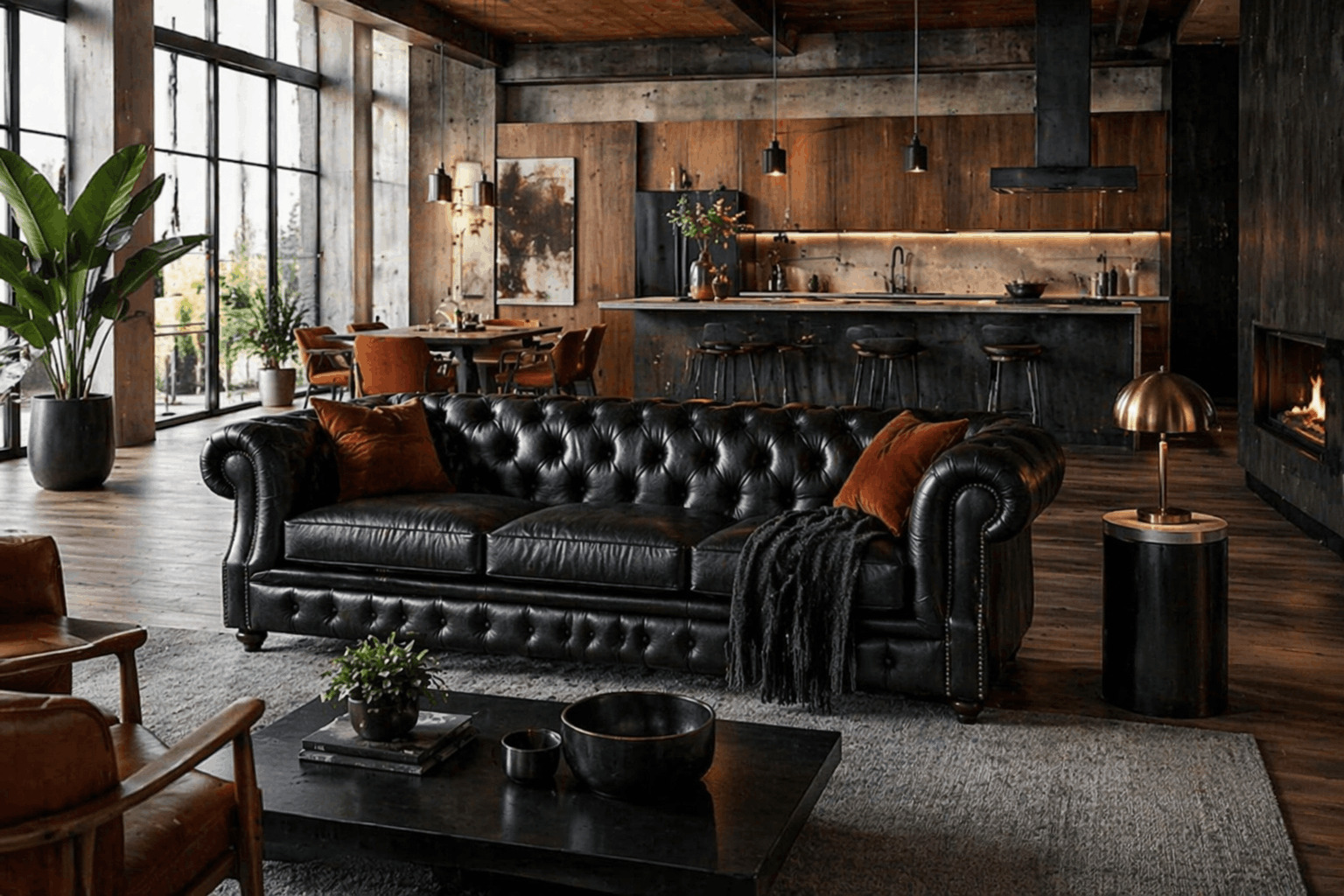
Layout Planning: Positioning a Black Sofa Correctly
Placement directly affects how the room functions.
A poorly positioned sofa can interrupt movement or make the space feel restricted. The aim is to support natural flow and ensure the layout feels intuitive.
Key considerations include:
- maintaining clear walking paths
- aligning seating with a focal point such as a TV or fireplace
- keeping distances between furniture comfortable
In smaller rooms, positioning the sofa slightly away from the wall can create a sense of depth. In larger spaces, it can be used to define zones without additional structures.
Working with Light and Surfaces
Because a black sofa absorbs light, the surrounding environment needs to compensate for that effect.
Instead of relying on a single light source, combining different types of lighting creates a more balanced result.
Surfaces also play a role. Reflective materials help distribute light, while softer finishes reduce harsh contrast.
To improve overall clarity:
- combine different lighting sources
- avoid clustering dark materials together
- introduce lighter finishes nearby
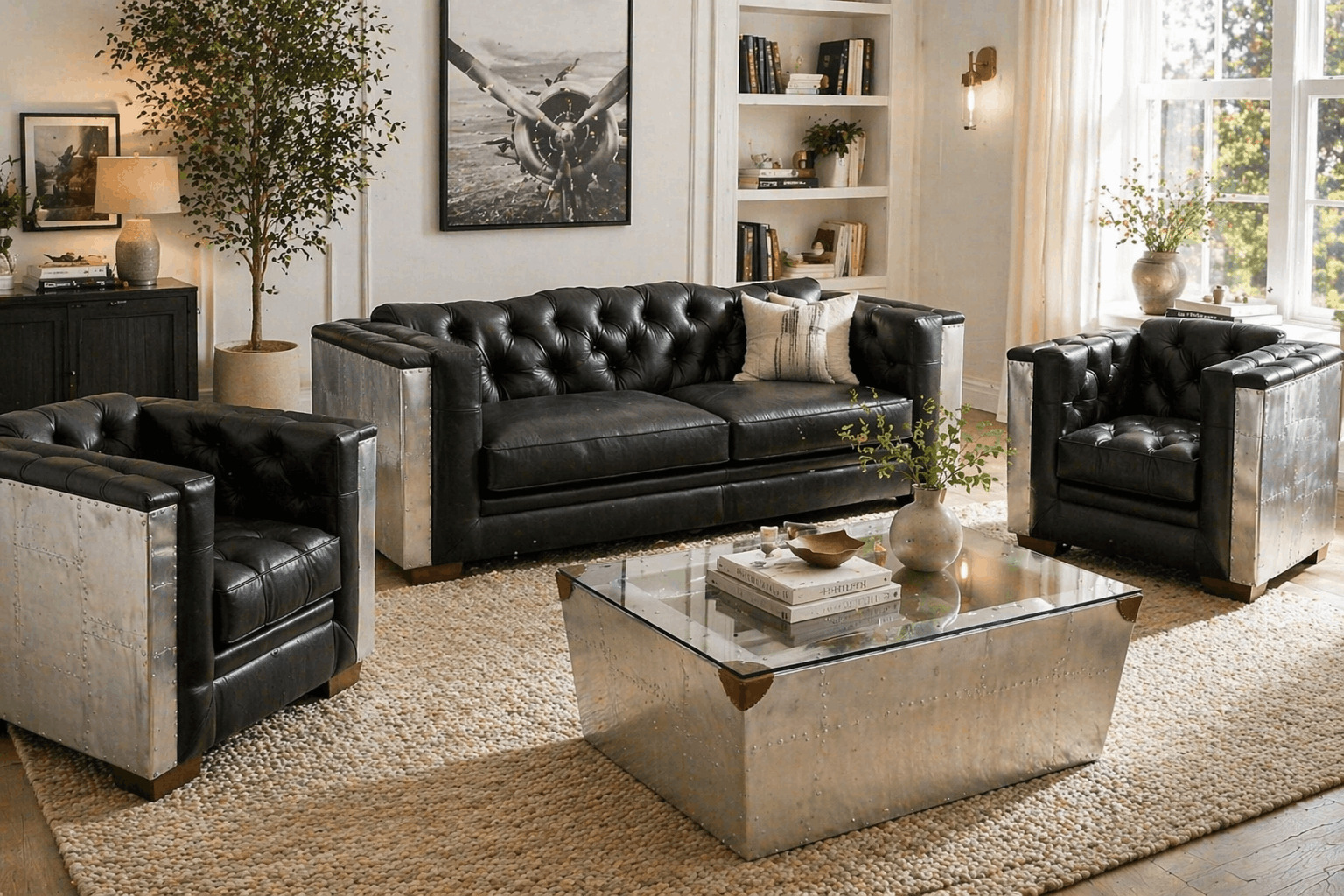
Creating Depth Through Accessories and Layers
Depth is created through variation rather than decoration alone. A black sofa naturally forms a strong visual base, so the surrounding elements should introduce contrast in a controlled and intentional way.
The focus should be on how different elements relate to each other — not how many are used, but how they are positioned, combined and balanced within the space.
A practical approach includes:
- varying heights across furniture and decor to avoid a flat, one-level layout
- combining materials such as wood, fabric and metal to introduce contrast
- placing accents in key positions rather than spreading them evenly
- using negative space to allow each element to stand out
Layering is not about adding more — it is about creating visual rhythm. A rug defines the base, seating adds structure, and carefully placed accessories introduce variation without overwhelming the room.
When done correctly, this approach creates an environment that feels considered and complete, with enough depth to remain visually interesting over time. Wall art and carefully chosen pictures can also help define the atmosphere, especially when they echo the colour palette used across the room.
Why Black Sofas Remain a Long-Term Choice
Black sofas continue to work because they adapt as interiors evolve.
While earlier designs often felt heavy, modern versions use cleaner lines and better proportions, making them suitable for a wider range of homes.
They also allow flexibility. Changes in colour, layout or accessories can refresh the space without replacing the main piece. This adaptability makes them a consistent and timeless choice for long-term use.
Common Mistakes When Decorating with a Black Sofa
A black sofa can feel overwhelming when the room lacks balance.
Common issues include:
- using too many dark elements together
- ignoring lighting conditions
- choosing materials that feel overly heavy
- arranging furniture without a clear structure
These problems are usually resolved by adjusting layout and material choices. Small changes, such as introducing contrast, improving light distribution or simplifying the arrangement, can quickly rebalance the space and make the sofa feel integrated rather than dominant.
Quick Styling Ideas You Can Try Today
Simple adjustments can improve the space quickly:
- add lighter textiles
- reposition furniture
- introduce greenery
- adjust lighting
These changes can make the room feel more stunning while keeping it functional. Even subtle updates can shift the overall perception of the room, helping it feel fresher, more balanced and better suited to everyday use without requiring a full redesign.
Final Thoughts: Making a Black Sofa Work in Your Space
A black sofa works best when the surrounding layout, colour and materials are carefully balanced. When these elements are aligned, the room feels both practical and visually complete, rather than styled in isolation.
What matters most is not the number of elements you add, but how well they work together. Clear spacing, thoughtful placement and a controlled colour palette will always have more impact than overloading a room with decor.
A well-positioned sofa can define how the room is used, guide movement and create a natural focal point. When combined with the right lighting and materials, it becomes a piece that supports everyday living rather than just filling the room
At Designer Sofas 4U, we focus on design that fits real homes, combining everyday comfort with long-lasting quality. If you are planning your layout, our sofa sizes guide can help you make the right choice and avoid common spacing mistakes.
If you are exploring similar tones, you may also find inspiration in dark grey sofa ideas , navy blue living room ideas or more natural palettes such as olive green sofa ideas.
FAQ
What colours go with a black sofa in a living room?
A black sofa works well with both light and rich tones. Neutrals like white, cream and soft grey brighten the room and create contrast, while warmer shades such as tan or terracotta make the space feel more relaxed. Deeper colours like navy or green can also work, but it’s best to keep the palette simple to avoid a heavy look.
What colour cushions go with black sofa for a balanced look?
Lighter cushions help soften the contrast of a black sofa and make it feel less dominant. You can also use warmer tones like beige, rust or muted orange for a more inviting look. Adding a mix of textures — such as woven or velvet — creates depth without needing too many colours.
What color curtains go with black couch in a modern interior?
Curtains should balance the overall room rather than match the sofa. Light fabrics in neutral tones keep the space open and airy, while darker curtains can add contrast if the room already has enough light. Choosing the right fabric also matters — lighter materials feel more relaxed, while heavier ones create a more formal look.
What colour carpet goes with black sofa to complete the space?
A neutral carpet in beige, grey or soft tones helps balance the visual weight of a black sofa. Textured or patterned rugs can add depth and prevent the space from feeling flat. It’s also important to choose the right size so the rug connects the seating area and feels intentional.