
.jpg)
History of the Chesterfield Sofa: Origin, Design and Lasting Appeal
Some sofas become fashionable for a season. A Chesterfield has done something far more difficult: it has stayed recognisable for centuries. The history of the chesterfield sofa is not only about where it came from, but why its deep buttoning, rolled arms and confident shape still feel relevant in modern homes.
A Chesterfield is more than a formal couch or traditional settee. It is a piece of British furniture with a clear identity, a strong meaning and a design legacy that has moved from aristocratic rooms into everyday living spaces.
What Is a Chesterfield Sofa?
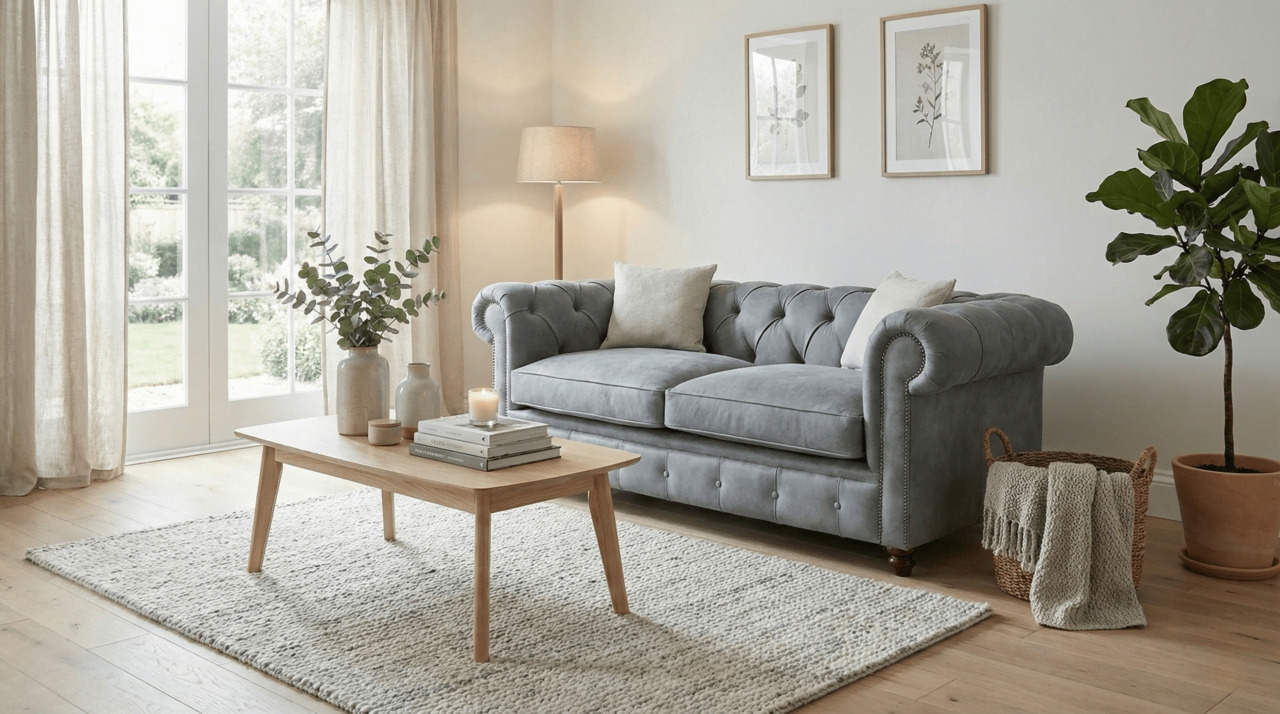
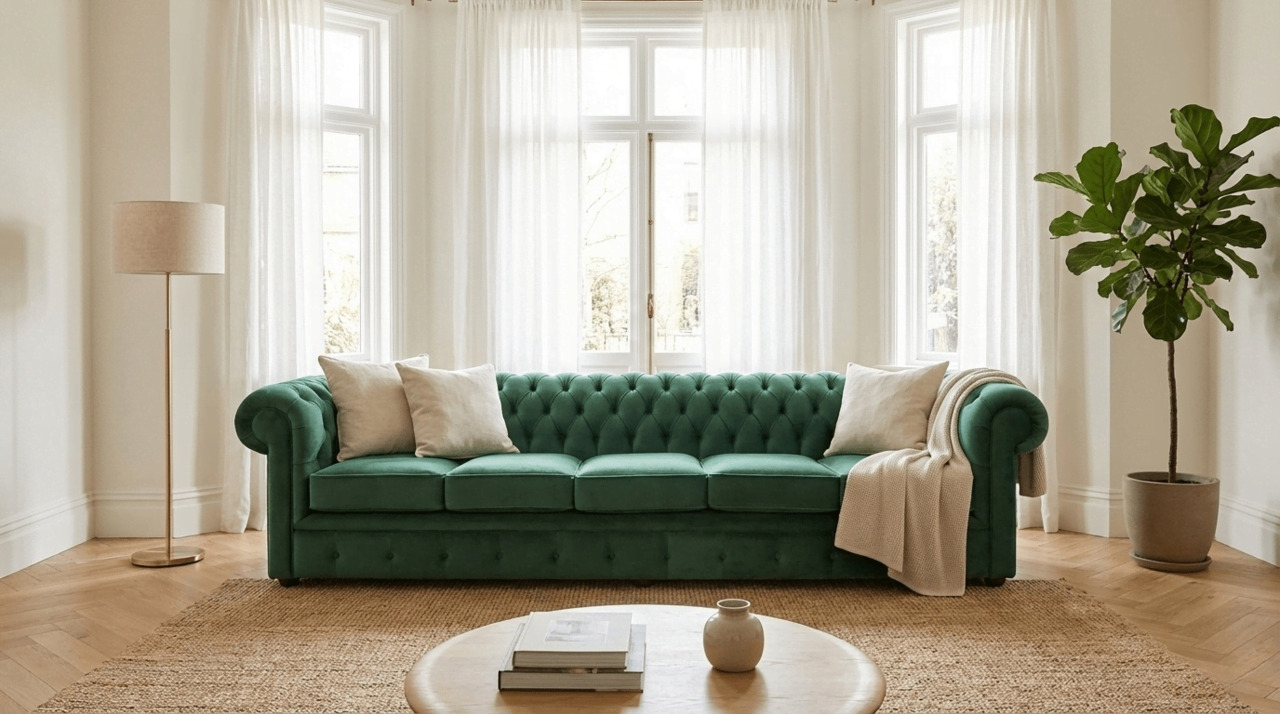
A clear definition begins with the shape. A Chesterfield is a sofa or settee with deep button tufting, rolled arms and a structured back that gives the seat its formal, instantly recognisable profile.
Traditional Chesterfields are often made in leather, although fabric and velvet versions are now common in modern homes. The style can feel grand, relaxed, decorative or understated depending on the upholstery, colour and room around it.
A Chesterfield is usually recognised by:
- deep button tufting across the back and sometimes the seat
- rolled arms with a rounded, sculptural shape
- a low, structured back
- a strong, confident silhouette
- leather, fabric or velvet upholstery
These details make the Chesterfield easy to spot. They also explain why the sofa feels classic without needing to look old fashioned.
The Origin Story Behind the Chesterfield
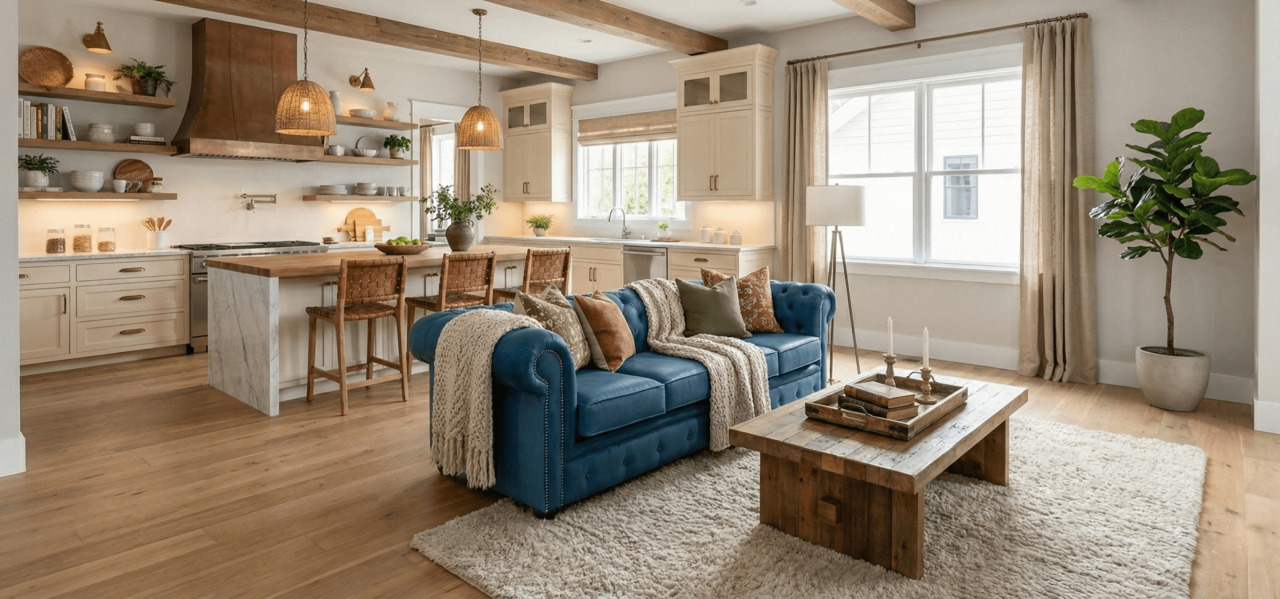
The chesterfield sofa origin is usually connected with Philip Stanhope, the 4th Earl of Chesterfield, who lived in the 18th century. According to popular history, he wanted a seat that allowed gentlemen to sit upright without creasing their clothing. The story fits the sofa’s formal posture, but it is best treated as tradition rather than a fully proven design record.
The origin of chesterfield as a sofa term is more complicated. Its etymology is linked to the title and place name Chesterfield, while the word later became associated with a deep buttoned upholstered couch. This is one reason the Chesterfield feels slightly legendary. It has a famous story, but it also has a wider journey through British interiors, language and furniture making.
That mix of fact, tradition and design identity is part of its charm.
From Aristocratic Seat to British Interior Classic
Over time, the design became more than an aristocratic idea because it suited formal social spaces. It looked composed, supported upright sitting and brought visual weight into a room. Over time, it became associated with clubs, offices, libraries, hotels and homes where furniture needed presence as well as comfort.
| Era | What changed | Why it still matters |
|---|---|---|
| 18th century | Linked with formal seating and upright posture | Explains the sofa’s structured, composed feel |
| 19th century | Became more recognised as an upholstered sofa style | Helped the Chesterfield move beyond aristocratic rooms |
| 20th century | Appeared in clubs, offices, hotels and private homes | Built its image as a British interior classic |
| Today | Reworked in leather, fabric, velvet and sofa bed forms | Makes the design easier to use in modern homes |
This journey helped turn the Chesterfield into an iconic British classic. It was not only a practical place to sit. It became a sign of taste, confidence and long lasting style.
Why the Design Became So Iconic
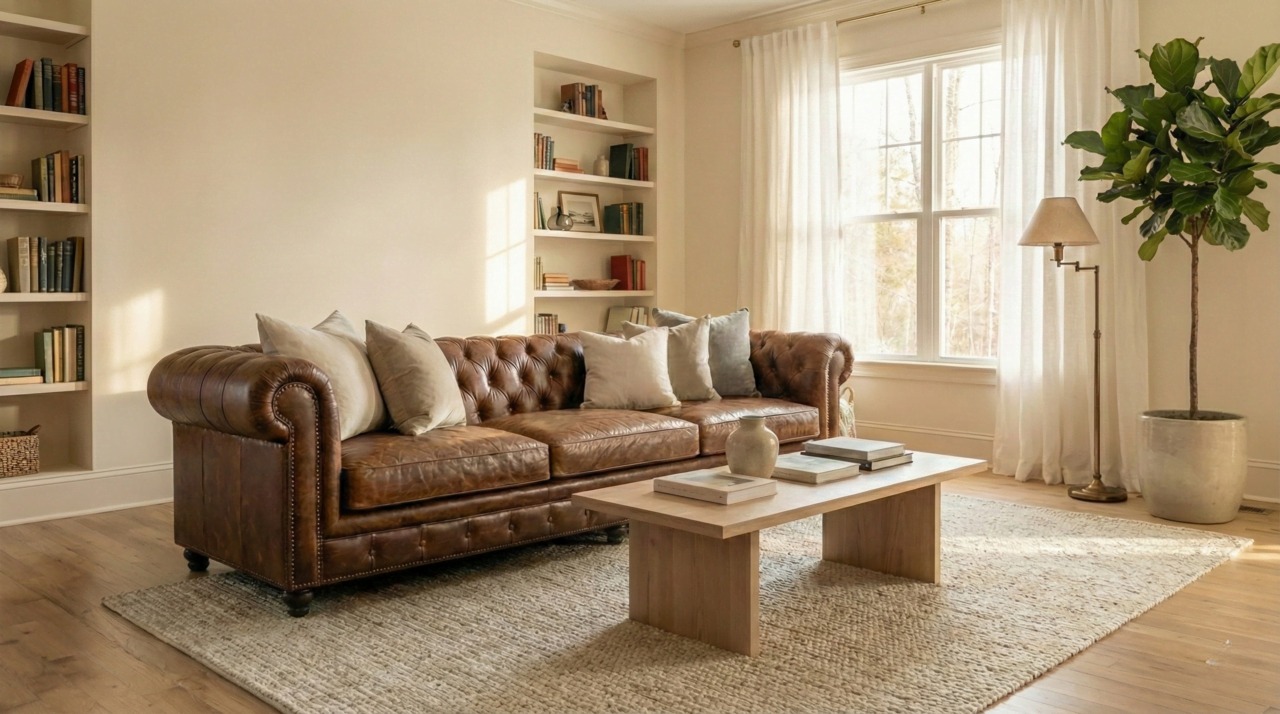
Much of its strength comes from details that work together. The tufted back gives the sofa depth. The rolled arms soften the outline. The low profile makes the piece feel grounded. The upholstery then changes the mood, from traditional leather to softer fabric or velvet.
| Design detail | What it adds |
|---|---|
| Deep button tufting | Texture, depth and a crafted look |
| Rolled arms | A softer outline and recognisable profile |
| Low back | A grounded, formal shape |
| Leather upholstery | Richness, ageing character and traditional appeal |
| Fabric or velvet | A softer, more decorative mood |
This is why the meaning of a Chesterfield goes beyond decoration. It has a clear shape, but it also carries a sense of heritage. One sofa can make a room feel more considered, even when the rest of the space is simple.
How Materials Changed the Chesterfield
Looking at materials, the chesterfield couch history is closely tied to leather. A dark brown, black or oxblood leather Chesterfield still feels traditional, substantial and rooted in British interior style. Leather gives the sofa structure and develops character over time, which suits a piece designed to last.
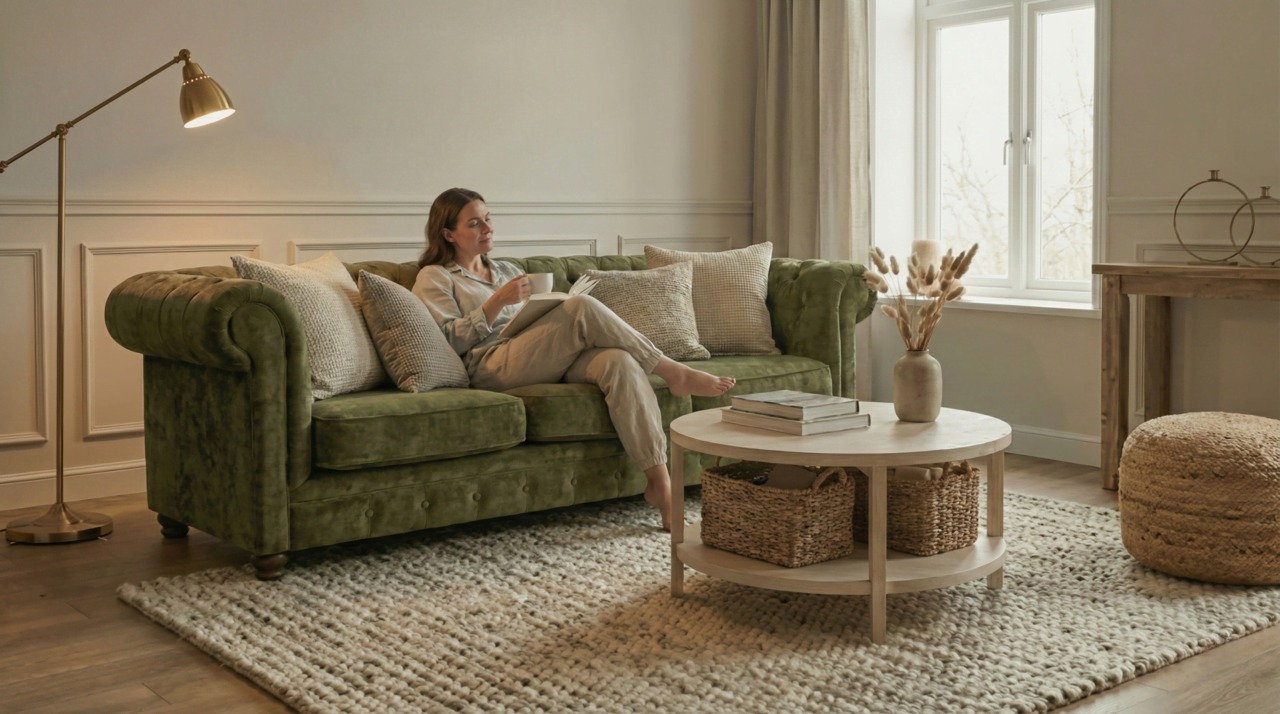
For a softer look, fabric changes the whole mood. A fabric Chesterfield can feel warmer and more relaxed, especially in a family living room or bedroom. Velvet brings a more decorative feel, making the same shape look richer and more expressive.
The material does not erase the Chesterfield identity. It simply changes how formal, cosy, bold or modern the sofa feels.
Modern Types of Chesterfield Sofas
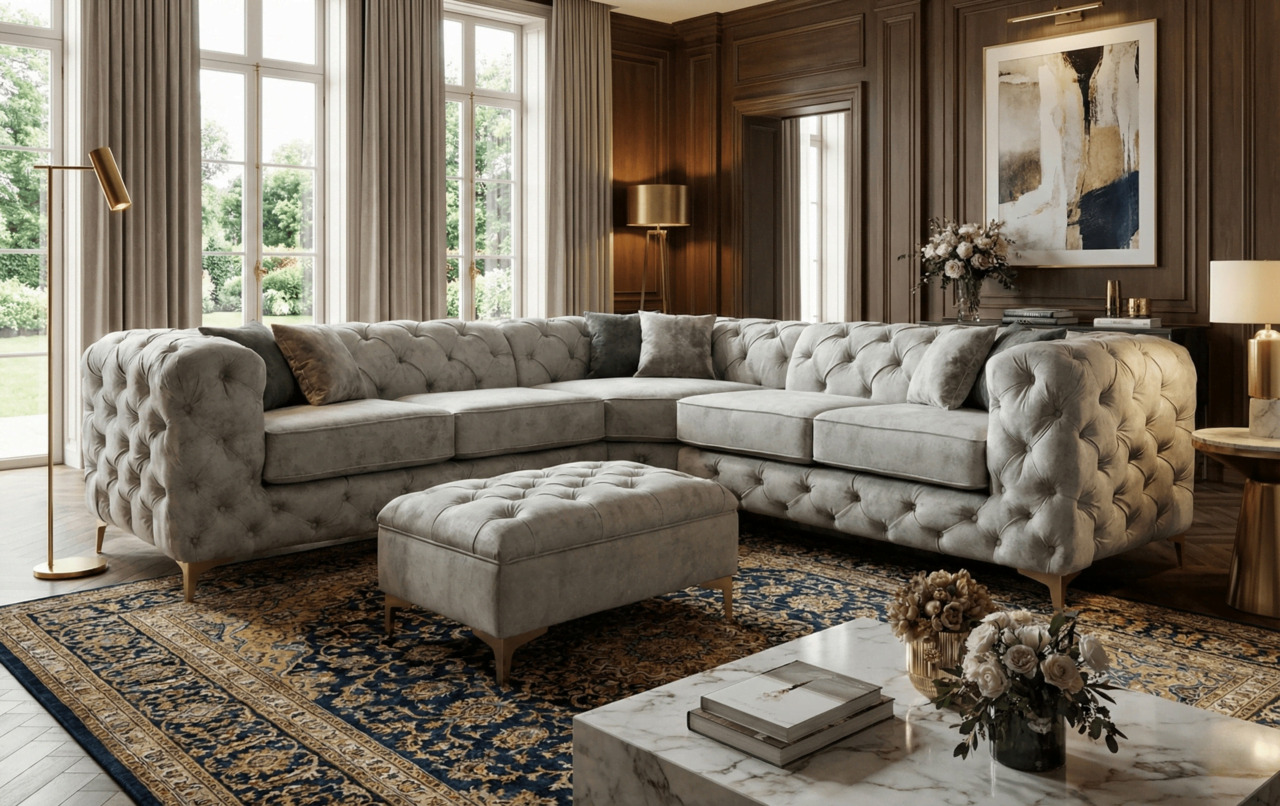
Modern Chesterfields are no longer limited to one formal three seater. The same design language now appears in compact two seater sofas, generous three seater designs, armchairs, suites, corner sofas and sofa beds.
That matters because the Chesterfield can now work in more than one kind of home. A smaller settee can suit a reading corner. A larger sofa can anchor a living room. A chair can bring the look into a study. A corner design can make the style practical for open plan spaces.
For homes where one room has to do more than one job, Chesterfield style sofa beds can add useful flexibility without losing the classic buttoned look.
To compare the wider range of shapes available today, Chesterfield furniture is a natural place to explore sofas, chairs, suites and other pieces inspired by this enduring design.
Why the Chesterfield Still Works in Modern Homes
In modern homes, this sofa still works because it has a clear silhouette. In a simple room, it can become the main feature without needing much decoration around it. In a layered room, it sits comfortably with rugs, bookshelves, brass lighting, timber furniture and patterned cushions.
The style also adapts well. Dark leather can suit a traditional study or formal sitting room. Soft grey fabric can feel calmer and more contemporary. Velvet can bring colour and drama while keeping the familiar outline.
At Designer Sofas 4U, the Chesterfield remains a natural choice for customers who want furniture with presence, British character and lasting appeal. It gives a home a sense of story, but it can still feel comfortable and usable in everyday life.
Final Thoughts: The Legacy of a Timeless Sofa
The history of the chesterfield sofa explains why this design has stayed relevant for so long. Its beginnings may include a little legend, but its legacy is clear. Its enduring shape, strong British identity and adaptable style explain why it continues to work in both classic and modern interiors.
It does not rely on passing trends. It brings shape, texture and history into the room. Explore handcrafted Chesterfield sofas and choose a piece that brings British character, deep-buttoned detail and enduring style into your home.
FAQ
What era are Chesterfield sofas from?
Chesterfield sofas are most closely associated with the 18th century and the Georgian era, mainly through the popular story linked to Philip Stanhope, the 4th Earl of Chesterfield. The name became more widely used later, so it is better to see the Chesterfield as a design with early roots and a long British furniture legacy.
Why is a couch called a Chesterfield?
A couch is called a Chesterfield because the name became linked with this deep-buttoned, rolled-arm sofa style. The connection is commonly traced to the Earl of Chesterfield, although the exact naming history is not fully documented. In some places, especially parts of Canada, “chesterfield” also became a general word for a sofa.
How can you tell if a sofa is a Chesterfield?
The easiest clues are the deep button tufting, rolled arms and structured silhouette. In many traditional designs, the arms and back sit at a similar height. Modern versions may soften the shape, but the sofa should still have that buttoned, sculptural look that makes the style recognisable.
Can a Chesterfield sofa look modern?
A Chesterfield can look modern when the room around it is kept simple. Clean walls, contemporary lighting, a plain rug or softer fabric upholstery can make the design feel fresh rather than formal. The sofa keeps its classic shape, but the styling changes the mood.