
.jpg)
How to Fix a Sagging Sofa
If you are wondering how to fix a sagging sofa, start by finding out where the dip is coming from. A sofa can sink because the cushion foam is worn out, the springs have popped, the plywood support has weakened or the frame has broken.
Some fixes are simple enough to try at home, especially if the cushions are removable. Others need more care, particularly when springs, upholstery or the frame are involved.
This guide takes you through the practical steps, so you can restore comfort where possible and understand when a sofa may be too far gone.
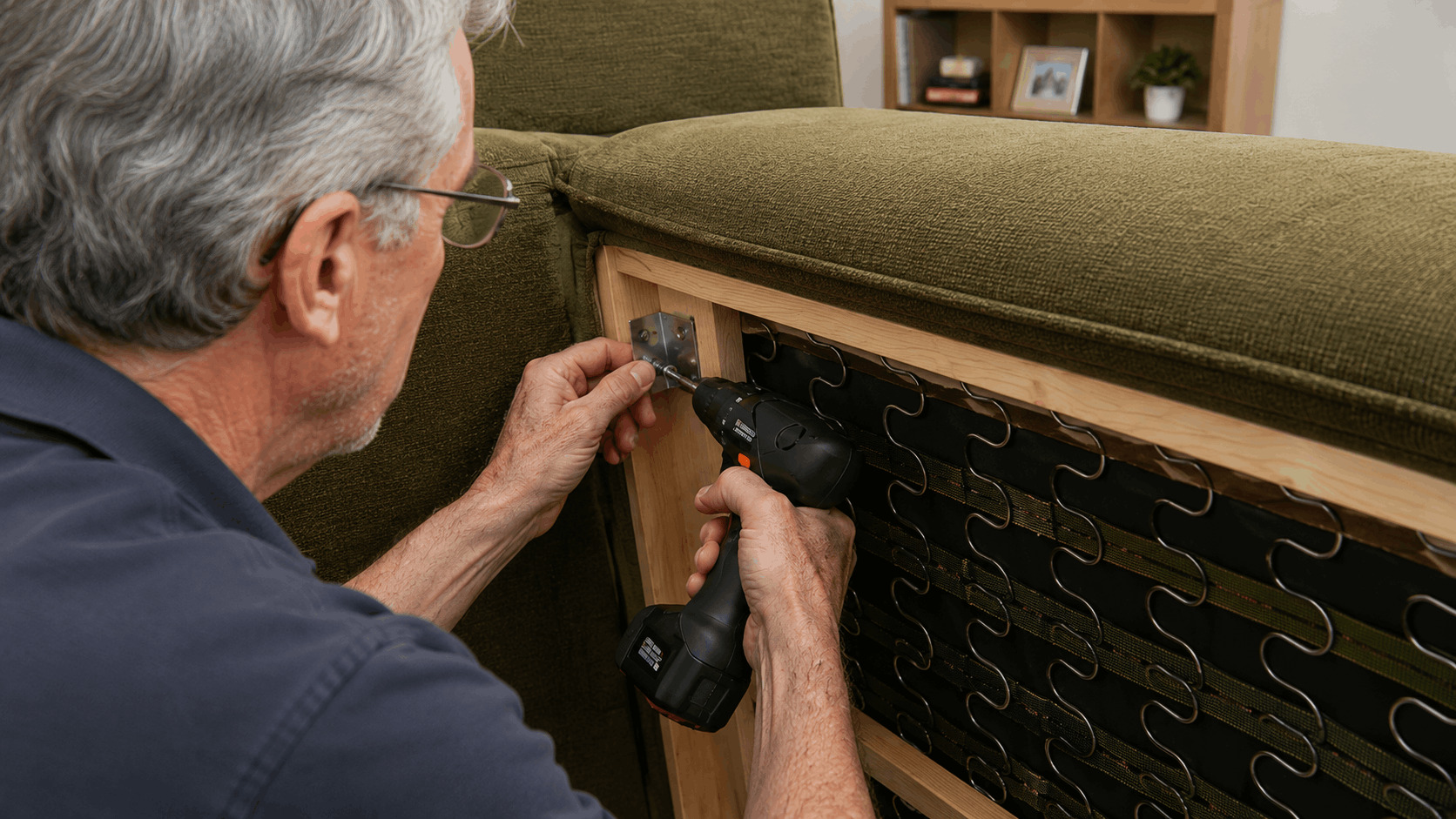
How to Fix a Sinking Couch
Before you buy new foam or take the couch apart, check where the sofa is actually dipping. Sit on the left, right and middle of the seat, then remove the cushions if possible and press down on the base.
If the cushions look flat but the base still feels firm, the problem is probably inside the cushions. If the base dips even without cushions, the issue may be in the springs, plywood, slats or frame.
| What you notice | Likely cause | First fix to try |
|---|---|---|
| Seat cushions look flat | Worn-out foam or filling | Replace or wrap the cushion inserts |
| The middle dips when you sit | Weak support or springs | Check the base under the cushions |
| Back cushions look slouching | Deflated filling | Add fresh filling or batting |
| One side sinks badly | Broken spring or frame | Consider upholstery repair |
The best way to fix sunken couch seating is to diagnose the problem before adding support or replacing foam. A quick cushion refresh may help, but it will not solve a broken frame.
Start with the Cushions Before You Take the Sofa Apart
Cushions are often the easiest place to begin. If the sofa seat feels lumpy, flat or deflated, unzip the cushion cover if possible and look at the insert inside.
Foam can become compressed over time, especially on the seat people use most. Fibre filling can also move into the corners, leaving the middle looking hollow.
To repair sagging sofa cushions, start with these basic checks:
- Remove the cushion insert if the cover has a zip.
- Check whether the foam springs back or stays flat.
- Look for lumpy, uneven or deflated areas.
- Add fresh batting if the foam is only slightly tired.
- Replace the foam if it has completely lost support.
Before closing the cover, push filling into the corners so the cushion does not look loose or uneven. This is usually a manageable DIY job if the covers have zips and the inserts are removable.

How to Make My Couch Cushions Firmer
If you want to firm up sagging couch cushions, the most reliable option is to replace soft or worn-out foam with a firmer insert.
Choose foam that suits how you use the sofa. Very firm foam can feel supportive, but it may not give the plush comfort you want for everyday lounging.
A good cushion usually needs:
- a supportive foam centre;
- a layer of batting around the foam;
- a cover that closes without strain;
- enough softness to sit comfortably.
If the zip is under pressure, the cushion has probably been overfilled. A firmer cushion should feel supportive, not hard or misshapen.
How to Fix Sagging Sofa Back Cushions
Back cushions usually sag differently from seat cushions. They may look slouching, creased or deflated rather than deeply dipped.
If you notice sofa back cushions sagging, check whether the filling has dropped to the bottom or moved into the corners. If the cushion has a zip, add fresh polyfill or batting by hand.
Focus on these areas first:
- top corners;
- upper back edge;
- centre of the cushion;
- lower corners if they look hollow.
The aim is to restore shape without making the back cushion too hard. It should support your posture, but still feel comfortable when you lean into it.
How to Fix a Sagging Couch with Attached Cushions
Attached cushions can be more difficult because you may not be able to remove the insert. First, check carefully for a hidden zip along the back, side or underside of the cushion.
Some sofas look fixed at first, but still have an access point.
If there is a zip, you may be able to add filling or adjust the insert in the same way as a loose cushion. If there is no access, be careful. Cutting into upholstery can leave visible damage if you are not confident with sewing or fabric repair.
In that case, an upholsterer is usually the safer option.
Can Plywood Help a Sagging Sofa?
Plywood can help when the cushions need more support underneath, but it is not a cure for every sagging sofa.
It works best when the seat base has weakened slightly and the cushions are still in reasonable condition.
| Plywood may help when… | Plywood will not help when… |
|---|---|
| The base feels weak but not broken | Springs are snapped or badly damaged |
| Cushions need firmer support underneath | The frame is cracked |
| The sofa dips slightly in the middle | One side collapses badly |
| You need a quick support fix | The sofa is uncomfortable even with support |
To use plywood, measure the seating area under the cushions and choose a smooth board with sanded edges. Place it flat on the base, then put the cushions back on top.
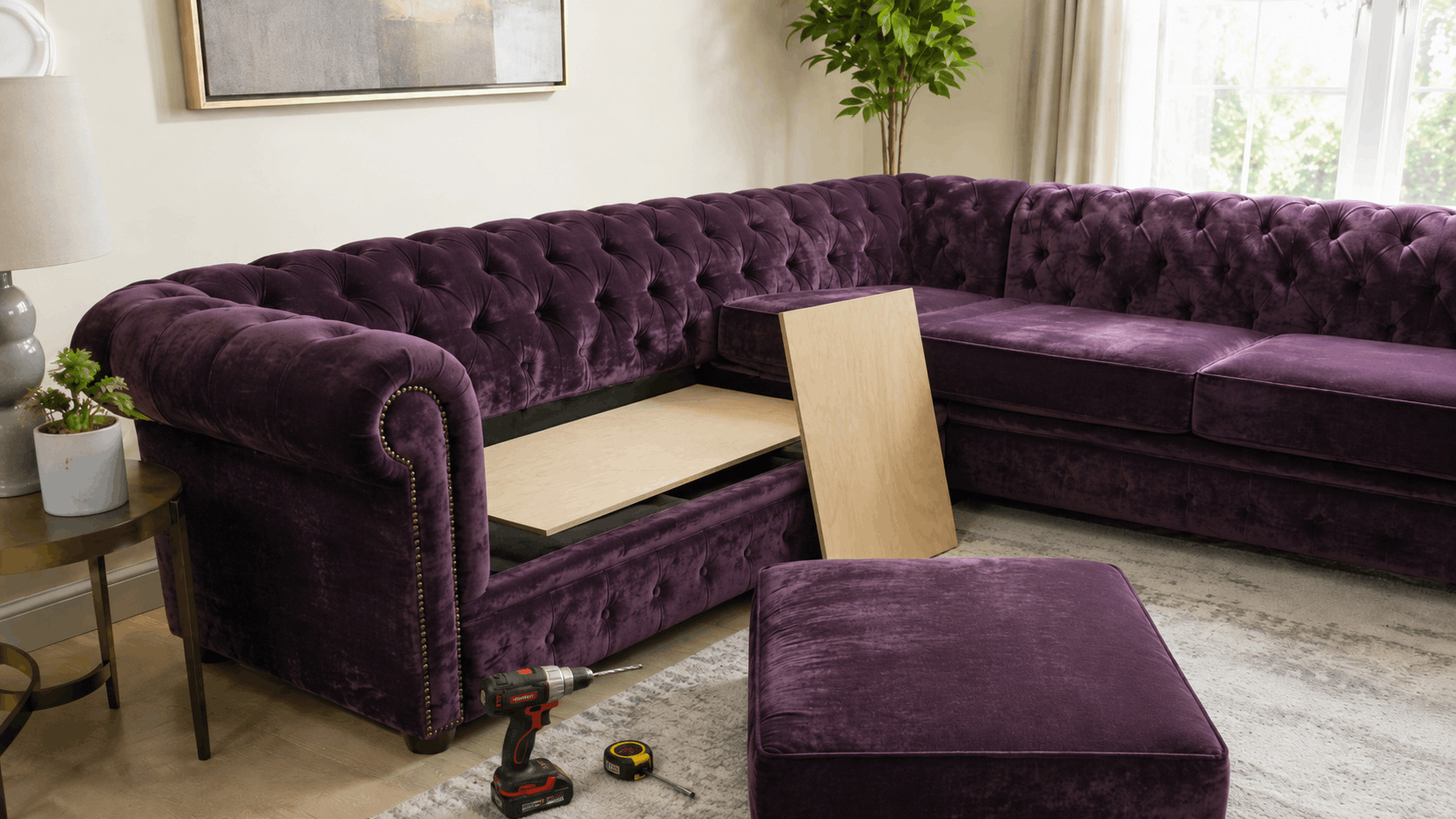
This can reinforce the seat and reduce dips, but it should not be treated as a permanent fix for snapped springs or structural damage.
How to Fix a Sagging Leather Sofa
Leather sofas need a little extra care because leather covers are less forgiving than fabric. When leather sofa seats have gone flat, the problem is often inside the cushion rather than in the whole sofa.
Flat foam can often be replaced or wrapped, but fixed leather seats may need professional upholstery work.
Be careful not to overstuff leather cushions. Too much filling can:
- stretch the leather;
- strain the seams;
- make the seat look uneven;
- change the shape of the sofa.
A leather conditioner can improve the surface, but it will not restore lost support inside the cushion. If the leather also needs care, our guide on how to clean a leather sofa explains how to look after the upholstery safely.
What If the Springs or Frame Are the Problem?
If the sofa sinks even when the cushions are removed, the issue may be underneath. Turn the sofa carefully and look at the base if you can do so safely.
You may see:
- a broken timber rail;
- a loose support;
- a popped spring;
- a damaged coil spring;
- torn webbing;
- a cracked frame.
This is where DIY becomes more difficult. If you need to fix springs in couch seating, start by checking whether the spring is loose, bent or broken. A loose clip may sometimes be tightened, but a broken spring usually needs replacing.
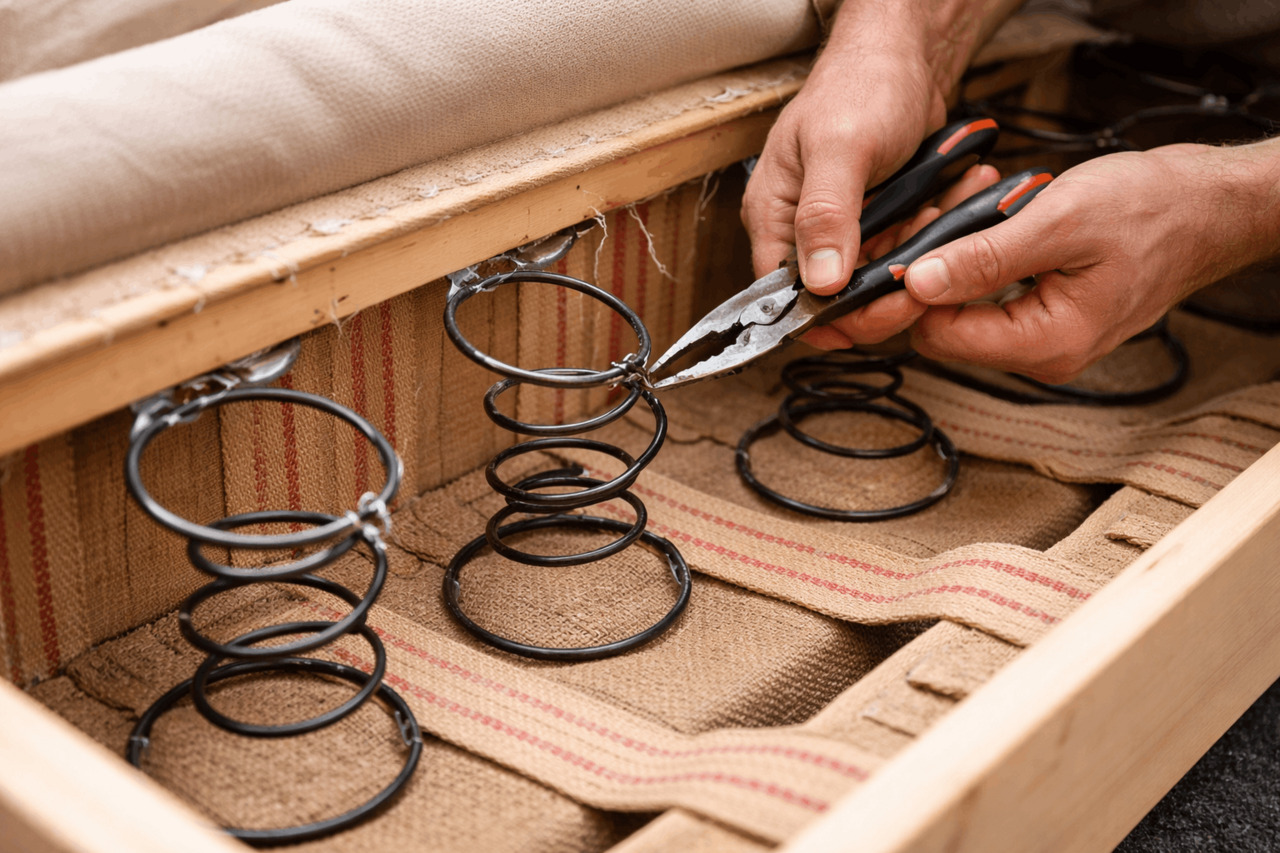
Springs can be under tension, so do not force metal parts if you are unsure. Loose joints may sometimes be tightened, but cracked timber or repeated spring failure often needs professional repair.
How to Repair a Couch Spring
If you are looking at how to repair a couch spring, start with a careful inspection rather than pulling parts out straight away.
A spring may have:
- popped out of its clip;
- snapped;
- twisted out of position;
- pulled away from the frame;
- damaged nearby upholstery.
If a clip is loose, it may need to be tightened or replaced. If the spring itself is broken, the safest repair is usually through an upholsterer.
This is especially true with a coil spring system, where the tension and surrounding upholstery can make the job harder than it first appears.
How to Stop Your Sofa Sagging Again
Once you have refreshed the cushions or repaired the support, a few habits can help stop sagging from returning too quickly.
Try these simple tips:
- rotate removable cushions regularly;
- plump back cushions after use;
- avoid always sitting in the same middle spot;
- spread use across the full couch or settee;
- avoid perching on the front edge of the seat;
- check small dips before they become deeper.
If your sofa has removable cushions, turning and rotating them can make a noticeable difference. It helps the filling wear more evenly and keeps the seat more supportive for longer.

When Is It Better to Replace the Sofa?
It is worth trying to repair sagging sofa comfort if the frame is solid and the issue is mainly in the cushions. New foam, fresh filling or extra support can make a real difference.
Replacement becomes more sensible when the sofa has deeper structural problems.
| Repair may be worth trying | Replacement may be better |
|---|---|
| Cushions are flat but the frame is solid | Frame is cracked or broken |
| Foam has gone soft | Springs keep failing |
| Back cushions look deflated | Seats collapse again quickly |
| Sofa is still comfortable with support | Sofa stays lumpy and uneven |
| Covers and upholstery are still in good condition | Comfort does not return after repair |
If the furniture is badly lumpy, uneven and no longer supportive, the best way forward may be to renew the sofa rather than keep patching it.
Before choosing a replacement, it is worth checking a practical sofa buying guide, so you can compare size, material, comfort and everyday use before you decide.
A sofa should feel comfortable when you sit down, not like something you have to keep adjusting. If the support has gone, a new piece can make the room feel fresher and your everyday seating much easier to enjoy.
It is also worth checking common sofa sizes before ordering, especially if your old sofa never quite suited the room.

Final Thoughts
A sagging sofa does not always mean the sofa is finished. Start with the cushions, then check the base, springs and frame. Cushion fixes can often restore comfort, while spring and frame problems need more care.
If your sofa can be repaired safely, it is worth trying. If the support has gone and comfort no longer returns, it may be time to choose a better sofa for your home.
When you are ready to replace rather than repair, explore the sofa options at Designer Sofas 4U and choose a style that gives your room the comfort, support and look you want for everyday living.
FAQ
Can you replace just the sofa cushions?
Yes, if the frame and base still feel solid. This usually works best with removable seat cushions that have zipped covers. New foam or fresh filling can restore support without replacing the whole sofa, especially if the upholstery is still in good condition.
What can I put under couch cushions to stop them sinking?
A smooth piece of plywood can give the cushions extra support and reduce a dip in the middle. It should sit flat under the cushions and have sanded edges. This is helpful for weak support, but it will not fix broken springs or a cracked frame.
Why does my sofa sag more on one side?
One side often sags because it is used more than the rest of the sofa. The cushion foam may have compressed, or the support underneath may have weakened. If the seat drops sharply or feels unstable, check for a broken spring, loose rail or frame problem.
Is it worth repairing an old sofa?
It is worth repairing if the sofa is still comfortable apart from flat cushions or light sagging. New foam, fresh filling or extra support may be enough. If the frame is damaged, springs keep failing or the sofa stays uneven after repair, replacement is usually the better choice.
How do I know if my sofa frame is broken?
A broken frame may cause one corner to drop, the seat to tilt, or the sofa to creak when you sit down. Remove the cushions and press gently on the base. If it shifts, dips or feels loose, the problem may be structural and should be checked by a professional.