
.jpg)
How to Reupholster a Sofa: A Practical Step-by-Step Guide
If you want to learn how to reupholster a sofa, start by deciding whether the furniture is worth the time, tools and material. New upholstery can refresh faded, worn or stained fabric, but it cannot correct a broken frame or failed seat support.
Recovering the outer panels is only one part of the job. A full redo may also involve repairing the structure, replacing foam, cutting new panels and sewing cushion covers. This guide explains the process step by step.
Is Your Sofa Worth Reupholstering?
Reupholstery makes sense when the frame feels solid, the sofa still suits your room and most of the damage is limited to the outer covering.
Sit on every section and check for movement, creaking or uneven support. Look beneath the sofa for loose joints, broken springs, worn webbing or damaged timber. Cushions that have lost their shape may need to be restuffed or given a foam replacement, while serious damage may require professional repair.
If sagging is the main issue, read the Designer Sofas 4U guide to fixing a sagging sofa before deciding whether to recover a sofa or refurbish it more extensively.
How Difficult Is It to Reupholster a Couch?
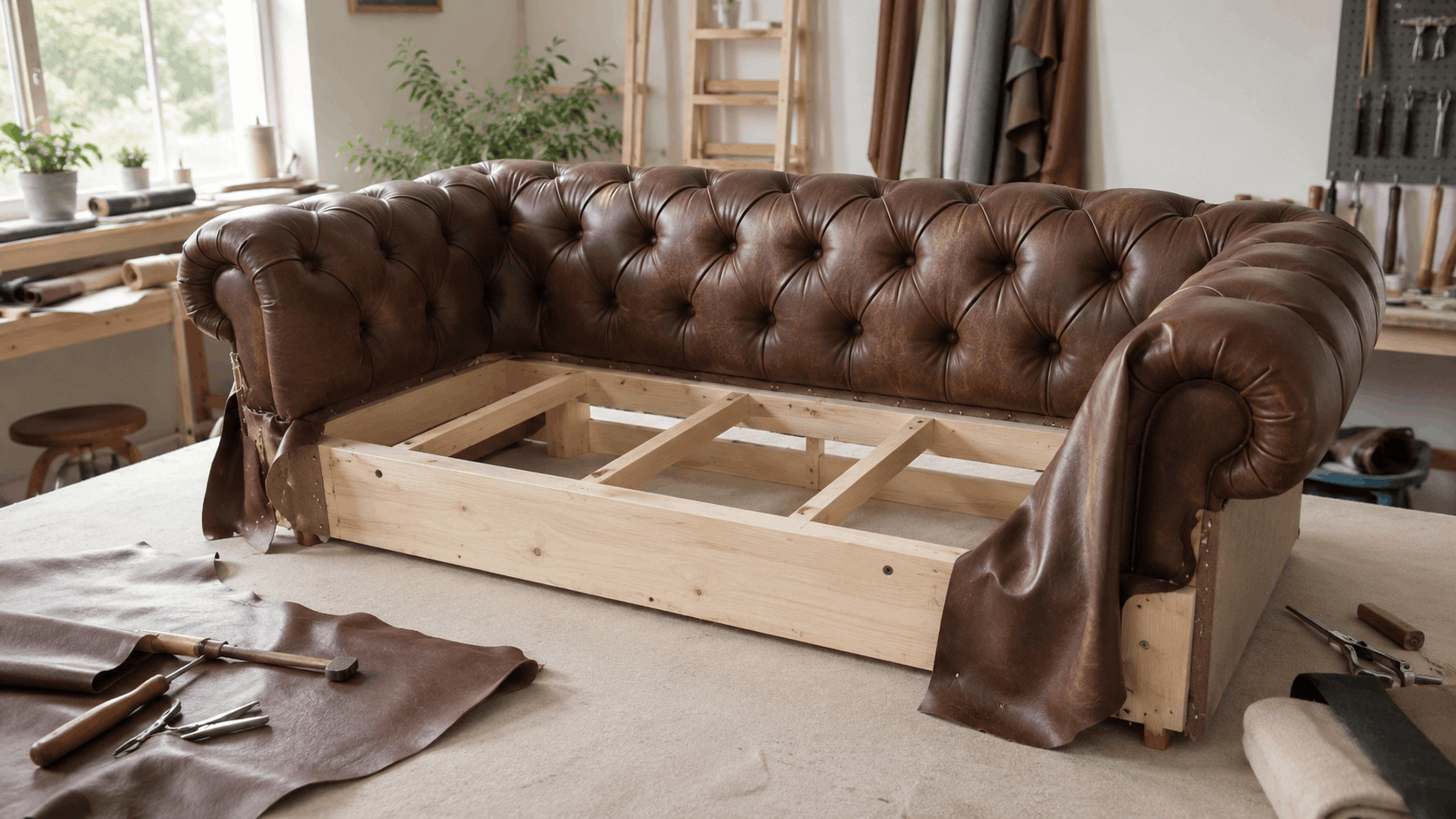
A simple fabric sofa with straight panels and removable cushions can be a realistic DIY project. A leather recliner, curved sectional, tufted Chesterfield or sofa with fixed upholstery is much more demanding.
The easiest way to reupholster a couch is to begin with a straightforward design and keep every original panel as a template. Complicated piping, non-removable cushions and damaged support are good reasons to use a professional upholsterer.
How to Measure a Sofa for Reupholstering
List every covered area, including the inside and outside arms, seat platform, front rail, back, sides and cushions. This gives you a preliminary idea of how many panels are involved.
For the final calculation, remove the old upholstery and lay each piece flat. Record its measurements and add an allowance for folding, sewing and stapling. Include piping, cushion boxing, skirts and the underside cover.
Patterned material needs extra fabric so stripes, checks or motifs can be aligned. A corner sofa or sectional may also contain panels that look similar but are not interchangeable.
How to Choose Upholstery Fabric for Sofa Reupholstery
Your material choice should reflect how often the sofa is used, how it must be cleaned and how confident you are with cutting and sewing.
Choose upholstery-grade fabric rather than lightweight curtain material. Plain woven fabric is easier for a first project because there is no large pattern to match. Velvet has a pile that must run in the same direction on every panel, while leather usually requires specialist tools.
Order a sample and check the colour beside your flooring and furniture. Consider whether the surface is likely to show a stain or need specialist cleaning.
What You Need Before You Start
Prepare a clear working area and gather:
- a staple remover and pliers;
- a flat-head screwdriver;
- a staple gun and upholstery staples;
- fabric scissors and a seam ripper;
- a tape measure and tailor’s chalk;
- labels or masking tape;
- gloves, protective glasses and a dust mask;
- a sewing machine where required.
Keep screws, legs and small fittings in labelled bags.
How to Reupholster a Sofa Step by Step
1. Photograph and Remove the Old Upholstery
Photograph seams, folds, corners and fastening points. Turn the sofa over, remove the legs if needed and begin with the dust cover underneath.
Work backwards through the layers. Remove staples carefully because the old pieces will become your cutting templates.
2. Label Every Panel
Mark each piece as soon as it comes off. Record whether it belongs to the left arm, right arm, inside back, outside back, seat or front rail.
Also mark the top, bottom and visible side. Add matching labels to the frame so you know where each section must return.
3. Repair the Structure and Padding
Complete any necessary work to the frame, springs, webbing or filling. Replace damaged foam and vacuum the exposed structure before fitting the new covering.
Do not put fresh fabric over an unresolved support problem, as reaching it later would mean removing the upholstery again.
4. Cut and Dry-Fit the New Fabric
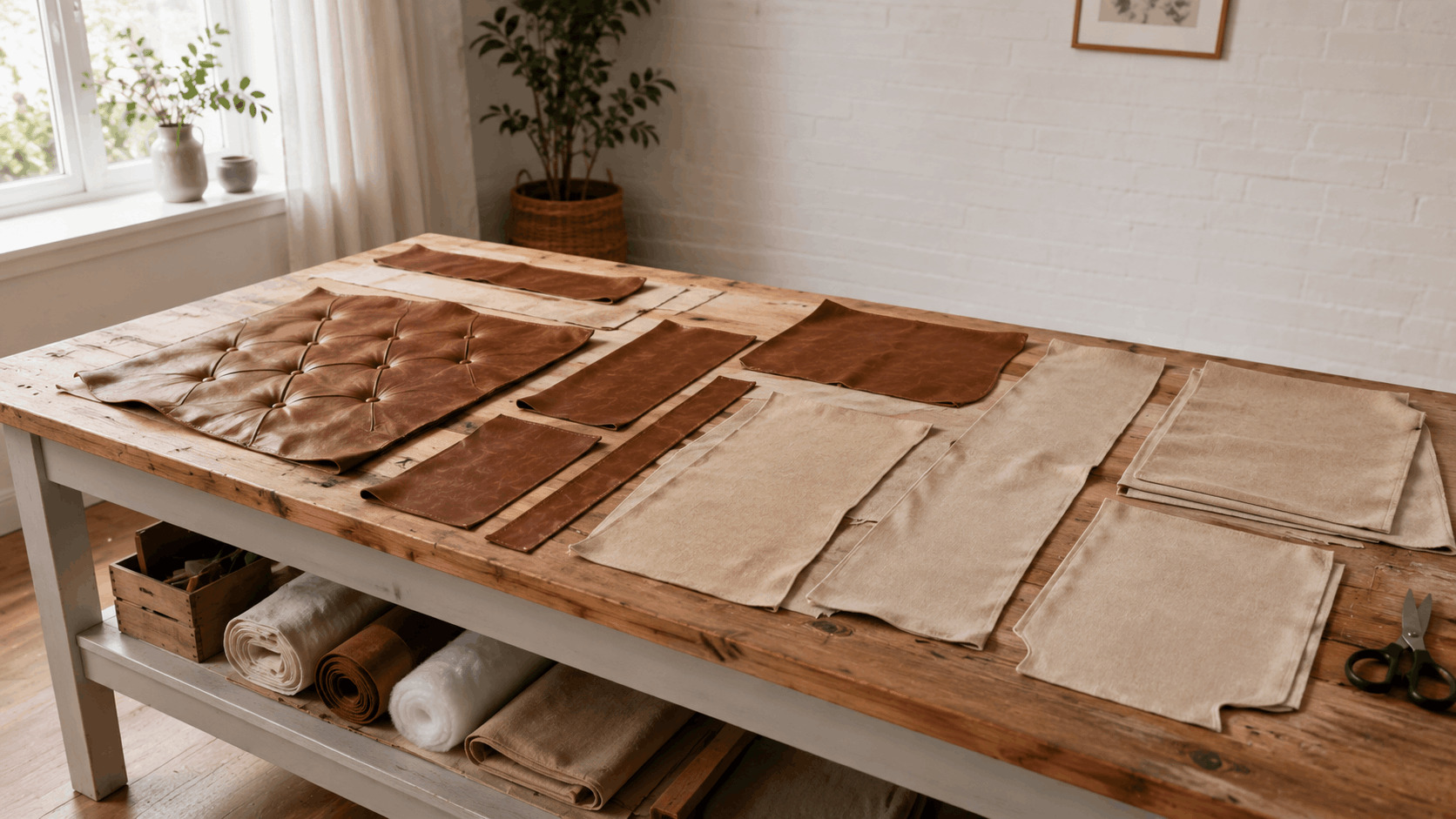
Lay the old panels over the replacement material and check the direction of the weave, pile or pattern. Mark each piece with tailor’s chalk, leaving extra fabric for gripping, folding and stapling.
Place every new panel on the sofa before fixing it permanently. This dry fit can reveal incorrect measurements or poor pattern placement.
5. Staple from the Centre Outwards
Secure the centre of each edge first, then alternate between opposite sides. Work towards the corners and finish them last.
Keep checking the visible surface so the fabric is firm without being distorted. Finish by sewing removable cushion covers, replacing trim, attaching a clean dust cover and refitting the legs.
More Complicated Areas
How to Reupholster a Sofa Arm
Fit the inside arm first. Secure the centre of the upper and lower edges, then work towards the corners while following the original folds. Fit the outside arm only after the inner panel and padding are secure.
Rolled or curved arms are harder to shape evenly than straight designs.
How to Reupholster a Sofa with Attached Cushions
Attached cushions cannot be removed and covered separately. Photograph how the original material enters each gap, then label the surrounding panels carefully.
The new cover may need to be sewn into shape before it is secured behind or beneath the fixed cushion. Deeply tufted designs are usually better handled by a professional.
How Long Does It Take to Reupholster a Sofa?
A straightforward sofa may require several working sessions spread across one or two weekends. Pattern matching, piping, attached cushions, foam replacement and structural repair will extend the project.
Allow time for careful removal and dry fitting, as rushing these stages usually creates more work later.
Common Mistakes to Avoid
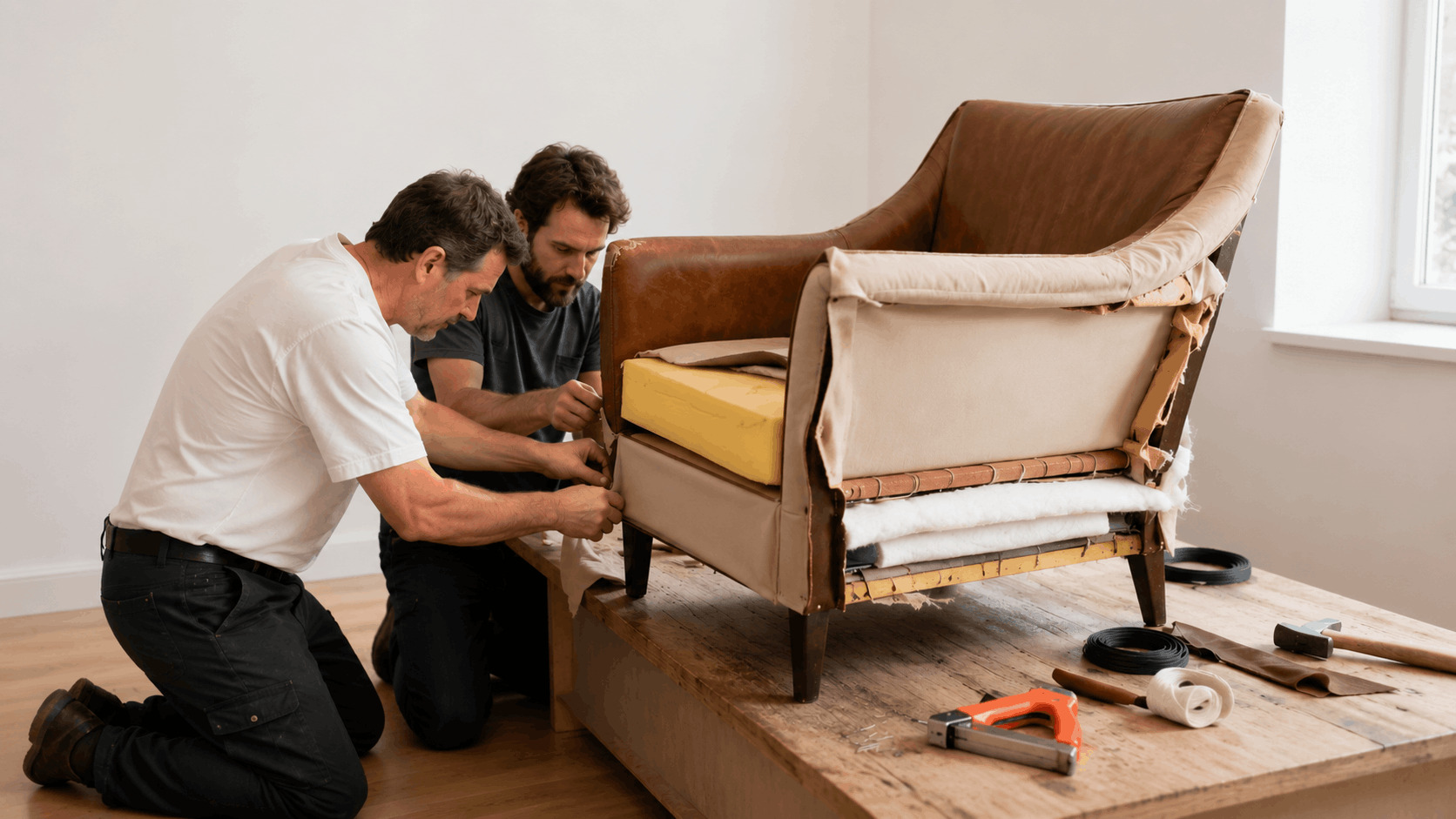
Do not buy fabric before checking the frame and completing the measurements. Avoid covering old upholstery with new material, as this hides damage and can create a bulky finish.
Do not cut every panel before testing the layout. Keep the tension even, leave corners until last and avoid choosing a recliner, leather Chesterfield or heavily tufted sofa for your first DIY project.
Decide Whether Reupholstery Is the Right Choice
Reupholstering a sofa can preserve a strong frame, a comfortable shape or a piece with personal value, but it is rarely a quick DIY project. Removing old staples, repairing support, cutting panels accurately, matching patterns and refitting fabric neatly all take time and patience. Mistakes can also increase the cost if material has to be replaced or the sofa needs professional correction.
In some cases, replacement will be the more practical and reliable option. Explore the fabric, velvet and leather sofas available from Designer Sofas 4U to find a design that suits your room, comfort preferences and everyday use.
FAQs
Is It Cheaper to Reupholster a Sofa or Buy a New One?
Reupholstery can be worthwhile when the frame is strong and only the fabric or cushion filling needs attention. If the springs, webbing and frame also require repair, a new sofa may offer better value. Our guide to sofa reupholstery cost explains the main price factors and the extra work that can affect the final quote.
Can You Reupholster Just the Sofa Cushions?
Removable cushions can be recovered separately when the main upholstery is still in good condition. If an exact fabric match is unavailable, a deliberate contrast usually looks better than a near match.
Should You Replace the Foam When Reupholstering?
Keep foam that feels even and returns to shape. Replace it if the cushion stays compressed, has soft areas or is breaking down around the edges.
How Long Should a Reupholstered Sofa Last?
The result depends on the condition of the frame, internal support, fabric quality and workmanship. Replacing the outer material alone will not extend the life of damaged springs, webbing or foam.