
.jpg)
Dark Grey Sofa Colour Scheme Ideas: Simple Tips and 8 Colour Schemes
A dark grey sofa shapes the atmosphere of a living room more than many people expect. The overall result depends on how the surrounding colour scheme is developed around it. In this guide, dark grey sofa colour scheme ideas are presented as clear, practical combinations that can be applied immediately, from wall colours and rugs to lighting and carefully chosen accent details.
You will find specific palettes, simple texture principles, and styling approaches designed to help you avoid common missteps such as flat monochrome schemes or mismatched undertones. Whether you prefer a calm neutral setting or a more defined contrast, thoughtful combinations allow a dark grey sofa to feel refined and complete within the space.
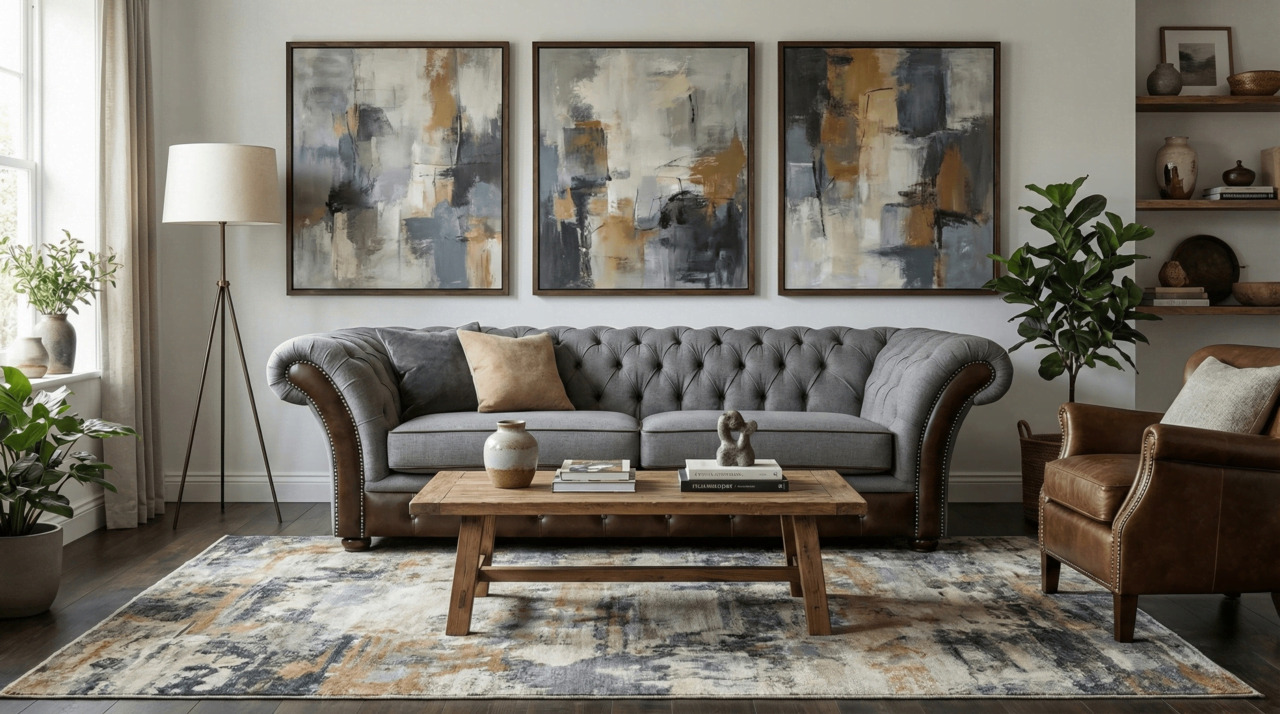
A Quick Checklist: Build a Colour Scheme in 15 Minutes
If you want a fast method, follow this structure:
- Choose one accent colour.
- Add two contrasting textures.
- Select a rug that defines the seating zone.
- Install at least two warm light sources.
- Repeat your accent 2–3 times across the room.
This simple framework prevents the space from feeling random.
What colours go with dark grey sofa — quick rules that always work
Before exploring specific palettes, it helps to understand what colours go with dark grey sofa in a way that consistently looks balanced.
1. Create light–dark balance
Because dark grey absorbs light, it needs contrast. Pair it with:
- white walls for crisp clarity
- light grey walls for softness
- greige walls for warmth
- a textured rug in a lighter tone
If everything around the sofa is equally dark, the space can feel heavy. Introducing lighter surfaces lifts the composition.
2. Warm vs cool accents — and how to mix them
Dark grey can lean warm or cool depending on its undertone. Cool tones such as navy blue or chrome accents sharpen the look. Warm contrast — like mustard yellow, beige accents, walnut tones or brass accents — makes the space feel inviting.
Mixing both is possible, but anchor one as dominant. For example:
- navy blue cushions + brass lighting
- emerald green accents + oak tones
Avoid adding too many competing colour temperatures.
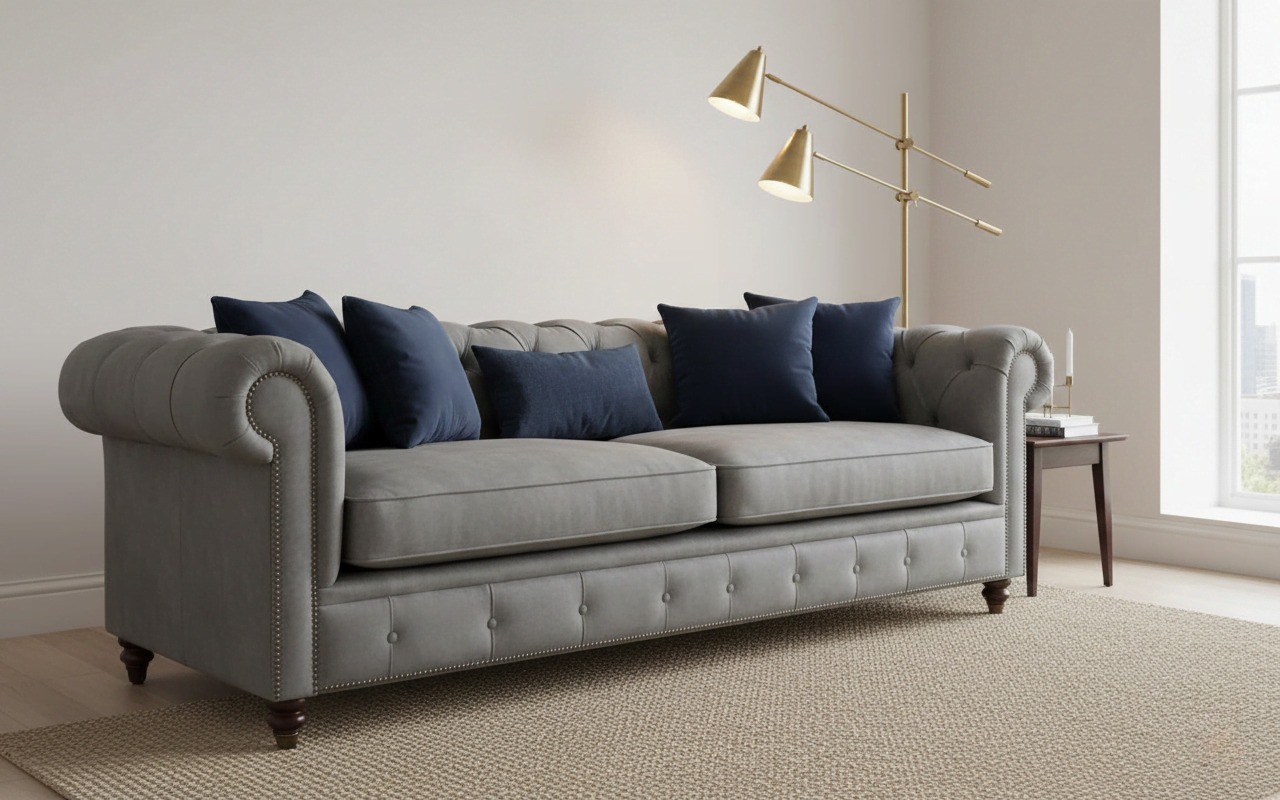
3. Repeat your accent colour
A common mistake in a dark grey sofa living room is introducing one bright pillow and nothing else. Instead, repeat the accent in 2–3 places:
- throw pillows
- artwork contrast
- a vase or lamp
- a patterned rug
Repetition creates cohesion.
4. Consider undertones and lighting
The same dark grey sofa can look charcoal in one room and almost blue-grey in another. Daylight, bulb temperature, and surrounding paint colour all influence perception.
Always test paint color next to the sofa fabric or leather. A warm white may look cream beside one grey and slightly yellow beside another. Your lighting plan matters as much as your palette.
Dark Grey Sofa Colour Scheme Ideas You Can Copy — 8 Ready-to-Use Palettes
Below are eight practical combinations you can adapt immediately. Think of them as “recipes” — walls + textiles + accents.
1. Warm neutrals + natural wood
Walls: warm white or pale taupe
Rug ideas: textured rug in cream
Accents: beige accents, oak tones, linen throws
This neutral scheme feels calm and timeless. Natural wood softens the dark grey and prevents the room from feeling stark. Ideal for cosy spaces and everyday living.
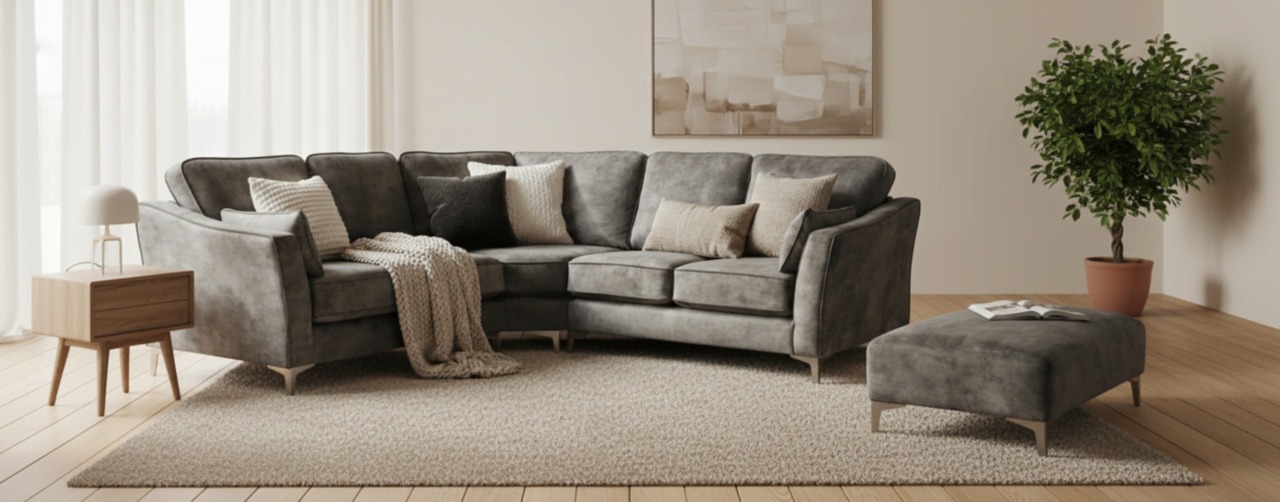
2. Layered greys + texture
Walls: light grey walls
Rug: patterned rug in soft charcoal and ivory
Accents: layered neutrals, boucle cushions, matte ceramics
Instead of introducing colour, vary texture. Velvet, wool, and linen create depth within a monochrome palette. This approach works beautifully in a modern dark grey sofa living room where simplicity matters.
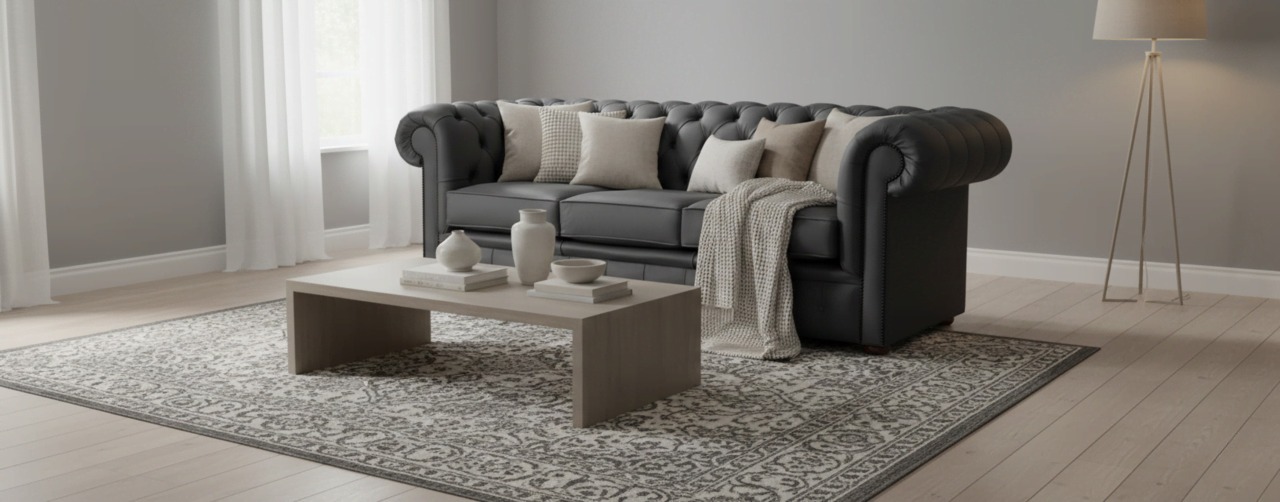
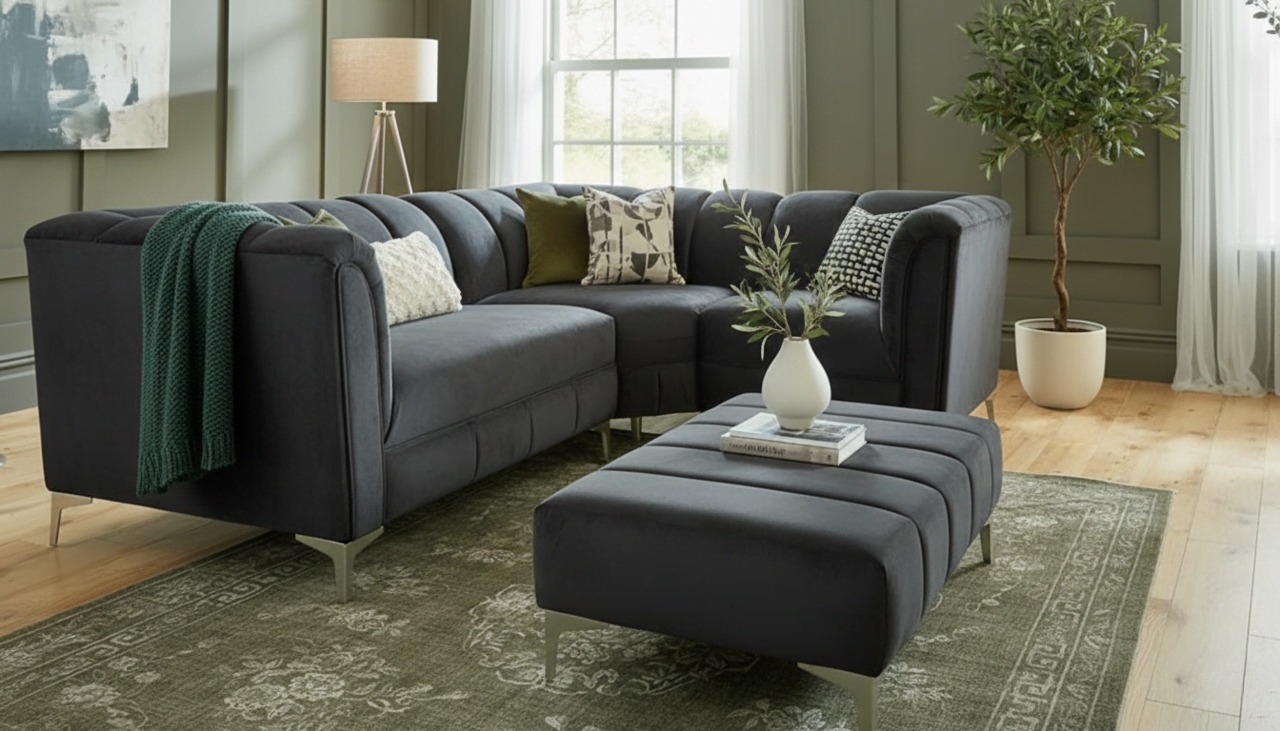
3. Sage or olive + off-white
Walls: muted sage
Accents: natural wood, cream accents
Textiles: soft woven throws
Green brings life without overwhelming the room. If you’re drawn to deeper botanical tones, we’ve previously explored olive green sofa living room ideas in more detail, focusing specifically on earthy and nature-inspired schemes.
4. Navy or teal + brass
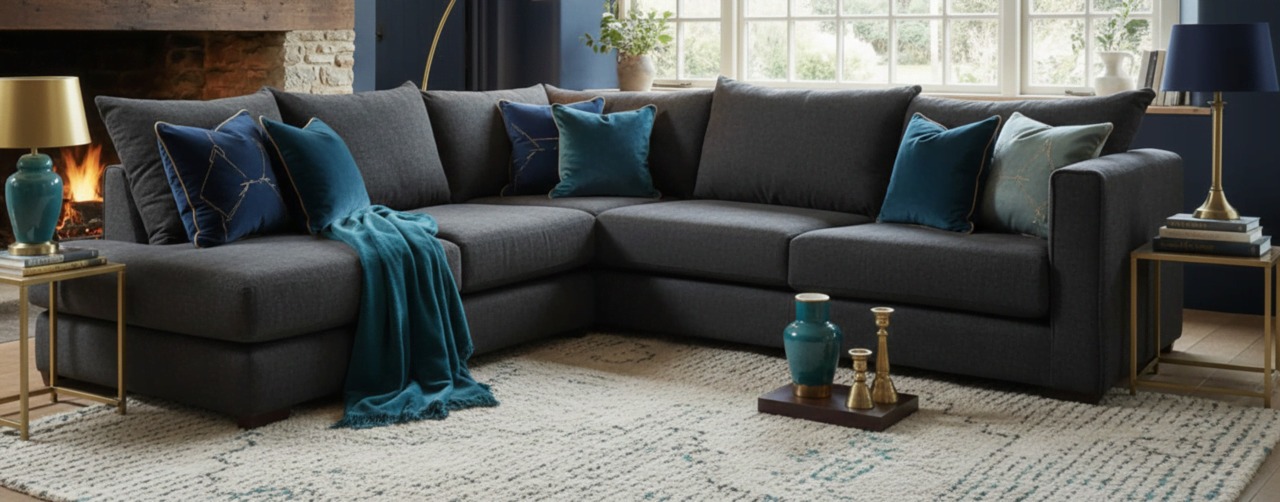
Walls: soft off-white
Accents: navy blue cushions, brass accents
Rug: subtle geometric in blue-grey
Deep blue creates elegant contrast with dark grey. For a closer look at styling built around richer blue tones, our navy blue sofa living room ideas guide explores layered and classic combinations.
5. Blush or dusty pink + soft grey
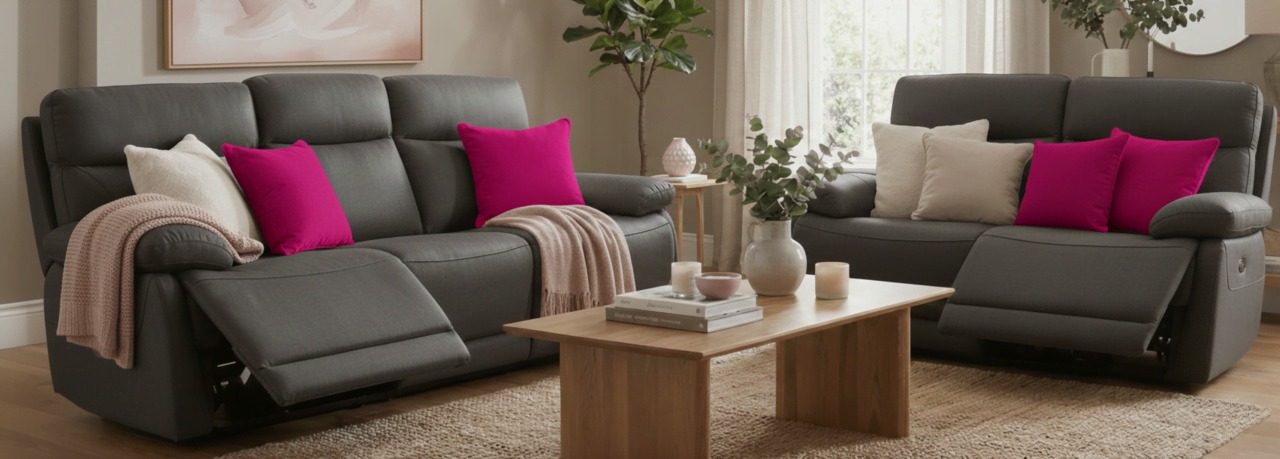
Walls: warm white
Accents: blush pink cushions, chrome accents for balance
Rug: pale neutral with subtle texture
Blush softens the severity of charcoal tones. Keep pink muted rather than bright to maintain sophistication.
6. Ochre or mustard + warm white
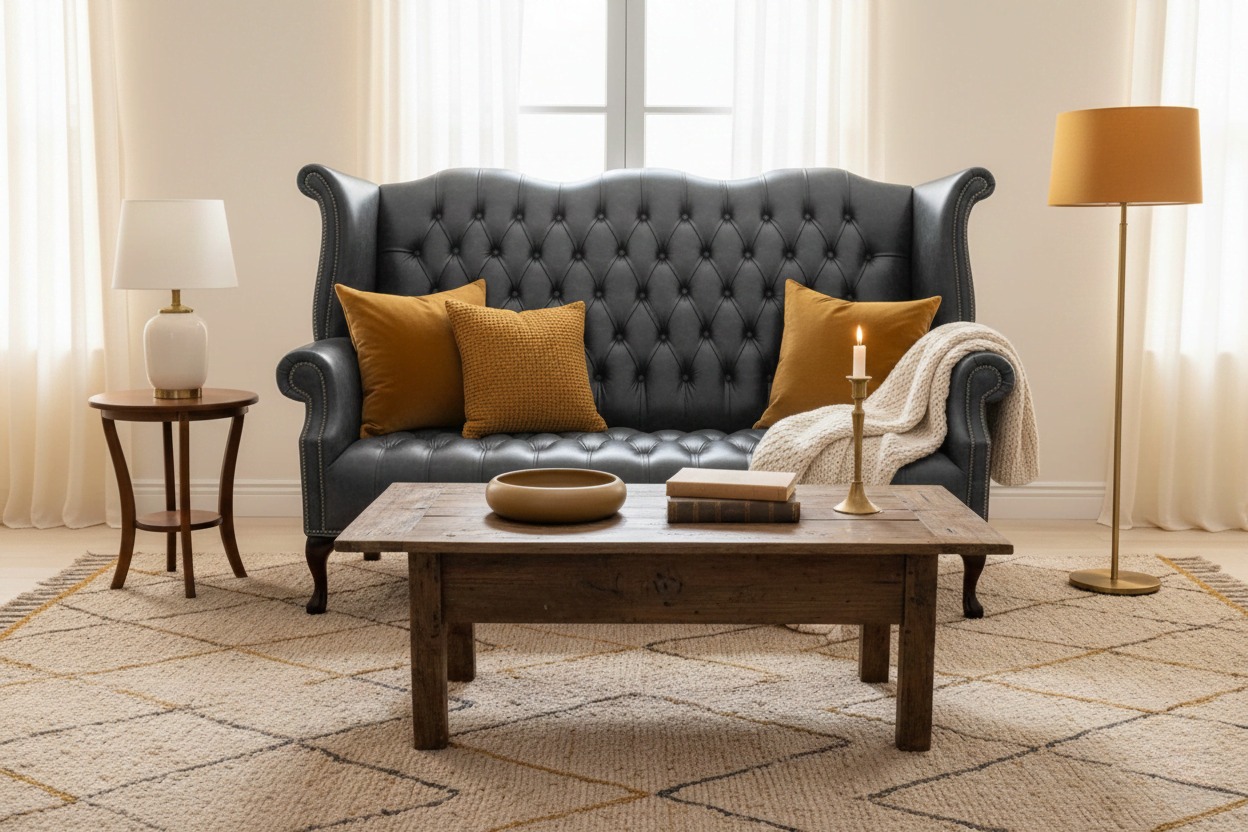
Walls: warm white
Accents: mustard yellow cushions, walnut tones
Lighting: warm bulbs
Mustard yellow adds energy without overwhelming the space. Because dark grey is restrained, this accent feels intentional rather than loud.
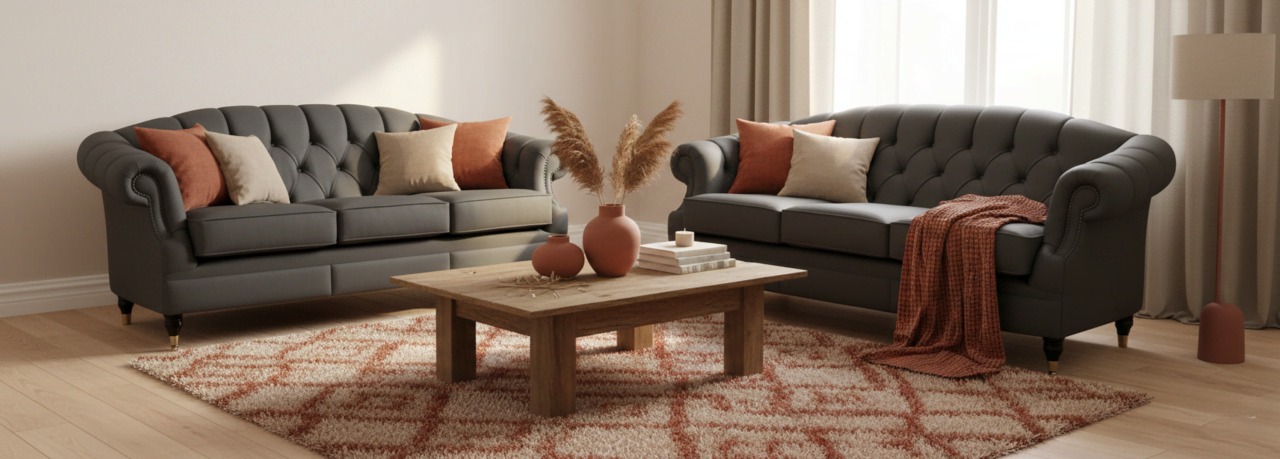
7. Terracotta or rust + linen tones
Walls: greige walls
Accents: burnt orange details, beige accents
Textures: woven textiles, clay ceramics
Terracotta creates earthy warmth and pairs beautifully with natural wood. This palette works well in homes that favour tactile finishes over high gloss.
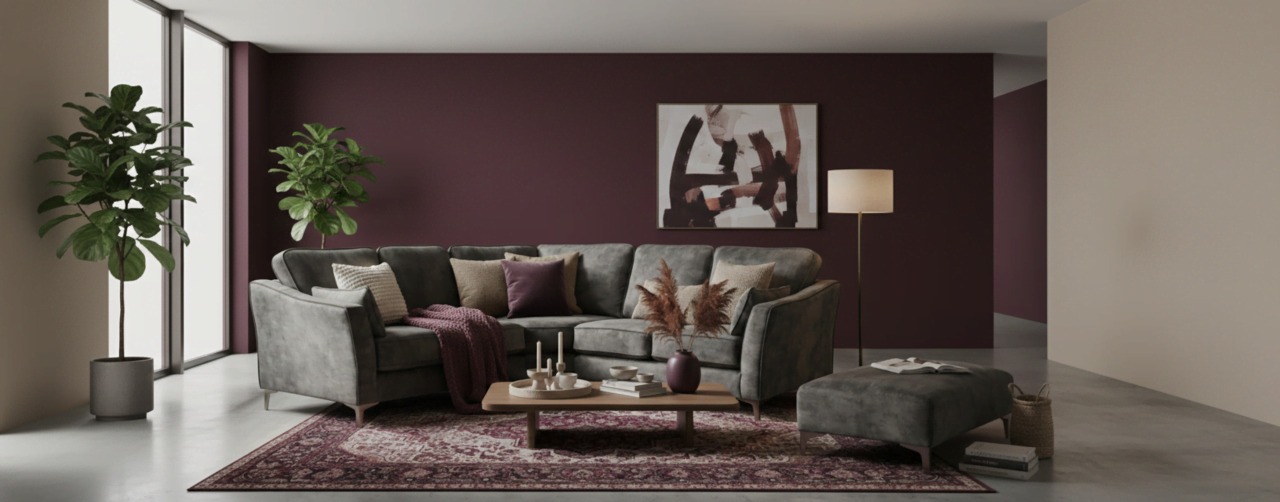
8. Burgundy or plum + beige
Walls: pale taupe
Accents: plum cushions, brass accents
Rug: light patterned rug
Deep wine shades add drama. Balance them with lighter beige accents to prevent heaviness.
Dark Grey Couch Living Room Ideas for Different Styles
If you are searching for dark grey couch living room ideas, the answer depends largely on the atmosphere you want to create. The same sofa can feel modern, cosy, industrial or Scandinavian depending on what surrounds it.
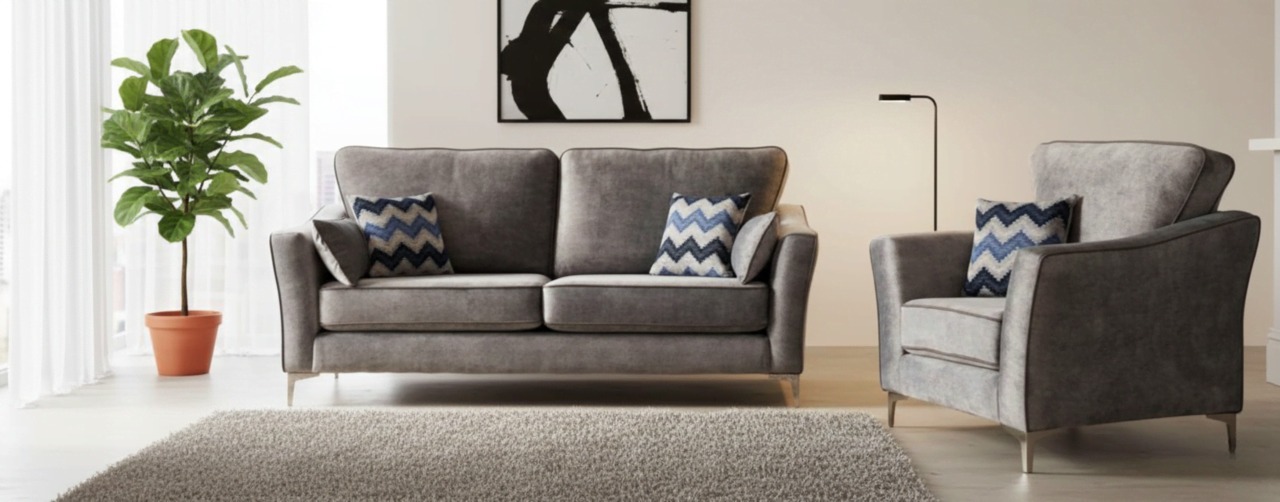
Modern / Minimal
Keep the palette restrained. White walls, black accents, and a structured lighting plan create a clean look. Choose simple throw pillows in tonal greys and limit décor to a few sculptural pieces. Avoid heavy patterns.
Cosy / Snug
Layered neutrals work beautifully here. Add a textured rug, soft wool throws, and warm contrast through walnut tones or brass accents. Use floor-length curtains to soften edges. The aim is to make the dark grey feel enveloping rather than stark.
Classic
A dark grey sofa living room with classic proportions benefits from symmetry. Matching lamps, balanced artwork contrast, and refined textures such as velvet cushions add structure. Beige accents and subtle pattern create warmth without overwhelming the base.
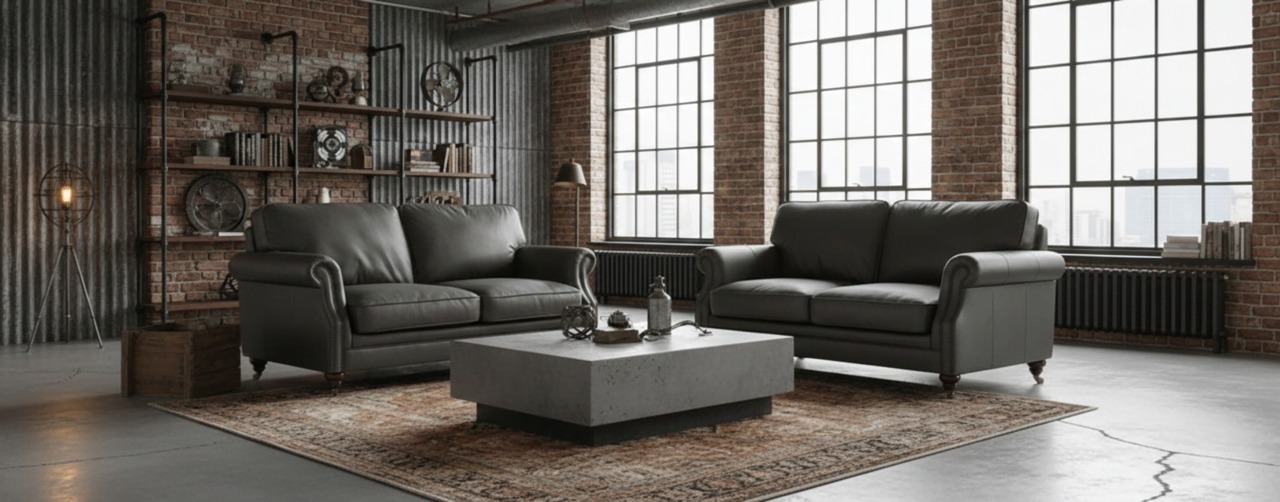
Industrial
Pair dark grey with black metal, exposed wood, and cool tones. Chrome accents and darker wall color choices can enhance the urban feel. Avoid overly soft fabrics — leather or structured upholstery works best here.
Scandi
Light grey walls, natural wood, and a neutral scheme define this approach. Keep accessories minimal. A pale textured rug and simple pillow ideas in off-white and soft beige prevent the sofa from dominating the room.
Dark Grey Fabric vs Leather Sofas — How the Material Changes the Whole Look
The material of your sofa significantly alters the mood of a living room with dark gray couch styling.
Fabric Sofas
Fabric feels softer and more relaxed. Matte finishes absorb light, making the sofa appear warmer and more inviting. They pair effortlessly with layered neutrals, boucle textures, and warm accent tones.
If you’re exploring fabric options, browsing our range of fabric sofas allows you to compare finishes, textures, and undertones in different lighting conditions. Fabric also tends to feel more forgiving in family homes.
For everyday upkeep, practical guidance on how to clean a sofa ensures longevity without compromising appearance.
Leather Sofas
Leather introduces structure and subtle reflectivity. It responds differently to daylight and artificial lighting, often appearing sharper and more defined. A leather sofa works particularly well with oak tones, walnut tones, brass accents, or black metal finishes.
If you prefer a more structured aesthetic, exploring our range of leather sofas allows you to see how different finishes interact with light and contrast within a dark grey scheme. Proper care also plays a role — knowing how to clean a leather sofa correctly helps preserve its colour, texture, and overall appearance over time.
How Fabric vs Leather Handle Light
Fabric diffuses light and softens contrast. Leather reflects it slightly, emphasising contours and shape. In darker rooms, this difference can influence how heavy or light the sofa feels.
Choosing Wall Colours That Won’t Feel Heavy in a Living Room With a Dark Gray Couch
Designing a living room with dark gray couch pieces requires careful wall colour selection. Walls frame the sofa if they are too dark, the room can feel compressed.
Five safe wall colours that consistently work:
- Warm white — brightens and lifts
- Greige — balances warmth and neutrality
- Pale taupe — adds depth without darkness
- Muted green — introduces subtle colour
- Dusty blue — complements cool undertones
An accent wall can work, but only if the room has sufficient light. In low-light rooms, avoid deep charcoal walls. Instead, focus on lighter paint color choices and add depth through textiles.
In spaces with limited daylight, layering light sources — floor lamps, table lamps, and warm bulbs — prevents the grey from feeling flat.
Textures That Elevate a Dark Grey Sofa: Cushions, Throws, and Simple Layering
Colour alone rarely transforms a space. Texture defines atmosphere.
A simple formula works well:
- two textures + one pattern
or - one texture + two tonal fabrics
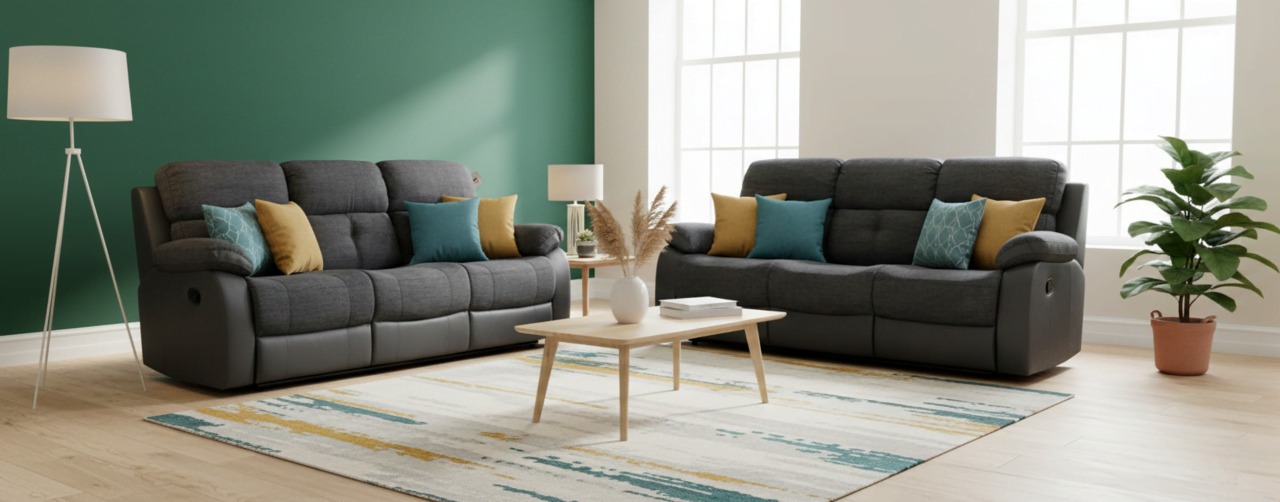
Boucle, linen, wool, and velvet each bring something different. Velvet adds richness. Linen softens formality. Wool creates warmth. A patterned rug or subtle geometric throw pillow introduces movement without chaos.
Limit yourself to one or two accent colours. Too many competing shades dilute the impact of the dark grey base.
Throw pillows should vary in scale — large square, smaller lumbar — to avoid uniformity. The goal is depth, not clutter.
The Right Rug for a Dark Grey Sofa — Colour, Pattern, and Size
Rug ideas are often overlooked, yet the rug anchors the seating zone.
Light Rug vs Patterned Rug
A light rug brightens the space and increases perceived contrast. It works well in smaller rooms where the sofa could otherwise dominate.
A patterned rug hides wear and adds character. In charcoal grey sofa living room ideas, subtle pattern prevents monotony.
Sizing Guide
Ideally:
- the front legs of the sofa should sit on the rug
- the rug should extend beyond the seating group
Too small, and the space feels disconnected. Too large, and it overwhelms.
Pile and Practicality
In family homes, medium pile balances comfort and practicality. A textured rug hides marks better than flat weaves. If pets or children are involved, durability matters as much as aesthetics.
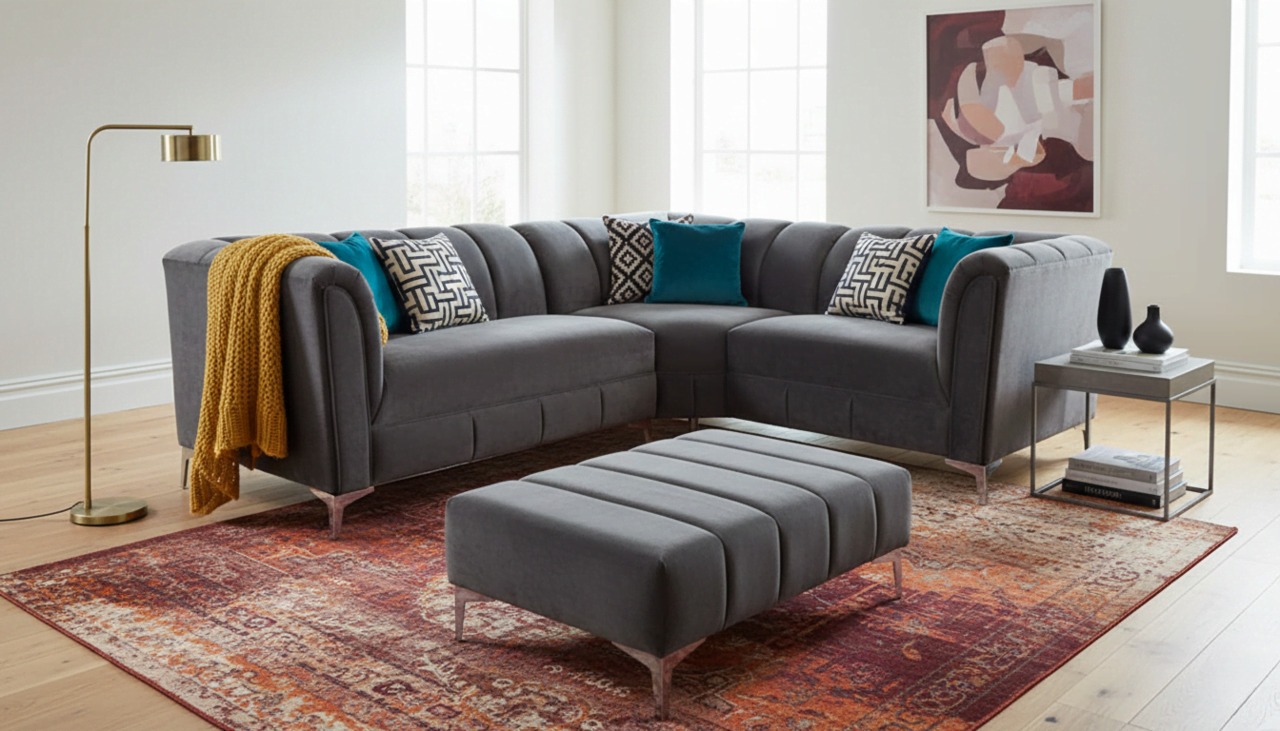
What to Add to a Room With a Dark Grey Sofa
A dark grey sofa provides a strong anchor, but the surrounding pieces determine whether the room feels complete.
Accent Chair Options
An accent chair can either introduce colour or soften the seating zone.
Option 1 — A Colour Accent
Choose emerald green, navy blue, blush pink, or burnt orange to create contrast. Repeating this shade in throw pillows or artwork contrast keeps the look cohesive.
Option 2 — A Light Neutral
A cream or beige chair brightens the space and offsets the weight of dark grey. This approach works especially well in smaller rooms.
Option 3 — Texture Without Bold Colour
Boucle or velvet in a soft neutral adds interest without overwhelming the palette.
If you're considering additional seating, exploring our collection of arm chairs can help you choose a shape and finish that complements your sofa and colour scheme.
Footstool or Ottoman Ideas
A footstool adds flexibility and visual balance.
- Matching dark grey creates a calm tonal look.
- A contrasting leather footstool introduces depth and texture.
- Storage ottomans add practicality in compact spaces.
A simple rule: repeat the chair or footstool colour in at least one other small detail — cushions, art, or decor — to avoid a disconnected appearance.
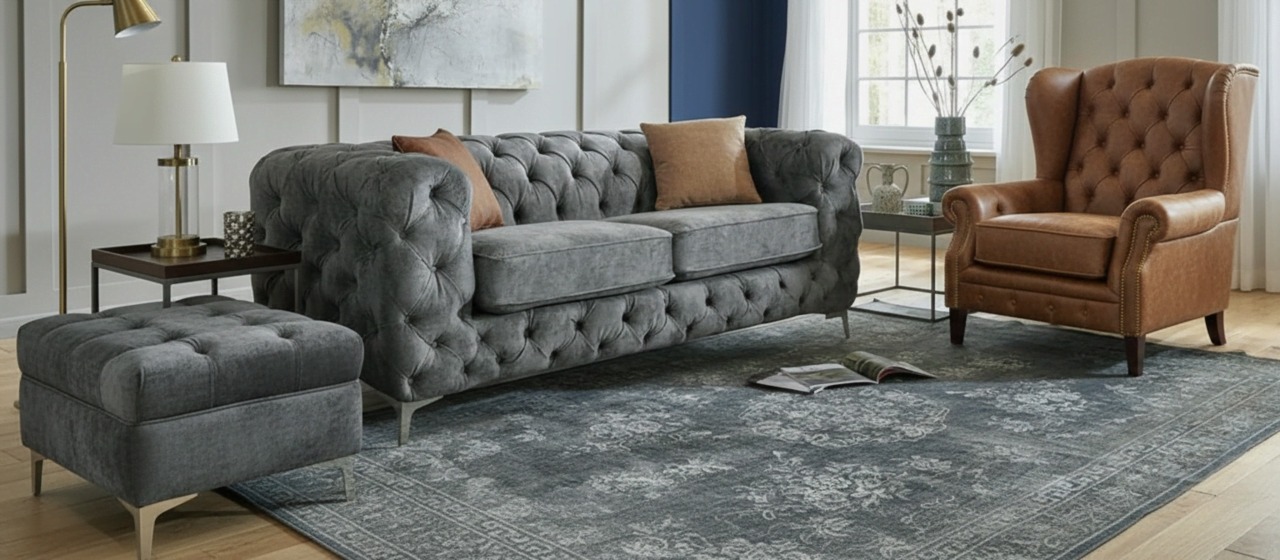
Curtains and Lighting — The Fastest Way to Make Grey Feel Warmer
Curtain Choices
Floor-length curtains elongate the room. Sheer layers soften daylight, while lined curtains provide depth.
In low-light rooms, lighter fabrics help maintain balance. Avoid overly dark curtains unless the room has generous natural light.
Dark grey reacts strongly to light. The same sofa may appear cool in daylight and warmer under soft bulbs.
Why Lighting Matters
Cool LED bulbs emphasise cool tones. Warm bulbs enhance warmth and soften contrast. A balanced lighting plan should include:
- ceiling lighting for general brightness
- a floor lamp for atmosphere
- a table lamp for layered warmth
Layered lighting prevents the sofa from feeling flat or heavy.
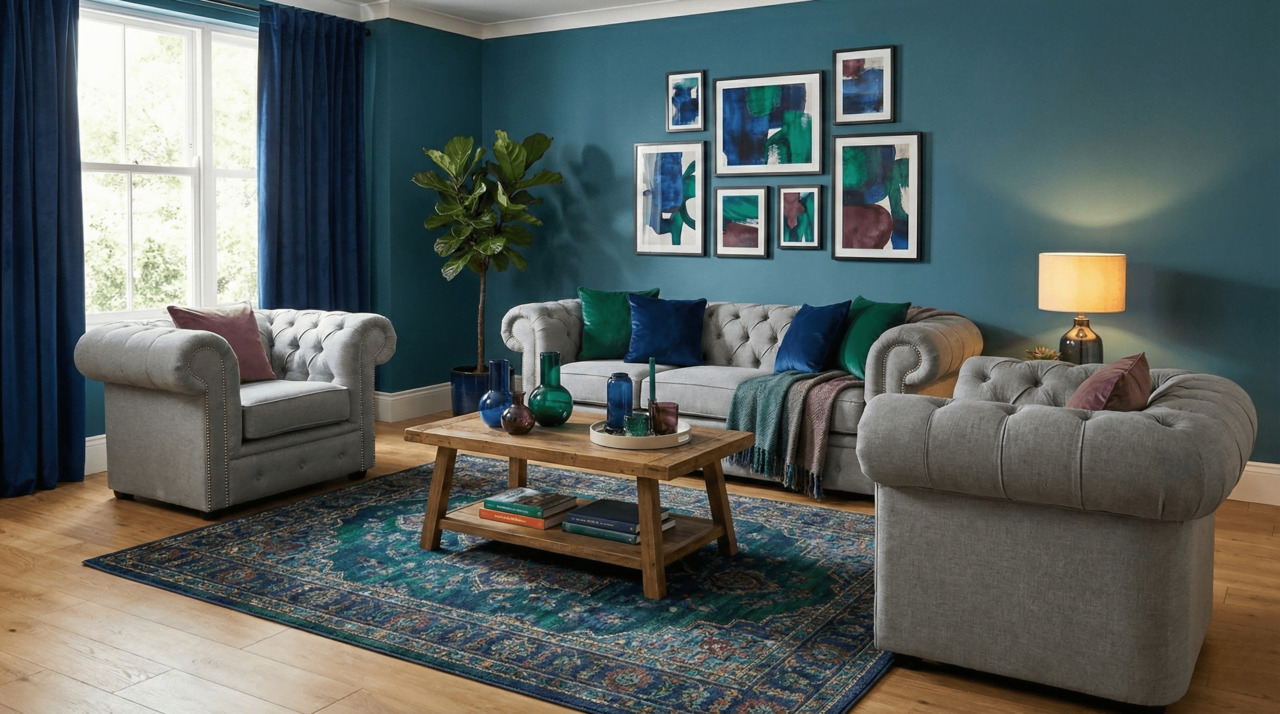
Wood and Metal Finishes That Pair Best With Dark Grey
The finishes you choose shape the character of the space.
Wood Tones
- Oak tones create warmth and Scandinavian simplicity.
- Walnut tones add richness and depth.
- Darker woods increase drama but require lighter textiles to avoid heaviness.
Wood introduces organic contrast against a dark grey base.
Metal Finishes
- Brass accents feel warm and inviting.
- Chrome accents enhance cool tones.
- Black accents create graphic definition.
Avoid mixing too many metals. One dominant finish with subtle secondary details works best.
Small Living Rooms vs Open-Plan Spaces — Different Styling Approaches
A dark grey sofa behaves differently depending on room size.
Small Rooms
Use lighter wall color choices and reflective surfaces. Mirrors increase perceived space. Keep textiles lighter and avoid excessive black accents.
Vertical elements — tall lamps or artwork — draw the eye upward and prevent the room from feeling compressed.
Open-Plan Spaces
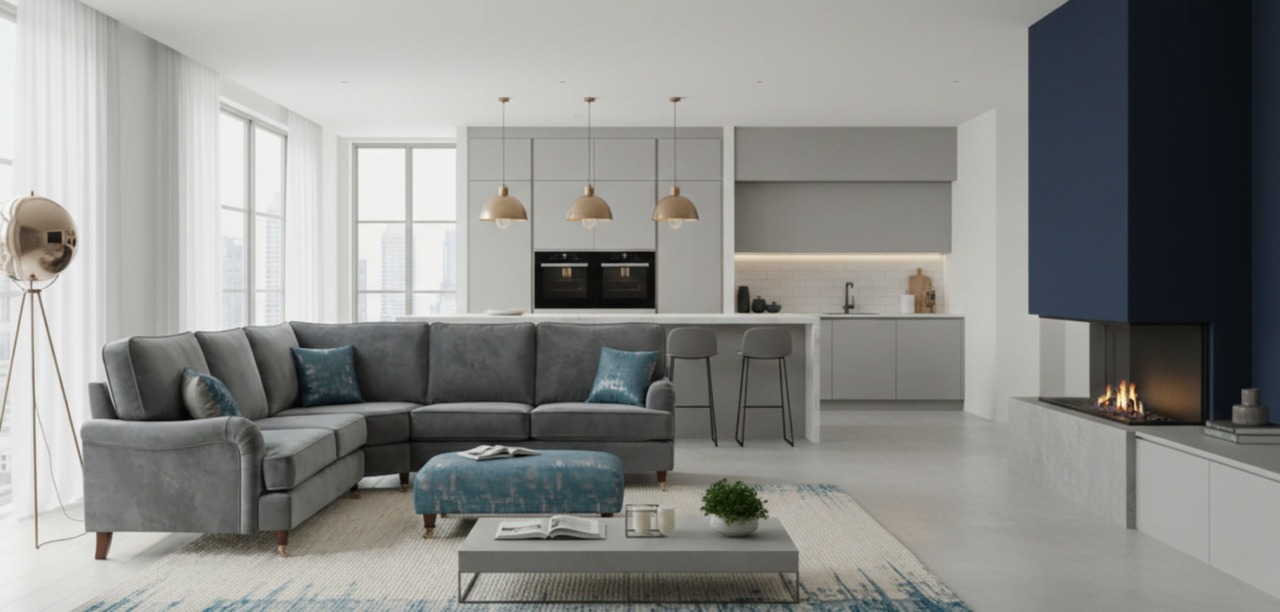
Define the seating area with a rug. Repeat accent colours in adjoining zones for visual flow. For example, navy blue cushions in the seating area can be echoed in dining chairs or artwork nearby.
This continuity ensures the sofa feels integrated rather than isolated.
Common Mistakes That Make a Dark Grey Sofa Look Flat
Even well-designed rooms can fall short if certain pitfalls are ignored.
Too Much of the Same Grey
A monochrome palette without texture can appear dull. Always introduce contrast or layering.
Clashing Undertones
Mixing cool grey with overly warm paint colour choices can feel unbalanced.
Not Enough Texture
Smooth surfaces everywhere reduce depth. Combine linen, wool, or velvet to create dimension.
Too Much Black
Black accents can overwhelm dark grey if overused.
Small Accessories That Get Lost
Tiny decorative items disappear against a dark base. Choose medium-scale pieces for impact.
Conclusion
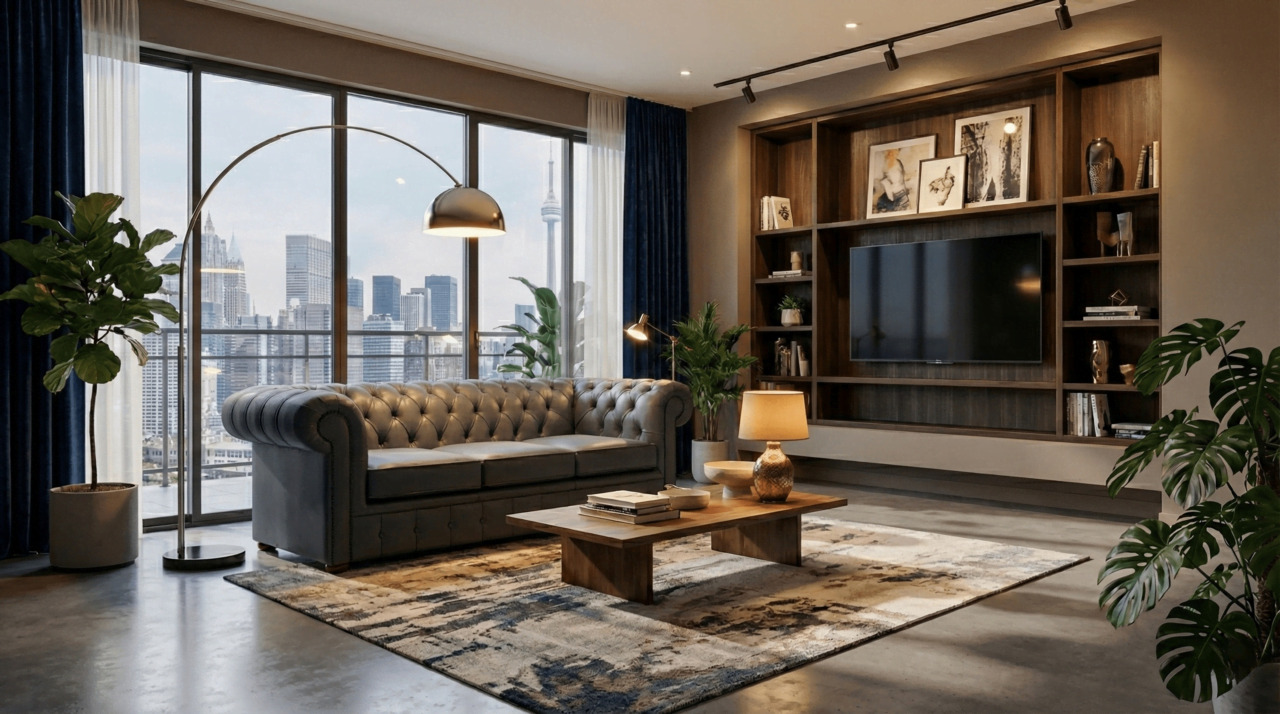
The most successful dark grey sofa colour scheme ideas combine balance, texture, and thoughtful repetition. Whether you favour layered neutrals, bold jewel tones, or soft natural finishes, the key lies in controlling contrast and light.
When styled with intention, a dark grey sofa becomes the foundation of a living room that feels cohesive, comfortable, and adaptable over time. Choosing a well-crafted model means it will stay reliable for everyday use.
FAQ
What colours go with dark grey sofa?
Dark grey works well with both warm and cool tones. Soft neutrals such as warm white, greige, and pale taupe create a calm foundation, while deeper accents like navy blue, emerald green, mustard yellow, or blush pink introduce contrast. The key is balance — pair bold colours with lighter walls or textiles to prevent the space from feeling heavy.
How do I brighten a dark grey sofa living room?
To brighten a dark grey sofa living room, focus on contrast and light reflection. Choose lighter wall colours, introduce a pale or textured rug, and layer your lighting plan with warm bulbs. Beige accents, cream cushions, and brass or chrome details can also lift the space without overpowering the sofa.
Does dark grey work in small spaces?
Yes, dark grey can work beautifully in compact rooms when styled thoughtfully. Combine it with light grey walls, mirrors, and lighter textiles to maintain visual balance. Avoid too many dark accessories and ensure the seating area is clearly defined with a rug.
Should I match my rug to my sofa?
It’s better to complement rather than match exactly. A rug that is slightly lighter or features a subtle pattern creates definition around the seating area. Exact colour matching can flatten the room, while gentle contrast adds depth.
Charcoal grey sofa living room ideas — what are the best styling options?
The most successful looks pair charcoal grey with lighter neutrals for balance, then add one strong accent colour for contrast. Layer in soft textures (wool, linen, velvet) and warm materials like wood or brass, and use warm lighting to keep the space feeling inviting.
Is dark grey too cold for a living room?
Dark grey only feels cold if paired with overly cool finishes. Adding natural wood, warm lighting, and soft layered textiles introduces warmth and prevents the space from feeling sterile. Even a single warm accent colour can shift the mood significantly.